Asian Eye Makeup: Lid Shapes, Liner, and Shadow

Asian eye makeup should be planned around lid shape, liner angle, shadow placement, and eye-area product labels, not around one fixed eye type. Monolids, hooded lids, tapered creases, double lids, round eyes, and deep-set eyes can all need different placement. Use this page as a technique guide, then adapt the steps to your own eye shape and comfort level.

Quick Answer: How to Plan Asian Eye Makeup
Map your visible lid space while your eyes are open, keep liner close to the lashes, and place the deepest shadow where it creates shape instead of covering the entire lid. For monolids and hooded lids, thin layers and open-eye placement usually work better than copying a closed-eye crease diagram.
| Makeup goal | Placement focus | Useful products | Keep in mind |
|---|---|---|---|
| Soft everyday definition | Upper lash line and outer third | Brown liner, taupe shadow, mascara | Keep color close to lashes |
| Lifted liner | Small outward flick or straight extension | Gel, pencil, or liquid liner | Check the angle with eyes open |
| Visible shadow depth | Thin bands above the lash line | Matte neutral or soft shimmer | Build upward gradually |
| Lower-lash balance | Outer lower third or soft shadow edge | Small brush and muted shadow | Avoid closing the eye with a heavy ring |
| Brighter inner area | Inner corner or center lid | Eye-labeled shimmer | Use finished cosmetics, not craft glitter |
Asian Eye Makeup vs Korean Eye Makeup
This page covers broad eye-shape technique: monolid, hooded lid, tapered crease, liner angle, shadow visibility, lower-lash balance, and eye-area label checks. For Korean-inspired soft shadow, puppy liner, and aegyo-sal styling, use the Korean eye makeup guide.
| Intent | Use this page when | Use the Korean eye guide when |
|---|---|---|
| Technique range | You want adaptable placement for several lid shapes | You want Korean-inspired styling cues |
| Liner shape | You are comparing tight, straight, lifted, or soft wing shapes | You want puppy liner or soft downward definition |
| Shadow planning | You need shadow that remains visible when eyes are open | You want a lighter gradient style |
| Lower eye area | You need balance without a heavy lower ring | You want aegyo-sal style guidance |
Lid Shape and Placement Guide
Do the placement check with relaxed eyes looking straight ahead. A look can disappear or change shape when the eye opens, so the open-eye check matters more than a diagram drawn on a closed lid.
| Lid shape or concern | Placement approach | What to avoid |
|---|---|---|
| Monolid | Build shadow upward in thin horizontal bands and keep liner close to lashes | One thick block of liner that covers visible lid space |
| Hooded lid | Place depth slightly above the fold while eyes are open | Only blending color where it hides under the hood |
| Tapered crease | Keep the outer third defined and soften the inner lid | Pulling dark shadow too far inward |
| Round eye | Extend liner softly outward and keep lower depth light | Heavy liner around the full eye |
| Small visible lid space | Use a thin upper line, soft shadow edge, and curled lashes | Thick black liner on both upper and lower edges |
Product and Tool Checklist
FDA eye-cosmetic guidance emphasizes using products as directed and keeping products not intended for the eye area away from the eyes. Choose formulas by placement, not only by color.
| Item | Use | Helpful for | Conservative check |
|---|---|---|---|
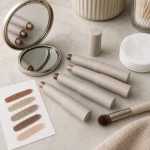
| Brown pencil liner | Soft lash-line depth | Everyday definition | Sharpen or clean the tip before use |
| Liquid liner | Thin line or lifted extension | Visible open-eye liner | Use short strokes near the eye |
| Matte transition shadow | Soft edge above the lash line | Monolids and hooded lids | Build in thin layers |
| Small pencil brush | Lower-lash shadow and outer-third depth | Controlled placement | Clean it regularly |
| Eye-labeled shimmer | Center lid or inner-corner accent | Brightness without heavy liner | Skip craft glitter near eyes |
| Mascara | Lash contrast | Definition after liner | Replace when dry, clumpy, or changed in smell |
Eye-Area Color and Label Checks
FDA color-additive rules are use-specific, so a color allowed in one cosmetic use is not automatically allowed for every eye-area use. Keep lip pencils, face paints, craft glitter, and novelty colors away from the eyes unless the finished product label clearly supports eye use.
- Use eye shadow, eyeliner, mascara, and shimmer products labeled for the eye area.
- Do not use lip liner as eyeliner unless the finished product directions support eye use.
- Keep loose craft glitter away from the eye area.
- Do not share mascara, liner, cream shadow, or eye brushes.
- Close pencils, pots, palettes, and mascara after use.
- Replace eye makeup that changes smell, texture, or performance.
Step-by-Step Routine
- Start with clean hands, clean tools, and dry lids.
- Look straight ahead and mark where shadow remains visible with eyes open.
- Place a soft transition shade just above the lash line or fold.
- Add depth to the outer third or a narrow band above the lashes.
- Apply liner in small strokes close to the upper lashes.
- Adjust the wing or extension while eyes are open.
- Balance the lower lash line with a light shadow edge if needed.
- Add mascara after cleaning away fallout.
- Remove the look gently before sleep.
Liner Shapes That Work Well
| Liner shape | How it reads | Best tool | Related guide |
|---|---|---|---|
| Tight upper line | Natural definition | Brown or black pencil | Brown eyeliner guide |
| Straight extension | Lengthens without a high wing | Liquid or gel liner | Winged eyeliner tools |
| Soft outer smudge | Diffused depth | Pencil plus small brush | Goth eye makeup guide |
| Thin liquid line | Clean open-eye definition | Brush-tip or felt-tip liner | Liquid eyeliner guide |
| Waterline depth | Stronger lash-line contrast | Only products directed for that placement | Waterline eyeliner guide |
Common Mistakes
- Assuming all Asian eye makeup needs the same crease or wing shape.
- Applying shadow only with the eye closed and skipping the open-eye check.
- Using a thick liner shape that hides limited visible lid space.
- Using lip pencils, face paints, or craft glitter near the eyes.
- Placing dark lower liner all the way around when a soft outer edge would fit better.
- Skipping removal because liner and mascara are hard to take off.
Sources
- FDA: Eye cosmetic safety
- FDA: Color additives and cosmetics fact sheet
- FDA: Color additives permitted for use in cosmetics
- AAD: When to replace makeup and sunscreen
- AAD: Can makeup cause acne?
FAQ
What is Asian eye makeup?
Asian eye makeup is a broad technique category for adapting shadow, liner, mascara, and lower-lash balance to different lid shapes and styling goals. It should not assume that every person has the same eye shape.
Is Asian eye makeup the same as Korean eye makeup?
No. Korean eye makeup is a narrower style direction with soft shadow, puppy liner, and aegyo-sal techniques. Asian eye makeup is broader and can include many lid shapes, liner angles, and shadow placements.
How do I make liner visible on monolids?
Use a thin line close to the lashes, then check the shape with eyes open. A straight extension or small outer flick may show better than a thick line across the full lid.
What shadow placement works for hooded lids?
Place the transition shade and depth slightly above the fold while looking straight ahead. This keeps the shape visible when the eyes are open.
Can I use shimmer for Asian eye makeup?
Yes, when the finished cosmetic is labeled for eye-area use. Place shimmer on the center lid or inner area in a controlled way instead of using loose craft glitter near the eyes.
Should I use black or brown eyeliner?
Brown liner gives softer everyday definition, while black liner creates stronger contrast. The better choice depends on the look, visible lid space, and how heavy you want the lash line to appear.
How should I remove Asian eye makeup?
Use an eye-area remover or cleanser, press briefly, and wipe gently instead of scrubbing. If a look takes repeated rubbing to remove, use a lighter formula or reserve stronger long-wear products for specific days.