Best Eyeshadow Stick: Formula, Shade, and Wear Guide

A good eyeshadow stick should match your lid type, finish, shade, setting speed, and eye-area label directions. Use the stick format when you want quick color placement with fewer tools, then compare how the texture blends, sets, layers, and removes. This guide focuses on buying and application checks; it does not claim that Beauty Supply Reviews tested every stick sold in stores.
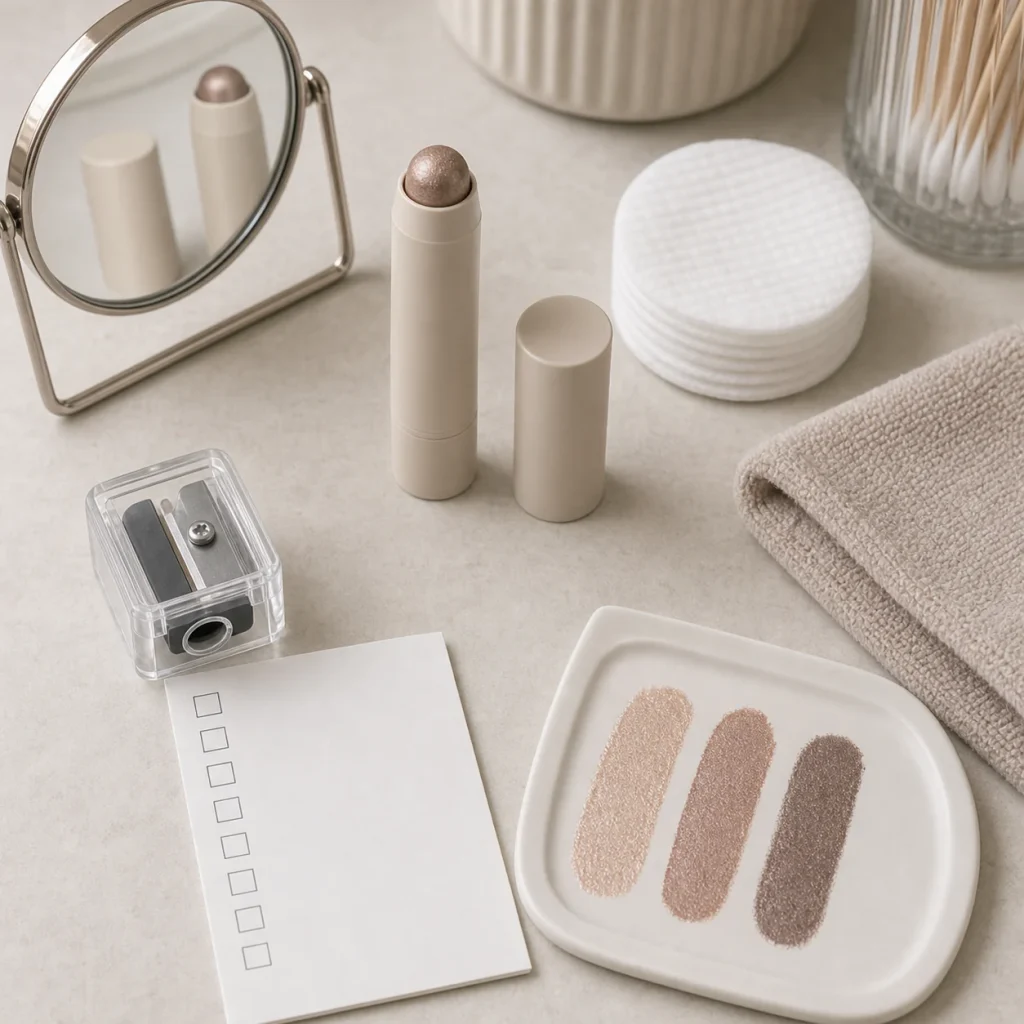
Quick Answer: How to Choose an Eyeshadow Stick
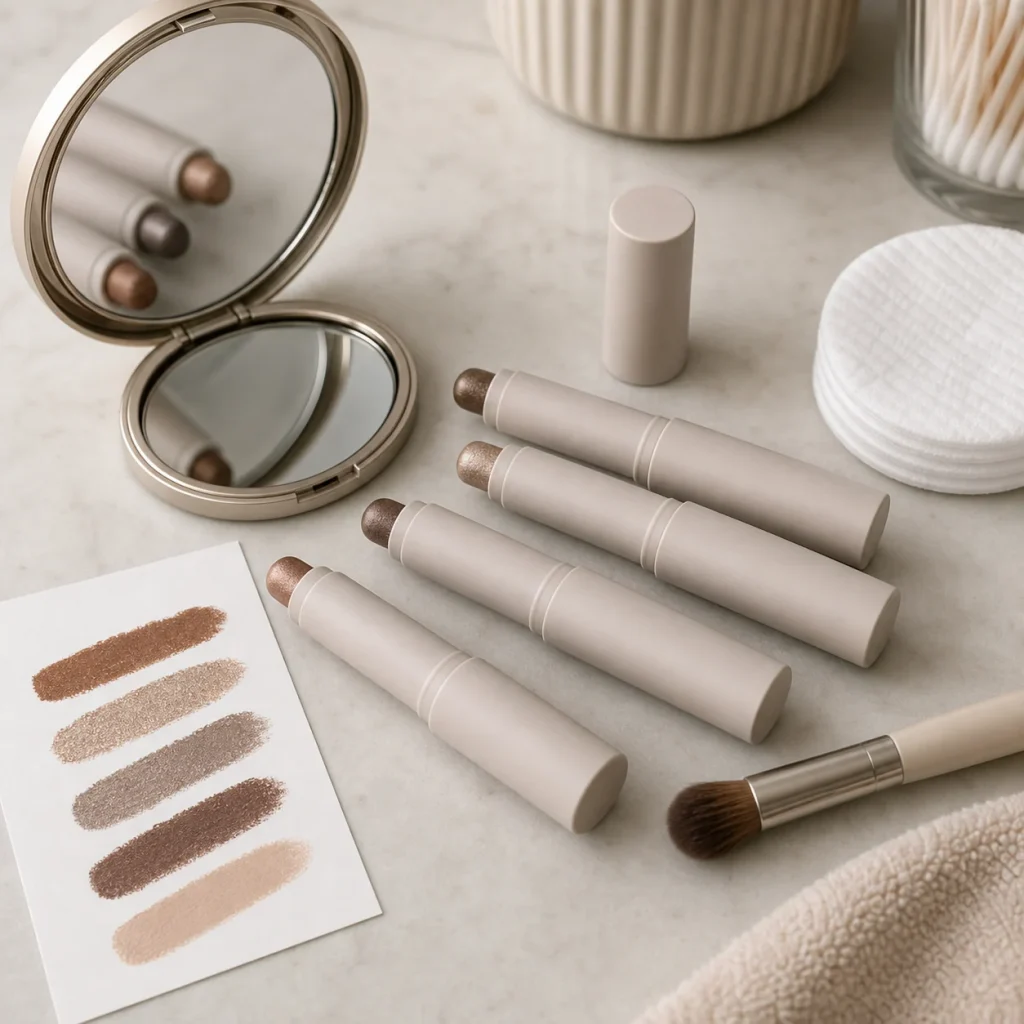
Choose an eyeshadow stick by starting with the makeup job. A neutral shimmer stick can brighten the lid, a matte taupe stick can add soft shape, and a deeper shade can work as a smoky base or liner-like accent. The useful choice is the one that gives enough working time to blend, then sets in a way that matches your lids and the rest of your eye makeup.
| Need | Stick direction | What to check | Skip when |
|---|---|---|---|
| Fast everyday lid color | Neutral shimmer or satin stick | Smooth glide and soft edge blending | The shade is too frosty for daylight |
| Soft crease shape | Matte beige, taupe, or brown stick | Enough working time before it sets | The edge grabs before blending |
| Bright color base | Opaque cream stick | Even payoff in one thin layer | It changes powder shadow color too much |
| Liner-like accent | Deep narrow-tip stick | Tip shape, label directions, and removal | The tip is too blunt for your lash line |
| Travel makeup | Twist-up stick with a firm cap | Cap fit and product stability | The cap loosens easily in a bag |
Eyeshadow Stick vs Powder Shadow vs Cream Shadow
Eyeshadow sticks sit between powder palettes and potted cream shadows. They are convenient because the color is already loaded into a pencil or twist-up tube, but that same convenience can limit brush control. A stick is usually strongest for simple lid color, quick accents, and one-shadow routines. Powder palettes still give more shade mixing and softer gradients.
| Product format | Main job | Useful when | Watch out for |
|---|---|---|---|
| Eyeshadow stick | Direct cream color placement | You want quick lid color or a base | Fast-setting formulas need quick blending |
| Powder eyeshadow | Soft blending and shade layering | You want gradients or several colors | Can need primer on uneven lids |
| Potted cream shadow | Cream color with brush or fingertip control | You like flexible placement | Open jars need clean handling |
| Eyeshadow primer | Prepare the lid before color | Powder skips or fades unevenly | Too much base can make cream products pill |
| Pigment shadow | Strong loose or pressed color | You want bolder color direction | Placement and fallout need more control |
Choose by Lid Type and Routine
Your lid texture, oil level, eye shape, and routine length affect how a stick behaves. A soft stick can look smooth on dry-looking lids but may move on oily lids. A firmer stick can set neatly but may need smaller sections while blending. Eye shape also matters: hooded lids and deep-set lids often need placement checks while the eyes are open.
| Lid or routine | Formula to compare | Application tip | Related guide |
|---|---|---|---|
| Oily lids | Thin, fast-setting cream stick | Use less skin care under eye makeup | Oily-lid eyeliner guide |
| Dry-looking lids | Creamy satin or soft matte stick | Blend in a thin layer without heavy powder | Cream eyeshadow guide |
| Hooded lids | Low-transfer stick with a soft edge | Place color while looking straight ahead | Eye-shape makeup guide |
| Brown-eye neutral routine | Bronze, taupe, plum, or soft brown stick | Match depth to the outer corner first | Brown-eye palette guide |
| Dark or alternative makeup | Deep matte or metallic stick | Keep edges clean before adding liner | Goth eye makeup guide |
Texture, Finish, and Shade Checklist
Texture and finish matter as much as shade. A beautiful color can still be hard to use if the stick dries too fast, feels waxy, or leaves a harsh edge. Before buying, think about whether you want the stick to act as a lid shade, a base under powder, an inner-corner accent, or a soft liner.
| Finish | Best use | Check before buying | Common issue |
|---|---|---|---|
| Matte | Soft shape, crease depth, smoky base | Does it blend before setting? | Can look dry if layered heavily |
| Satin | Everyday lid color | Does the sheen stay subtle? | Can lose shape if too creamy |
| Shimmer | Bright lid or inner corner | Are shimmer particles even? | Can emphasize texture when overbuilt |
| Metallic | Party makeup or one-shadow look | Does it set without a thick edge? | Can crack visually in a heavy layer |
| Deep cream | Liner-like accent or smoky outer corner | Can you sharpen or shape the tip? | Can get messy without a clean edge |
Application Routine for Stick Shadow
Stick shadow is easiest when the layer stays thin. Draw less product than you think, blend the edge first, and add a second layer only where you need more depth. If the stick sets quickly, work one eye at a time. If it stays creamy for longer, keep the color away from areas where it may transfer.
- Start with clean, dry lids unless the product directions say otherwise.
- Draw a small amount on the lid, outer corner, or lash line.
- Blend the edge with a clean fingertip or small brush before adding more.
- Keep shimmer shades thinner near fine lid texture.
- Let the cream settle before layering powder shadow.
- Use a cotton swab or clean brush to refine the edge.
- Remove eye makeup gently at the end of wear.
Drugstore and Premium Shopping Checklist
Price does not decide whether a stick fits your routine. Compare the packaging, tip shape, shade range, dry-down, and eye-area directions. A simple drugstore stick can be the better choice if it has the shade and texture you will actually use. A higher-priced stick can be useful when the color range, packaging, or finish fills a real gap in your makeup bag.
| Check | Good sign | Risk signal | Why it matters |
|---|---|---|---|
| Eye-area directions | Label clearly supports eyelid use | Multi-use claim with unclear placement | Eye-area products need careful label reading |
| Tip design | Twist-up or sharpenable format stays neat | Tip becomes too blunt after a few uses | Shape affects placement and edges |
| Working time | Blends before it sets | Drags or grabs immediately | Fast dry-down can make patches |
| Shade | Works with your everyday palettes | Looks different from the cap or online swatch | Stick shades can dry darker or warmer |
| Removal | Comes off with your normal eye remover | Needs heavy rubbing | Removal affects the daily routine |
Primer Pairings and Layering
Eyeshadow sticks can work alone, over primer, or under powder shadow. The best pairing depends on how much grip you need and how creamy the stick feels. Heavy primer plus a heavy cream stick can pill, while a very slippery lid may need a thin primer layer before the stick.
| Layering plan | When it helps | How to apply | Useful related page |
|---|---|---|---|
| Stick alone | The formula sets well on your lids | Draw, blend, and let it settle | Drugstore cream shadow guide |
| Primer under stick | Color moves or skips on bare lids | Use a thin primer layer and wait briefly | Eyeshadow primer guide |
| Powder over stick | You want more depth or softer edges | Add powder while the stick still has light grip | Neutral palette guide |
| Pigment over stick | You want stronger color direction | Use a small brush and control fallout | Pigment shadow guide |
| Liner over stick | You want definition after cream color | Let the stick settle before liner | Eyeliner brush guide |
How to Use Different Finishes
Not every finish should be placed the same way. Matte sticks usually look cleaner when the edge is blended quickly. Shimmer sticks can be tapped onto the center of the lid. Metallic sticks can look smoother when used in one thin layer instead of repeated heavy layers.
| Finish | Placement idea | Tool | Watch point |
|---|---|---|---|
| Matte beige | Base shade or soft crease | Small blending brush | Keep the edge thin |
| Matte brown | Outer corner or smoky base | Dense pencil brush | Blend before dry-down |
| Champagne shimmer | Center lid or inner corner | Fingertip or flat brush | Use a small amount near texture |
| Bronze metallic | One-shadow lid look | Fingertip then clean brush | Avoid thick ridges |
| Deep plum or black | Lash-line accent | Angled brush after drawing | Check eye-area directions first |
Eye-Area Hygiene and Replacement
Sticks touch the eye area directly or sit very close to it, so clean handling matters. Keep caps tight, avoid sharing eye makeup, and follow the label if the product changes smell, texture, or appearance. FDA consumer guidance also warns against adding water or saliva to cosmetics. AAD guidance supports regular brush cleaning and paying attention to replacement timing for makeup products.
- Close the cap tightly after each use.
- Wipe the outside of the stick if cream collects around the rim.
- Use clean brushes when blending cream shadow.
- Do not share eye sticks or eye makeup applicators.
- Do not use water or saliva to refresh a drying stick.
- Replace the product according to label guidance or sooner if the texture, smell, or appearance changes.
How This Page Fits the Eye Makeup Cluster
This eyeshadow stick guide should act as the hub for stick-format decisions. Use the primer page when the question is lid prep, the cream shadow pages when the question is potted or cream texture, and the palette pages when the question is shade family or multi-shade blending. Keeping those intents separate helps readers and search systems understand the site structure.
| User question | Best page type | Why | Internal path |
|---|---|---|---|
| Which stick finish should I buy? | Eyeshadow stick guide | Format and finish are the main decision | Current page |
| Do I need a base first? | Primer guide | Lid prep is the main decision | Drugstore primer guide |
| Should I buy a pot or a stick? | Cream shadow guide | Texture format is the main decision | Cream shadow guide |
| What palette works for brown eyes? | Palette guide | Shade family is the main decision | Brown-eye palette guide |
| How do I adapt placement to eye shape? | Eye-shape guide | Placement is the main decision | Eye-shape makeup guide |
Common Mistakes
- Drawing too much product on the lid before blending.
- Waiting too long to soften the edge on a fast-setting stick.
- Using a blunt tip for lash-line detail.
- Layering heavy primer under a creamy stick and causing pilling.
- Choosing a metallic shade when a satin shade would be easier for daytime.
- Keeping the cap loose so the stick dries at the tip.
- Ignoring label directions for eye-area placement.
Sources
- FDA: eye cosmetic safety
- FDA: makeup
- FDA: using cosmetics safely
- FDA: shelf life and expiration dating
- AAD: how to clean makeup brushes
- AAD: when to replace makeup
FAQ
Are eyeshadow sticks easier than powder eyeshadow?
They can be easier for one-shadow looks because the product draws directly on the lid. Powder eyeshadow is still better when you want soft gradients, several shades, or very diffused edges.
Do eyeshadow sticks need primer?
Some sticks work well on bare lids, while others look better over a thin primer layer. Use primer when color moves, skips, or looks uneven, but keep the primer layer light so the cream does not pill.
What finish is easiest for beginners?
Satin neutrals are often easiest because they add light without showing every edge. Matte sticks need faster blending, and metallic sticks can show texture if the layer gets thick.
Can eyeshadow sticks work on oily lids?
Yes, but choose a thinner stick that sets cleanly and use less product. A light primer layer may help if your lid makeup usually moves during the day.
How do you stop stick shadow from looking patchy?
Use a thin first layer, blend the edge right away, and add more only where needed. If the formula sets very fast, work one eye at a time and keep a clean brush nearby.
Can eyeshadow sticks be used as eyeliner?
Some can create a soft liner effect, especially deeper shades with a narrow tip. Check the product directions for eye-area placement and use a clean brush if you need a sharper edge.
When should an eyeshadow stick be replaced?
Follow the product label and replace it sooner if the smell, texture, or appearance changes. Do not add water or saliva to soften a drying stick.
Are drugstore eyeshadow sticks different from expensive ones?
The useful difference is not only price. Compare shade range, working time, dry-down, packaging, tip shape, and how the formula fits the eye makeup you already wear.