Hair Masks: Formula, Hair-Type Fit, Frequency, and Buildup Guide

Direct answer: choose a hair mask by its complete formula, label-defined purpose, hair condition, application zones, timing, and washout rather than by a single featured ingredient or hair-type label. Use the stated dose on controlled sections, keep it off roots or scalp when directed, rinse completely, and judge the dry result plus next-wash residue before repeating.
Define the exact hair mask role
Hair masks range from rinse-out creams and gels to concentrated emulsions, protein-focused formulas, oil-rich products, and label-defined pre-wash formats. The front category name is only a starting point. Read the complete directions for hair state, application zones, amount, timing, heat, rinsing, and frequency. The FDA hair-products overview supplies federal cosmetics context, but it does not compare formulas or establish that one format suits every strand pattern, density, service history, or styling goal.
Read the complete formula in context
Conditioning agents, fatty alcohols, oils, silicones, proteins, humectant systems, fragrance, preservatives, and pH all shape slip, weight, deposition, and rinsing. Ingredient order and a highlighted ingredient cannot predict the finished result by themselves. Consider the whole emulsion, gel, serum, spray, or foam together with the dispensed amount and the other products already on the hair. Do not dilute, combine, decant, or heat a formula unless its current directions specifically permit that handling.
Start with a controlled setup
Prepare one representative section and preserve a simpler comparison section. Keep the product, cap, clean towel, sectioning tools, and a written dose record within reach. Protect clothing and nearby surfaces when spray, gel, serum, or foam can transfer. Work with clean hands and tools, keep the package traceable, and avoid starting several new products during the same routine comparison.
Control water level and section size
Follow the stated wet-or-dry condition before applying. Hair that is soaking, damp, towel-dried, or fully dry can distribute the same amount differently. Use the label-approved state and sections small enough for complete coverage without repeatedly loading the outer layer. Record the starting water level. Adding more water or product midway makes it harder to identify whether the first dose was adequate.
Measure the first dose
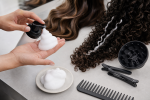
Divide the stated amount across consistent sections rather than applying a large handful to the visible surface. A pump, spray, fingertip amount, or palmful is specific to its dispenser and texture; it is not a universal unit. Begin at the low end of the stated directions, distribute it completely, and wait for the required drying or processing endpoint before deciding whether another small amount is appropriate.
Distribute by the intended zone
Follow the package zones; many masks belong on lengths and ends, while a formula intended for scalp use needs its own explicit directions. Separate roots, mid-lengths, ends, perimeter, and service sections when their needs or directions differ. Outer-layer shine is not proof that inner sections received an even amount. Use fingers, palms, a comb, brush, or applicator only when the product and hair condition permit that tool without force.
Check overlap with the rest of the routine
Compare the mask with a simple shampoo-and-rinse baseline before adding leave-in conditioner, oil, cream, gel, heat product, or finishing spray. Add only one companion product to a small comparison section after the first layer settles. Watch for coated roots, limp movement, slow drying, tack, dull film, pilling, or difficult rinsing. Duplicate-function layers can add weight and residue without improving the intended result. Keep heat protectant, color service, attachment, and scalp directions separate rather than assuming compatibility.
Judge the fully dry cosmetic finish
Assess detangling access, movement, grouping, volume, surface feel, shine, static, drying time, and tool film after complete drying. Evaluate the result only after the stated dry or set time. Compare root lift, movement, grouping, hold, touch, shine, transfer, fragrance, and tool film under similar conditions. An immediate wet feel can disappear or intensify after drying, so avoid adding a correction layer while water is still masking the deposit.
Run the key hair mask check
Compare equal sections with the same shampoo, water condition, mask dose, timing, rinse, and drying method before assigning the result to hair type. Keep a nearby control section with the simpler routine and use the same water level, tools, drying method, and handling. This is a practical cosmetic comparison, not a laboratory result. Repeat on another routine day before changing the whole head when weather, service history, or prior residue could explain the difference.
Recognize residue and cumulative load
Frequent or overlapping masks can add conditioning, protein, oil, silicone, or styling film that changes wetting, lather, movement, and drying. Reduced wetting, altered lather, dull film, rapid heaviness, pilling, flakes, tack, tool coating, textile transfer, or a longer drying time can indicate that the routine carries too much material. Reduce one layer, zone, dose, or application date at a time instead of stacking aggressive reset steps or household cleaners.
Set frequency from evidence
Base the next use on the current label, the dry finish, and the next complete wash instead of assuming that more damaged-looking or textured hair always needs more applications. Log the wash date, amount, zones, water state, companion products, drying method, weather, sleep or textile contact, finish, and next-wash behavior. Follow the current label interval. A schedule copied from another formula or hair description does not account for a different dose, dispenser, service history, or product stack.
Plan washing and removal
Rinse through dense inner sections until the stated endpoint, then use the normal label-compatible cleansing routine when cumulative film becomes evident. Confirm whether ordinary shampoo, a stated cleansing step, or simple rinsing is expected. Give water and cleanser access to every coated section, rinse fully, and inspect again when dry. Do not scrape a cast, force a comb through stuck sections, or use dish detergent, solvent, or an unapproved chemical shortcut on hair or scalp.
Keep linked routine decisions separate
The hair-gloss guide helps with separating shine deposition from mask conditioning. The natural hair-care supply guide covers checking full labels and routine fit. Use the hair-extension care guide for keeping masks away from attachment zones when required. These are supporting decisions; none substitutes for the exact hair mask label, dose, finish, or removal check.
Store the product and clean tools
Preserve the original package and dispensing parts. Close the package after use and keep it within its stated temperature, light, ventilation, and upright-storage directions. Wipe pumps or nozzles without pushing debris into the opening. Clean combs, brushes, clips, bowls, towels, pillowcases, and heat attachments so an old film does not distort the next application.
Use conservative skin and hair boundaries
The FDA cosmetics-allergen guidance supports label and ingredient review without predicting an individual response. The AAD gentle hair-care guidance supports cautious handling without prescribing hair mask. Do not improvise heat, extend timing, mix raw ingredients into the product, or apply to irritated skin unless the current directions explicitly support that use. Stop use and seek appropriate help for burning, swelling, hives, breathing difficulty, eye exposure that persists after rinsing, pain, marked shedding, or worsening breakage.
Use a final decision log
Record product identity, date opened, task, exact dose, zones, application order, water level, dry time, slip, movement, volume, grouping, drying time, residue, rinse completeness, transfer, residue, and wash result. Compare like with like. Keep the current routine only when its cosmetic benefit is clear, its handling fits the label, and its cumulative load remains manageable without unsafe correction steps.
Decision table
| Question | Useful evidence | Stop or revise when |
|---|---|---|
| What is the product task? | Rinse-out conditioning, pre-wash use, or another label-defined task is explicit | The category name replaces label directions |
| How much is used? | A measured amount reaches the intended sections and rinses evenly | Roots collapse, drying slows, or coated film remains |
| Does it layer cleanly? | The dry section keeps useful movement with the planned leave-in or styler | Pilling, flakes, tack, or lost movement appears |
| Can it repeat? | The previous application has washed out and the label interval permits another use | Old residue or transfer is hidden by another application |
Final checklist
- The exact hair mask format, directions, zones, timing, and removal are known.
- Hair water level, section size, dose, and dispenser are recorded.
- Only one companion layer changes during a compatibility check.
- Slip, movement, volume, grouping, drying time, residue, rinse completeness, transfer, residue, and washout are inspected after drying.
- Skin reaction, pain, matting, marked shedding, or worsening breakage stops use.
A hair mask is a whole-formula, dose, timing, and removal decision. Standardize those variables, inspect the fully dry result, and use next-wash evidence before changing frequency.