Extension Cord Limits for Hair Tools: Features, Fit, Maintenance, and Safety

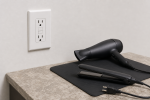
Direct answer: plug a hair tool directly into a suitable wall outlet whenever its instructions require or prefer direct connection. Use an extension cord only when the hair-tool and cord directions permit it, then match voltage, frequency, grounding and polarization, current and wattage rating, conductor gauge, length, indoor dry-location use, and plug fit with adequate margin. Keep it fully uncoiled, temporary, visible, and protected from heat, water, doors, rugs, furniture, and foot traffic.
Identify the exact extension cord considered for a hair tool
Record the hair tool’s rated voltage, frequency, current or watts, plug type, grounding or polarization, direct-outlet language, and extension prohibition or conditions. For the cord, record listing evidence, voltage, current and watt rating, conductor gauge, length, conductor count, grounding, indoor or outdoor designation, temperature and dry-location limits, single-receptacle or multi-outlet form, and inspection instructions. Category wording and physical fit do not replace model-specific ratings, certification evidence, installation requirements, exclusions, or current manufacturer instructions.
Resolve compatibility before connection
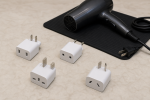
Use the complete ratings and directions rather than plug fit alone. A longer cord and smaller conductor can increase voltage drop and heating under load; a coiled cord can retain heat. Never remove a grounding pin, defeat polarization, connect multiple extension cords, add a travel adapter, converter, timer, splitter, or power strip, or place multiple high-power hair tools on one extension arrangement. Evaluate voltage, frequency, current, watts, load type, plug, grounding, polarization, outlet, and location as separate checks. A successful physical connection does not prove that the complete electrical system is suitable.
Inspect every component while disconnected
Use bright light and dry hands. Inspect housing, blades, pins, receptacles, shutters, controls, cord, strain relief, appliance plug, outlet face, and nearby surface as applicable. Stop for cracks, looseness, heat marks, residue, moisture, corrosion, distortion, exposed conductor, taped repair, abnormal odor, or missing documentation.
Build a dry and visible setup
Inspect the wall outlet, appliance cord and plug, and the entire extension cord while disconnected. Reject cuts, crushing, taped repairs, stiff or soft spots, exposed conductor, bent blades, loose receptacle, scorch marks, odor, moisture, or a cord that cannot lie fully uncoiled. Route it in the open on a dry stable path without doors, drawers, rugs, furniture, sharp edges, heat, sinks, or walkways. Keep the complete connection away from sinks, wet hands, aerosols, towels, paper, hair product, heated surfaces, children, pets, foot traffic, drawers, and doors. Do not conceal an electrical connection behind furniture or inside storage.
Operate only inside the documented limits
Connect only the one permitted hair tool, seat both connections fully, keep them visible and unloaded by pulling, and supervise the complete use. Do not cover the cord, coil excess, use it as permanent wiring, or continue if either connection or cable becomes warm, loose, noisy, intermittent, odorous, or discolored. Switch off and unplug at both ends after the temporary task. A secondary device or protective feature never authorizes unattended use, water exposure, damaged equipment, overload, an incompatible supply, or continued operation after abnormal behavior.
Keep normal appliance controls primary
Use the hair tool’s own switch, temperature, cooling, and unplugging procedure exactly as directed. Do not rely on a timer, protection device, adapter, extension, fuse, breaker, or indicator as the routine method for ending use or deciding that an appliance has cooled enough for cleaning and storage.
Separate protection from prevention claims
Electrical protective devices address defined conditions and have limits. They do not prevent every shock, burn, fire, wiring fault, overload, appliance failure, or misuse. No accessory can make water exposure, an unsuitable outlet, a damaged cord, or an unapproved voltage combination acceptable.
Record practical extension cord considered for a hair tool evidence
Record appliance and cord ratings, direct-outlet instructions, gauge, length, grounding, outlet condition, routing, load count, use duration, connection fit, observed temperature by permitted non-contact inspection, odor, voltage-related behavior, switch-off, disconnection, cooling, and replacement. A completed session does not prove adequate rating for another tool or duration. Retain the exact model instructions and the authoritative source for destination or installation facts. Do not replace missing rating evidence with a review, photograph, marketplace description, or memory of prior use.
Use authoritative boundaries carefully
The CPSC household electrical-products guidance provides specific immersion-protection context for covered hand-supported dryers; it does not certify every extension cord considered for a hair tool. The AAD gentle hair-care guidance supports conservative heat and handling without validating an electrical accessory. The FDA hair-products overview provides cosmetics context, not electrical compatibility evidence.
Stop after a trip, interruption, or abnormal event
Switch off the appliance if it is safe to do so, disconnect power by the directed method, and do not repeatedly reset, reconnect, replace a fuse, change outlets, or add an adapter to make the setup continue. Follow the device instructions and use a qualified electrician, property manager, manufacturer, or service provider when the event requires diagnosis beyond consumer inspection.
Cool, clean, and store correctly
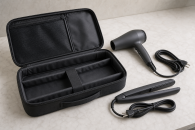
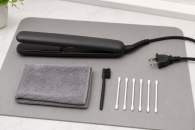
Disconnect by both plugs, let the cord cool, inspect its full length and both ends, clean only as directed, dry fully, and store in loose loops without tight bends, knots, hooks, or heavy items. Retire rather than repair a damaged consumer extension cord unless its manufacturer provides a qualified service route. Never clean or inspect contacts while energized. Do not spray cleaner into electrical openings, scrape contacts, bend blades back into place, open sealed housings, bypass a control, or improvise a repair.
Recognize the retirement or service point
Stop use for manufacturer prohibition; insufficient or unknown rating; missing ground; wrong polarity; loose fit; coiled or covered use; multiple connected cords; cuts, crush damage, exposed conductor, taped repair, stiff or swollen insulation, bent blades, hot plug or receptacle, buzzing, arcing, intermittent power, odor, smoke, or repeated breaker trip. A reset, tighter grip, taped cord, different outlet, higher-rated-looking adapter, or another attempt is not proof that the underlying electrical or mechanical problem is resolved.
Compare extension cord considered for a hair tool options without creating a fault
Compare documentation while all cords are disconnected, using the same appliance nameplate, manufacturer permission, voltage, load, required margin, grounding, gauge, length, route, full-uncoiling requirement, outlet condition, and stop rule. Do not compare cords by running deliberate high-load or heating challenges. Documentation, dimensions, ratings, and disconnected inspection are the comparison tools. Never create a deliberate overload, ground fault, water exposure, stall, high-temperature run, loose connection, or incompatible-voltage trial.
Use related guides for separate decisions
The beauty-supply checklist helps with placing electrical decisions inside a complete dry station. The salon equipment guide covers planning outlets, clearances, storage, and maintenance boundaries. Use the flat-iron guide for keeping appliance heat and hair-section decisions separate. These guides do not replace the exact extension cord considered for a hair tool, appliance, outlet, or supply directions.
Record the final decision
Log hair-tool model and ratings, direct-outlet language, cord listing and ratings, gauge, length, grounding, outlet, routing, load count, duration, fit, warmth or odor observations, switch-off, disconnection, cooling, storage, and retirement. Keep the setup only while every rating and permission remains traceable, connections remain cool and stable, protective checks pass, the dry area remains controlled, and normal switch-off and unplugging do not depend on the accessory.
Decision table
| Check | Useful evidence | Stop or revise when |
|---|---|---|
| Permission | Both appliance and accessory directions permit the setup | Any direction prohibits or omits the intended use |
| Ratings | Voltage, frequency, load, plug, grounding, and location match | A rating is missing, incompatible, or inferred from fit |
| Condition | Outlet, housing, contacts, cord, and plug are intact and dry | Damage, heat, odor, moisture, looseness, or repair appears |
| Operation | The supervised setup remains visible and inside limits | Interruption, trip, heat, arcing, noise, or instability occurs |
| Shutdown | The tool is switched off, unplugged, cooled, and inspected normally | An accessory is relied on instead of the appliance procedure |
Final checklist
- The exact extension cord considered for a hair tool, appliance, supply, outlet, load, and location permissions are documented.
- Housing, contacts, cord, plug, outlet, controls, and dry work area pass inspection.
- No adapters, extensions, converters, timers, splitters, or strips are chained.
- The hair tool remains supervised and is switched off, unplugged, cooled, and stored normally.
- Damage, heat, odor, arcing, trip, failed check, or uncertain rating ends use.
Extension-cord use with a hair tool is first a manufacturer-permission decision, then a rating, gauge, length, grounding, route, temporary-use, and inspection decision. Direct connection remains the default when the appliance directions require it or the complete cord evidence is uncertain.