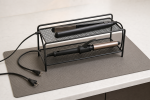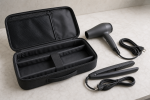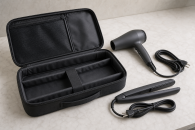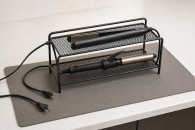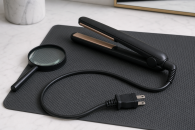
Hair Tool Cleaning Kits: Features, Fit, Maintenance, and Safety

Direct answer: build a hair-tool cleaning kit around the exact appliance directions, not a universal accessory list. Select a soft brush sized for accessible seams and vents, a clean lint-free cloth compatible with the housing and plates or barrel, cotton swabs only where permitted, and only the cleaner and application method named by the manufacturer. Switch off, unplug, cool completely, keep liquid away from openings and contacts, dry every surface, and inspect before reuse. A kit cannot make dismantling, immersion, spraying, scraping, or chemical use acceptable.
Define the exact hair-tool cleaning kit decision
Record every kit item, material, bristle stiffness, cloth fiber and weave, swab construction, permitted cleaner identity and concentration when applicable, dispensing method, excluded surfaces, cross-use policy, cleaning or disposal directions, drying time, storage container, and replacement schedule. Keep abrasive pads, metal picks, blades, household solvents, and unidentified bottles out. A category name, professional appearance, metal housing, padding, or similar geometry does not establish a rating, permission, protection, or universal fit. Use the exact current directions and model evidence.
Match one tool and one task
Map each item to one accessible appliance surface: dry loose hair at a vent, residue on a permitted cool plate, debris at a housing seam, or exterior dust. Keep tools assigned to separate appliance classes when residue transfer matters. Do not use a brush or swab to enter electrical openings, force a hinge, lift a plate, remove a guard, or reach an area identified for qualified service. Keep appliance heat, electrical supply, hair handling, cleaning chemistry, storage, and travel questions separate. A nearby accessory cannot change the limits of the hair tool or transfer permission from another model.
Inspect everything while disconnected
Move the tool to a dry cleaning zone away from outlets and product use. Switch off, unplug by the plug, wait for full cooling, remove only user-removable attachments by their directions, inspect cord and housing, wash and dry hands, prepare the minimum permitted cleaner outside the appliance, and keep every unused liquid capped and separate. Bright light should reveal each relevant housing, edge, support, seam, closure, vent, control, cord, strain relief, plug, contact, and lining. Do not hide damage with tape, product, a cover, or an improvised repair.
Prepare a dry controlled station
Separate outlets and energized equipment from inspection, cooling, cleaning, and packing zones. Keep sinks, product bottles, aerosols, towels, paper, sharp tools, children, pets, and walkways outside the work area. Give every disconnected plug and cooling tool a stable visible position.
Follow the bounded procedure
Start with dry loose-debris removal. Apply a permitted cleaner to the cloth or swab only when directions require it; never spray or pour onto the appliance. Use light controlled strokes with no scraping, flooding, forced insertion, or repeated rubbing after residue stops releasing. Keep vents, controls, cord entry, plug, battery area, and internal cavities dry. Stop before force, uncertain compatibility, blocked airflow, unstable support, trapped moisture, cord loading, excessive heat, electrical abnormality, or loss of visibility. Repetition does not turn an unsupported setup into an approved one.
Keep normal appliance controls primary
An accessory never replaces switching off, unplugging by the plug, supervision, a suitable dry outlet, appliance cooling, cord inspection, or the manufacturer’s service route. Do not bypass a switch, grounding feature, polarized plug, protective device, guard, vent, stand, or stated cooling interval.
Use observable evidence
Record tool model, cooled and unplugged time, residue location, kit item, cleaner and amount when permitted, stroke direction and count, debris release, surface change, lint, moisture, odor, drying interval, reinspection, kit cleaning, cross-use, storage, and retirement. A visibly cleaner surface does not establish disinfection or restored appliance performance. Use model-specific facts rather than popularity, appearance, an immediate result, or an undocumented specification. Include the stop rule and any unresolved question so another person does not repeat an unsafe or inconclusive setup.
Compare hair-tool cleaning kit options without a fault challenge
Compare kit items on equivalent cool unplugged accessible surfaces with the same residue type, appliance directions, dry-first sequence, cleaner amount when permitted, pressure limit, stroke count, drying interval, reinspection, and stop rule while changing one documented brush, cloth, or swab feature. Return every item to the same cool, dry, disconnected baseline before a second observation. A deliberate overload, heat challenge, drop, water exposure, forced fit, repeated flex, or energized fault simulation is outside a reader comparison.
Read authoritative sources within their limits
The U.S. Consumer Product Safety Commission hair-dryer guidance supports electrical-shock and protective-device context for hand-supported dryers; it does not approve a particular hair-tool cleaning kit. The American Academy of Dermatology gentle hair-care guidance supports conservative heat and handling boundaries without comparing accessories. The FDA hair-products overview provides federal cosmetics context and does not establish electrical compatibility, tool performance, travel acceptance, or material durability.
Clean and maintain only as directed
Dispose of single-use swabs as directed, remove debris from reusable brushes, wash cloths separately by their material directions, clean reusable kit items only with compatible methods, rinse when required, dry bristle bases and cloth folds fully, and store the complete kit dry and protected from product spills and powered tools. Cleaning is not the same as disinfection, electrical repair, material restoration, or performance validation. Never improvise with immersion, spraying into openings, household solvents, boiling water, abrasive tools, glue, tape, or internal access.
Verify cooling and complete drying
Inspect hidden seams, vents, cord pockets, padding, bristle bases, folds, feet, closures, and contact recesses that apply. A cool handle does not prove that every heated surface is cool, and a dry exterior does not prove that an enclosed area is dry. Do not cover or pack the item until both endpoints are satisfied.
Set a clear retirement or service point
Stop use for an unapproved cleaner or tool; sharp, melted, hardened, shedding, corroded, or contaminated brush; linting, stained, oily, chemically exposed, or persistently damp cloth; loose swab fibers; trapped residue or moisture; damaged appliance surface; opened housing; uncertain cross-use; or any task that requires force, dismantling, immersion, or internal access. A lower setting, lighter pressure, another outlet, a larger adapter, extra padding, tape, glue, or a longer wait cannot restore uncertain electrical integrity, damaged material, failed geometry, or missing manufacturer permission.
Use related guides for separate decisions
The beauty-supply checklist helps with placing the item inside a complete tool routine. The salon equipment guide covers planning dry zones, clearances, storage, and maintenance. Use the flat-iron guide for keeping appliance temperature and hair-section decisions separate. These pages do not replace the exact hair-tool cleaning kit directions, ratings, or service limits.
Keep the claim boundary explicit
No disinfection, sanitation, residue removal guarantee, restored tool performance, scratch prevention, damage-free cleaning, internal electrical cleaning, universal material compatibility, or medical benefit is claimed. The article organizes observable decisions and stop conditions. It does not certify a product, reproduce a laboratory standard, diagnose a fault, or authorize a setup that either manufacturer excludes.
Log the final decision
Record appliance model, cleaning directions, kit inventory, item materials, residue and location, switch-off and unplugging, cooling, cleaner identity and amount, method, observations, drying, reinspection, kit cleaning, storage, cross-use, and retirement. Keep the item only while its role remains defined, the complete setup stays within instructions, and every relevant component can be inspected, cooled, cleaned, dried, stored, and retired predictably.
Decision table
| Check | Useful evidence | Stop or revise when |
|---|---|---|
| Identity | Exact models, materials, ratings, and directions are known | Any component or permission is uncertain |
| Condition | All relevant surfaces, cords, plugs, supports, and closures are intact | Damage, heat marks, residue, looseness, or distortion appears |
| Fit | The one defined tool and task fit without force or blocked clearance | The setup depends on pressure, chaining, crowding, or improvised support |
| Procedure | Switch-off, unplugging, cooling, cleaning, and drying remain visible | A normal appliance control or endpoint would be skipped |
| Retirement | Stop rules and service routes are documented | Continued use depends on repair guesses or missing evidence |
Final checklist
- The exact hair-tool cleaning kit, tool, task, and current directions are documented.
- Every applicable material, support, housing, cord, plug, vent, and closure passes inspection.
- The station is dry, stable, visible, disconnected when required, and free of chained devices.
- Switch-off, unplugging, cooling, cleaning, complete drying, and storage remain separate steps.
- Damage, abnormal heat, odor, arcing, moisture, force, or uncertain permission ends use.
A hair-tool cleaning kit is an appliance-direction, access, material, dry-first, cleaner-dose, drying, and cross-use decision. The safest kit is the smallest set that completes permitted exterior maintenance without opening, soaking, spraying, or improvising.