Heated Straightening Brushes: Features, Fit, Maintenance, and Safety

Direct answer: choose a heated straightening brush by mapping which tooth, plate, or barrel surfaces heat, then compare guard-tooth height, tooth spacing and tip condition, head width and length, temperature controls, grip, cord swivel, permitted hair condition, section capacity, cleaning access, and service support. This category uses direct heated contact and is not automatically a hot-air brush. Guard teeth reduce access to some hot surfaces but do not make the head cool, prevent every skin contact, guarantee straightness, eliminate repeated passes, or establish suitability for every texture, density, extension, scalp condition, or product.
Define the exact heated straightening brush feature
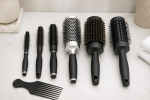
Designs may use heated ceramic-described plates between plastic guard teeth, heated metal teeth inside taller cool tips, a heated barrel under bristle rows, or a combination. Identify every exposed heated face, guard height, tooth row, edge, back-of-head temperature boundary, sensor or control disclosed by the manufacturer, and whether the head contains airflow. Do not infer heat isolation from color or tooth appearance. Read the model and accessory directions before comparing category language. A material, mineral, ion, ceramic, heat-resistant, or professional-style term does not replace the electrical rating, temperature boundary, compatible surface, attachment list, or maintenance instructions.
Match dimensions and controls to the task
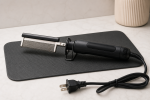
Match head width, heated length, tooth spacing, and guard clearance to section width, strand density, hair length, and access near roots without pressing toward the scalp. Check grip diameter, control reach, wrist angle, cord swivel, stand or resting edge, working clearance, and whether ends can pass through the tooth field without folding or wrapping around the housing. Check the complete working footprint and the space needed for hands, attachments, cord movement, cooling, and storage. A feature is useful only when the operator can reach controls, maintain clearance, and stop without crossing a hot or electrical surface.
Inspect before every use
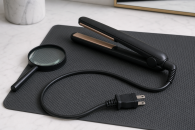
Use bright light and dry hands. Look for cracks, loose parts, damaged coatings, sharp edges, blocked openings, distorted heat surfaces, exposed conductors, frayed insulation, bent plug blades, overheated marks, unusual odor, residue, or moisture. Do not operate equipment whose condition or required protection check is uncertain.
Build a dry, stable setup
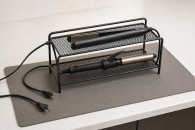
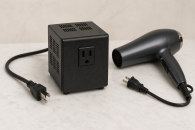
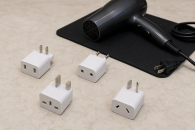
Use dry hands and hair in the exact condition permitted by the instructions, commonly fully dry unless stated otherwise. Detangle first, inspect the cool head and every tooth, clear residue, verify controls and cord, place the tool on an approved heat-safe surface, route the cord, and divide sections below the stated capacity. Keep aerosols, loose hair, clips, and product away from openings and hot surfaces. Keep aerosols, paper, towels, plastics, children, pets, trip hazards, and loose hair away from heated or moving-air zones. Do not use an extension arrangement, adapter, voltage converter, attachment, or counter surface unless the exact directions permit it.
Start conservatively
Begin at the lowest effective permitted temperature. Place a small section into the tooth field without pressing the head into skin, maintain controlled tension outside the hot area, and move continuously at the directed pace. Avoid holding the head at roots, trapping ends, or repeating one point. Stop for snagging, loose or missing guards, unstable heat, hot handle, unusual odor, smoke, sparking, cord heat, or scalp or skin discomfort. Change only one variable at a time. More heat, longer contact, closer distance, wider sections, or repeated passes can increase exposure without proving that the category feature caused a better cosmetic finish.
Control section size and placement
Create sections that fit inside the actual heated face or airflow path without overlap, folded ends, compressed tangles, or blocked intake. Support the section, keep hot parts away from skin, and use a mirror or second viewpoint when blind placement could bring a tool close to ears, neck, scalp, cords, or attachments.
Use timing and distance evidence
Follow the stated contact time, motion, distance, and cooling instructions. A hand count is not a reliable timer, and a dial position is not a universal temperature. Record the actual model setting and stop early for discomfort, smoke, burning odor, snagging, unstable controls, or abnormal sound.
Judge the cooled result
Stop at the planned cooled cosmetic result rather than adding heat for an assumed texture change. Let each section cool before assessing alignment, movement, ends, surface appearance, static, retained shape, snagging, pass count, and comfort. Separate the effects of starting condition, section size, tension, temperature, movement, product, and cooling. One immediate result cannot establish long-term condition, heat exposure, feature output, or material durability. Repeat only after the tool, section, and work surface return to the required state.
Separate feature claims from observations
A smoother look, reduced static, defined wave, shorter recorded time, or comfortable handling is an observation under one setup. It does not prove ion generation, uniform heat, mineral action, fire resistance, strand repair, moisture preservation, or a result for another person, climate, outlet, product stack, or hair history.
Keep water and electricity separated
The CPSC household electrical-products guidance provides specific immersion-protection and electrical context for covered dryers; it does not certify every heated straightening brush or accessory. Follow the exact device instructions, keep it away from water, and never retrieve plugged-in equipment from water.
Use conservative hair and product boundaries
The AAD gentle hair-care guidance supports limiting harsh handling and excessive heat without endorsing this tool category. The FDA hair-products overview provides cosmetics context but does not establish compatibility between a styling product, hair service, attachment, temperature, and heated straightening brush.
Cool, clean, and store correctly
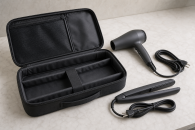
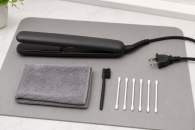
Switch off, unplug, and cool completely on the approved support. Remove shed hair from between teeth without bending guards, wipe heated faces and tooth bases only by the stated method, keep liquid out of the housing and controls, dry all channels, inspect tooth anchoring and coating, and store without crushing the head or tightly wrapping the cord. Never clean a hot or energized tool. Do not scrape coatings, immerse electrical housings, push debris deeper into an intake, or use solvent, bleach, oil, or compressed air unless the directions specify it.
Recognize the replacement or service point
Stop use for a missing, loose, bent, sharp, or melted guard tooth, exposed damaged heater, chipped or lifting surface, cracked head, loose handle, failed control, unstable stand, hot grip or plug, frayed cord, sparking, smoke, burning odor, abnormal cooling, or repeated snagging under permitted use. A reset, tighter grip, hotter setting, taped cord, different outlet, or another cleaning attempt is not evidence that an electrical, heat, surface, coating, or mechanical fault is resolved.
Run a controlled heated straightening brush comparison
Compare brushes with the same fully dry hair context, section dimensions, product load, temperature, placement, tension, pass speed, pass count, cooling interval, room conditions, and stop rule while changing one head or guard feature. Repeat on another routine day before generalizing. Keep the stop rule fixed and do not create a deliberate high-heat, water, overload, or fault challenge to compare consumer equipment.
Use related guides for separate decisions
The flat-iron guide for fine hair helps with reviewing conservative heat and pass control. The flat-iron guide for natural hair covers planning sections, tension, and heat boundaries. Use the beauty-supply checklist for planning the complete tool station. These pages do not replace the exact heated straightening brush electrical, heat, material, surface, or maintenance directions.
Record the final decision
Log heated-surface map, guard and tooth geometry, head dimensions, temperature, hair condition, section size, placement, tension, speed, passes, cooled result, snagging, head and handle heat, cleaning, cord, storage, and retirement date. Keep the item only while the feature disclosure is clear, the working setup remains controllable, every inspection passes, and the observed cosmetic benefit does not require ignoring heat, electrical, surface, hair, or maintenance limits.
Decision table
| Check | Useful evidence | Stop or revise when |
|---|---|---|
| Feature evidence | The exact component, material, coating, or mode is disclosed | A category word replaces model-specific evidence |
| Fit and controls | Dimensions, settings, attachments, and clearance match the task | The setup requires overlap, blocked airflow, or blind control |
| Heat use | The lowest effective permitted setup reaches a defined endpoint | Heat, time, distance, or passes escalate without a clear stop rule |
| Electrical condition | Housing, cord, plug, controls, and protection checks pass | Damage, odor, heat, sparking, smoke, or intermittent operation appears |
| Maintenance | Contact surfaces, vents, filters, mat faces, and attachments are clean and dry | Residue, blocked openings, moisture, damage, or odor remains |
Final checklist
- The exact heated straightening brush feature, heat or use limit, controls, and compatible setup are documented.
- Housing, hot surfaces, attachments, counter area, cord, plug, and openings pass inspection.
- Section size, distance, timing, contact, and cooling endpoint are controlled.
- The item is switched off, unplugged when directed, cooled, cleaned, dried, and stored correctly.
- Damage, overheating, odor, smoke, sparking, unstable controls, or abnormal shutdown ends use.
Choose the complete setup, not the category word. Preserve the operating limits and stop when the evidence no longer supports continued use.