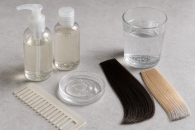
Clarifying Shampoo: Formula, Hair-Type Fit, Frequency, and Buildup Guide

Direct answer: clarifying shampoo is a higher-cleansing option for removing an identified load of oil, styling film, dry-shampoo residue, mineral deposits, or product buildup. It is not automatically the best regular shampoo, and stronger lather does not prove cleaner or healthier hair. Choose it by the residue you need to remove, the product directions, scalp comfort, hair condition, water exposure, and what the hair feels like after a complete rinse.
Use the narrowest effective reset: identify the likely buildup, confirm that the formula is intended for that task, wash with controlled distribution, and reassess before repeating. Frequency should come from evidence on your own scalp and hair rather than a universal weekly schedule.
Clarifying describes a job, not one standard formula
Products sold as clarifying, detox, deep-clean, reset, purifying, chelating, or residue-removing can use different surfactants and supporting ingredients. The front label cannot tell you how aggressively a formula will clean, whether it addresses minerals, or whether it suits color-treated hair. Read the ingredient list, directions, warnings, intended frequency, and color-service notes on the exact product.
The FDA hair-products overview explains that shampoos and related hair products are cosmetics under federal oversight unless their claims or ingredients make them drugs. That regulatory context does not rank clarifying formulas or guarantee suitability for a particular scalp or hair type.
Identify buildup before reaching for a stronger wash
Buildup is an accumulation problem, not every instance of dullness, frizz, flakes, or roughness. Look for a recent change connected to heavy styling products, silicone-rich layering, oils, waxes, dry shampoo, frequent swimming, hard-water exposure, or incomplete rinsing. Compare the scalp, roots, mids, and ends separately because they collect different materials.
Hair that feels coated at the roots but dry at the ends may need targeted cleansing rather than repeated full-length washing. White particles can be dried product, lint, scale, or a scalp concern; appearance alone cannot diagnose the cause. Persistent itching, sores, sudden shedding, or marked scaling needs appropriate professional assessment rather than increasingly strong cosmetic cleansing.
Separate ordinary clarifying from mineral-removal claims
A general cleansing shampoo may remove oil and styling film without being designed to bind calcium, magnesium, copper, or iron. A chelating or swimmer-focused product may make a specific mineral-removal claim, but the exact label still controls use. Do not assume that acidic packaging language, a citrus scent, or the word detox proves chelation.
Record whether the problem followed a pool, well water, hard water, a new styling routine, or a chemical service. That history helps distinguish a cleaning task from a color-correction task. Do not mix vinegar, baking soda, household cleaners, or improvised acids into shampoo to create a stronger treatment.
Match cleansing strength to scalp and hair condition
An oily scalp with resilient, unprocessed hair may tolerate a different wash pattern than a dry or reactive scalp with lightened, relaxed, permed, fragile, or tightly coiled lengths. This does not create a fixed rule by curl pattern or identity. Evaluate current comfort, breakage, porosity, tangling, color service, and the amount of residue that actually needs removal.
The American Academy of Dermatology hair-care guidance recommends gentle handling and limiting practices that increase breakage in vulnerable hair. It does not prescribe a clarifying schedule. Use that evidence as a condition boundary: when hair is already snapping, stretching abnormally, or tangling severely, stronger cleansing is not a repair method.
Read fragrance and allergen boundaries
Clarifying language does not mean hypoallergenic, fragrance-free, or irritation-free. Check fragrance, botanical extracts, colorants, preservatives, and other ingredients that matter to your known history. The FDA cosmetics-allergen page explains that cosmetic allergens can cause reactions and that ingredient review matters; it cannot predict an individual’s response.
Follow any package-directed test or exposure response. Stop and rinse for significant burning, swelling, hives, breathing difficulty, eye exposure, or another concerning reaction, then seek appropriate help. Do not use a stronger shampoo to scrub away a reaction.
Use lather as a distribution aid, not a cleanliness score
Lather changes with surfactant system, product dose, water hardness, oil load, and the amount of water in the hair. A low first lather can mean a heavy soil load, but it can also reflect the formula. Adding more product until foam looks impressive can increase residue, dryness, cost, and rinse time without improving the result.
Fully wet the scalp and hair, use the directed amount, and distribute with the pads of the fingers rather than scratching with nails. Work in sections when density makes the scalp difficult to reach. Add water before adding more shampoo, then rinse until the hair and scalp no longer feel slippery from cleanser.
Target the scalp while protecting vulnerable lengths
Most oil and dry-shampoo residue concentrates near the scalp, while styling film and minerals may extend through the lengths. Apply according to the product directions and identified load. Avoid rough piling, twisting, or aggressive back-and-forth scrubbing. Let directed lather move through lengths during rinsing unless the product specifically calls for broader application.
The dry-shampoo residue guide explains application distance, distribution, visible cast, and buildup checks. Clarifying can remove accumulated residue, but correcting the dose and application pattern prevents the same problem from immediately returning.
Decide whether one wash is enough
After a complete rinse, evaluate the scalp and wet hair before automatically repeating. A second wash may be permitted when the label directs it and the first pass encountered a heavy load. It is not required simply because a stylist, video, or generic routine says to shampoo twice.
Stop repeating when the scalp feels uncomfortable, the hair becomes excessively rough or tangled, color releases unexpectedly, or the residue problem is no longer changing. More passes cannot solve an incompatible coating, severe mineral issue, damaged fiber, or scalp condition.
Condition by zone after the reset
Clarifying can leave lengths with less surface lubrication, especially when they are porous or chemically treated. Use a compatible conditioner at the permitted sites and dose. Concentrate slip where detangling requires it rather than coating the scalp by default. Detangle from ends upward with low tension.
The hair-gloss guide separates cleansing, conditioning, shine, and tonal deposit. A gloss is not a substitute for removing residue, while clarifying is not a substitute for color correction or structural repair.
Protect color and chemical-service records
Some clarifying products can increase visible fade or reveal uneven porosity because they remove surface deposit. Check whether the formula is allowed on color-treated, vivid, plant-colored, lightened, relaxed, or permed hair. Follow any interval around a chemical service rather than inventing one.
Document the service date, formula class, current shade, starting feel, and result after washing. If color releases heavily, hair becomes gummy, or breakage increases, stop and reassess. Do not immediately layer toner, permanent color, remover, protein, oil, and another cleanser in an attempt to correct several observations at once.
Build frequency from a trigger and outcome
A useful frequency plan has two parts: a repeatable trigger and an acceptable result. A trigger might be a verified styling-film load, several dry-shampoo applications, swimming exposure, or loss of normal movement that improves after clarifying. The result should be a comfortable scalp, manageable hair, and reduced residue without escalating dryness, fade, tangling, or breakage.
Start with the product’s maximum-use directions and space washes according to actual need. Someone may need an occasional reset, a limited swimmer routine, or no separate clarifying shampoo at all. “Once a week,” “once a month,” and “every wash” are not universal evidence.
Change the upstream routine when buildup returns
Repeated buildup can come from excessive styling-product dose, incompatible layers, heavy root application, poor distribution, incomplete rinsing, hard-water exposure, or applying more product before the previous layer is removed. Change one factor at a time and keep the ordinary wash routine stable long enough to observe the effect.
The natural hair-care supply guide provides a label-first framework for matching cleanser, conditioner, styling products, tools, and routine. Use it to simplify the routine rather than treating clarifying as permission to keep adding layers.
Clarifying-shampoo decision table
| Question | Useful evidence | Stop or reconsider when |
|---|---|---|
| What needs removal? | Oil, styling film, dry shampoo, pool exposure, or documented minerals | The cause is unknown or symptoms suggest a scalp concern |
| Does the formula fit? | Directions cover the hair condition, color status, and intended task | Claims are vague or the service history conflicts |
| How should it be used? | Directed dose, wetting, sectioning, massage, rinse, and repeat limit | More product or scrubbing is needed to force a result |
| When should it repeat? | A defined buildup trigger returns and prior use was comfortable | Dryness, fade, tangling, irritation, or breakage increases |
Final checklist
- The residue or exposure problem is identified rather than guessed.
- The exact product directions match the intended clarifying or mineral-removal task.
- Scalp comfort, chemical history, color, porosity, tangling, and breakage are considered.
- Dose, distribution, lather, repeat washing, rinsing, and conditioning are controlled.
- Frequency uses an observed trigger and outcome, not a universal calendar rule.
- Persistent symptoms, reactions, or structural damage are not treated as ordinary buildup.
Clarifying shampoo works best as a defined reset, not as a routine badge of cleanliness. Identify the material you need to remove, choose a formula that explicitly fits the task, use the minimum effective wash, and change the upstream product or water routine when buildup repeatedly returns.