Best Dry Shampoo for Dark Hair: Residue Checklist

Quick answer: For dark hair, compare dry shampoos by visible residue, tint transfer, format, scent, and scalp comfort rather than a universal ranking. Apply lightly to dry roots, let the product settle, and blend before adding more. This independent editorial page does not claim first-hand product testing or universal outcomes.
Dry shampoo for dark hair works best when it absorbs oil without leaving a gray cast, chalky roots, or a visible powder line. Choose by residue level, tint depth, scent, hair density, scalp feel, and label directions rather than assuming every white powder or dark-tinted spray will blend the same way.
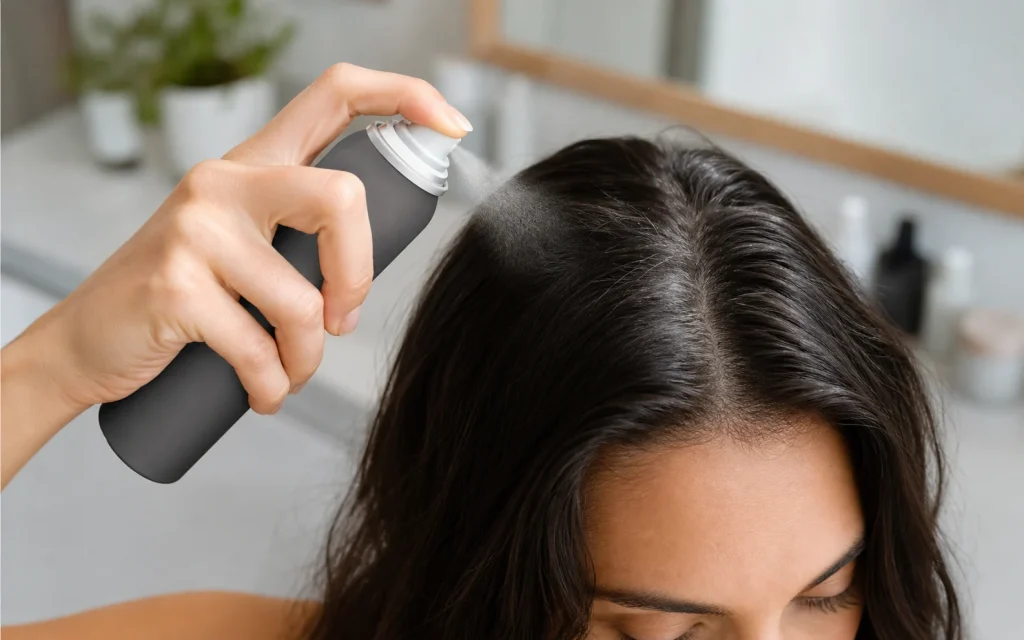
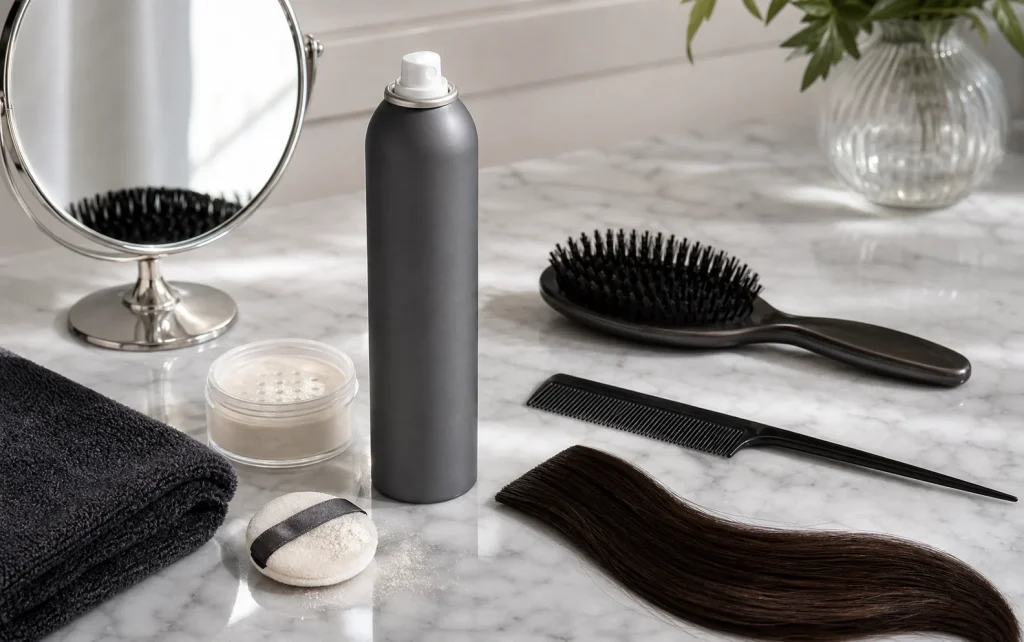
Quick Answer: How to Choose Dry Shampoo for Dark Hair
Choose translucent dry shampoo if you want the least color transfer, tinted dry shampoo if white cast is your main problem, powder if you want controlled root placement, and aerosol spray if you need fast all-over oil absorption. Apply lightly, wait, massage, then brush or shake out before adding more.
| Formula type | Best for | Dark-hair benefit | Watch out for |
|---|---|---|---|
| Translucent aerosol | Fast root refresh | Lower risk of color transfer than dark tint | Can still look gray if over-applied |
| Tinted aerosol | Very dark brown or black roots | Helps reduce visible white residue | Can transfer to fingers, pillowcases, or hats |
| Loose powder | Precise oily-root placement | Lets you control how much product lands on the scalp | Needs careful blending on visible part lines |
| Foam or mist | Light refresh and soft finish | Can feel less chalky than powder-heavy formulas | May not absorb heavy oil as strongly |
| Fragrance-free or low-scent formula | Scent-sensitive routines | Less competing scent near the face | May be harder to find in tinted options |
| Volumizing dry shampoo | Flat roots | Adds lift while reducing oil shine | Can feel gritty if layered too often |
Match the Shade and Finish to Your Hair
Dark hair shows residue more easily than lighter hair, so the finish matters. The right choice depends on whether your hair is soft brown, deep brunette, black, cool-toned, warm-toned, or color-treated.
| Hair color or finish | Better direction | Why it helps | Use note |
|---|---|---|---|
| Soft brown hair | Translucent or light brunette tint | Less likely to make roots look dusty or too dark | Start with less than the label maximum |
| Deep brunette hair | Brunette tint or invisible finish | Balances oil absorption and residue control | Blend along the part line before adding more |
| Black hair | Low-residue or dark tint formula | Reduces visible gray cast at the roots | Check for transfer before wearing light fabric |
| Cool-toned dark hair | Neutral or ash-leaning finish | Avoids warm brown dust at the roots | Test in daylight when possible |
| Warm brunette hair | Neutral brunette tint | Blends better than stark white powder | Use lightly around the hairline |
| Color-treated dark hair | Label-compatible formula | Supports the routine without heavy rubbing | Follow color-care and wash-day needs |
Application Routine for Dark Roots
Dry shampoo looks cleaner on dark hair when it is applied in thin layers. Waiting before blending gives oil-absorbing ingredients time to work and reduces the need for heavy product.
| Step | What to do | Why it matters |
|---|---|---|
| 1. Shake or prep | Follow the label, especially for aerosol or powder products | Helps distribute ingredients evenly |
| 2. Apply to oily zones | Focus on the part, crown, hairline, and nape only if needed | Avoids coating clean lengths |
| 3. Wait before blending | Let the product sit briefly before touching it | Gives oil absorption time to happen |
| 4. Massage lightly | Use fingertips at the root, not nails | Breaks up residue without scraping the scalp |
| 5. Brush or shake out | Remove visible powder before adding more | Prevents chalky buildup |
| 6. Wash when buildup remains | Do not keep layering if roots feel coated | Dry shampoo is not a full replacement for washing |
Buying Checklist
A useful dark-hair dry shampoo should solve oil at the roots without making the hair look dusty, stiff, or mismatched. Check the residue, scent, finish, packaging, and label directions before buying.
| Check | Why it matters | Good sign |
|---|---|---|
| Residue control | Dark hair shows powder quickly | Formula says translucent, invisible, brunette, or dark-hair friendly |
| Tint transfer | Dark tint can rub off | Product blends without staining fingers heavily |
| Oil absorption | Roots need refresh without a coated feel | Hair looks less shiny but still moves |
| Scent | Dry shampoo sits near the face | Scent is wearable for several hours |
| Label directions | Aerosol and powder products should be used as directed | Instructions are clear for distance, amount, and warnings |
| Wash-day fit | Layering too long can feel gritty | Works as a short refresh, not a substitute for cleansing |
Safety, Labels, and Scalp Comfort
The FDA publishes consumer information on cosmetics, cosmetics labeling, and personal care product safety. For dry shampoo, this means following directions, keeping aerosol and powder products away from the eyes, and stopping use if the scalp or skin reacts poorly. The American Academy of Dermatology also recommends gentle hair-care habits that reduce avoidable damage.
- Read and follow label directions, especially for aerosol sprays and powders.
- Keep dry shampoo out of the eyes and avoid inhaling product clouds intentionally.
- Apply only where oil is visible instead of coating the full head.
- Do not use on irritated, broken, or uncomfortable scalp skin.
- Wash when buildup, itching, heavy residue, or dullness remains.
- Stop using a formula that causes burning, rash, swelling, or persistent discomfort.
Best-Fit Scenarios
For oily dark roots
Use a translucent or brunette dry shampoo only at the roots. Wait before blending, then brush out visible powder before deciding whether more product is needed.
For black hair
Choose a low-residue or dark-tinted formula and test for transfer. Apply away from light clothing and blend carefully along the hairline and part.
For fine dark hair
Use a lightweight spray and avoid heavy powder layers. Fine hair can look matte or stiff when too much product collects near the roots.
For thick dark hair
Lift sections and apply product in small zones so it reaches the oily roots. Do not coat only the top layer if the inner layers are oily.
For color-treated brunette hair
Use a formula that fits your color-care routine and avoid aggressive rubbing. A neutral tint may blend better than stark white powder.
Sources
- FDA: Cosmetics
- FDA: Cosmetics labeling
- FDA: Cosmetics safety Q&A on personal care products
- AAD: Healthy hair tips
- FDA: Hair dyes
FAQ
Which dry shampoo is best for dark hair?
The best dry shampoo for dark hair is usually a low-residue translucent formula or a brunette-tinted formula that absorbs oil without leaving a gray cast. The right choice depends on hair depth, transfer tolerance, scent, and scalp feel.
How do I stop dry shampoo from looking white on dark hair?
Apply less product, wait before blending, massage lightly, and brush out visible powder before adding more. If white cast still shows, try a translucent or brunette-tinted formula.
Is tinted dry shampoo better for black hair?
Tinted dry shampoo can be useful for black hair because it reduces visible white residue, but it can transfer. Test it around the hairline and avoid rubbing it onto light fabrics.
Can dry shampoo replace washing hair?
No. Dry shampoo can refresh oily roots between washes, but it does not fully cleanse the scalp or hair. Wash when buildup, itchiness, dullness, or heavy residue remains.
Should dry shampoo go on wet or dry hair?
Dry shampoo is generally intended for dry hair unless the label says otherwise. Follow the product directions and avoid layering it on damp roots unless the formula specifically supports that use.
Related Beauty Supply Reviews guides
Continue with this related guide and this next-step guide. Both links are included for reader navigation, not as proof of a product or outcome claim.