Edge Brushes: Size, Material, Technique, Hair-Type Fit, and Care Guide

Direct answer: choose an edge brush by usable head width, bristle material and stiffness, tip finish, handle control, and any integrated comb or pointed tail. Match one end to a clearly defined hairline task, use only a small compatible amount of styling product, keep pressure light, and clean every bristle base and attachment seam before fully drying the tool. A firmer or smaller brush does not establish better hold, more precise styling, safer skin contact, growth support, or fit for every texture and hairline.
Define the exact edge brush role
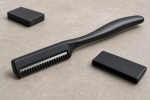
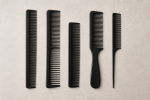
Record brush-head length and width, bristle material, bundle density, stiffness, cut profile, tip feel, row spacing, handle material and texture, comb-tooth spacing, tail shape, seams, adhesive boundaries, heat directions, wet-use directions, and cleaning limits. On a dual-ended tool, inspect and evaluate each end independently. A category name, color, professional label, or similar appearance does not establish material durability, compatibility, hygiene, safe handling, or a universal fit. Inspect the actual item and its current directions before use.
Match the format to one task
Define whether the tool is for distributing a label-compatible edge product, shaping a short perimeter section, smoothing surface strands, separating a small section with a comb, or creating a visible part with a permitted tail. Keep the tool away from extension bonds, clips, lace, wounds, eyes, and any zone where the exact directions do not support contact. Separate that task from nearby cutting, chemical, electrical, scalp, skin, extension, wig, and cleaning decisions. One accessory should not silently inherit the permissions or performance claims of another product.
Inspect materials and contact surfaces
Use bright light to inspect every edge, tip, bristle, tooth, seam, closure, nozzle, handle, seal, coating, and moving part that applies to the item. Look for cracks, roughness, distortion, residue, looseness, corrosion, swelling, trapped moisture, and prior repair. A defect hidden by product or poor lighting remains a defect.
Prepare a controlled work area
Start with a visible, accessible perimeter section and clean dry hands. Confirm the hair and skin state, remove old product when the routine calls for it, support nearby hair without tension, dispense product with a separate clean method, and keep the pointed end capped or directed away from the face whenever it is not in use. Keep sharp tools, powered devices, hot surfaces, liquids, cords, chargers, and unused accessories in separate stable zones. Maintain a clear sightline and a defined place for the item after use so a contaminated, pointed, wet, or loose component is not placed back with clean equipment.
Use the item with visible control
Load only a thin film onto the intended brush surface, place the bristles against hair rather than digging into skin, and use short controlled strokes in one mapped direction. Lift and reposition instead of scrubbing repeatedly. Use the comb or tail only with a clear sightline, then set the tool down with pointed and product-coated ends contained. Change only one variable at a time and stop before discomfort, force, poor visibility, uncertain compatibility, or loss of control. Repetition is not useful evidence when each pass changes the section, surface, fill, or equipment state.
Keep pressure, liquid, and heat conservative
Use only the pressure, liquid contact, temperature, and exposure permitted by the exact material and directions. Do not infer heat resistance from color, water resistance from a smooth surface, chemical resistance from plastic construction, or gentle contact from a soft initial feel.
Separate hair-type fit from marketing
Hair density, length, curl pattern, fragility, service history, extensions, wigs, scalp access, and the current product load can change section and handling needs. These contexts support a smaller controlled setup; they do not prove that one accessory is designed for every person or that a cosmetic result will be consistent.
Record practical edge brush evidence
Record head width, bristle stiffness, tool end, product identity and amount, hair state, section width, stroke direction and count, pressure comfort, dragging, residue, final shape after settling, transfer, cleaning access, and dry time. Compare visible handling rather than assuming that immediate sleekness predicts durability. Use observable facts rather than a rating, popularity signal, or a single immediate impression. Include the exact stop rule so a later comparison does not continue beyond the point at which the item ceased to be predictable.
Clean within the material directions
Remove hair and product from the bristle tips, bundle bases, comb teeth, tail, ferrule, and handle seams using the approved method. Wash only within the material and adhesive directions, keep incompatible solvents and high heat away, rinse when permitted, blot excess water, and dry with open airflow before covered storage. Cleaning and disinfection are different claims and may require different products, contact times, rinsing, and material evidence. Never improvise with boiling water, household solvents, concentrated bleach, abrasive tools, or prolonged soaking.
Verify complete drying
Inspect enclosed seams, bristle or tooth bases, closures, tubes, seals, folds, ferrules, handles, and storage cases as applicable. A dry outer surface does not establish that the interior is dry. Provide open airflow and do not seal a damp item in a pouch, drawer, or covered station.
Set a clear retirement point
Stop use for sharp, split, hardened, splayed, loose, or persistently coated bristles; cracked or rough comb teeth; a pointed end that is bent, sharp, or difficult to control; exposed adhesive; loose ferrule; cracked handle; odor; trapped moisture; or repeated scratching and catching. Lighter pressure, extra product, another rinse, tape, glue, or a different storage position does not restore a damaged contact surface, uncertain material, failed closure, leaking seal, or inaccessible contaminated area.
Run a controlled edge brush comparison
Compare edge brushes on equivalent small perimeter sections with the same hair state, product and dose, support, stroke direction, pressure limit, pass count, settling interval, cleaning method, and stop rule while changing one documented head-size, bristle, comb, or handle feature. Repeat only when the first item and routine have returned to a clean, dry, documented baseline. This is an observational comparison, not proof of laboratory performance, durability, individual response, or a universal cosmetic outcome.
Use related guides for separate decisions
The hair-extension fit guide helps with keeping edge work separate from attachment points. The hair crown extension guide covers reviewing extension construction before perimeter styling. Use the natural hair-care supply guide for checking labels and routine fit across hair contexts. These pages do not replace the exact edge brush directions or its material limits.
Keep source and claim boundaries visible
The AAD gentle hair-care guidance supports conservative handling without endorsing a edge brush. The FDA hair-products overview provides federal cosmetics context, while the FDA cosmetics-allergen guidance supports label review without predicting an individual response. These sources do not compare accessory performance, materials, brands, or service results.
Respond to discomfort or exposure
Stop the routine for pain, burning, swelling, broken skin, eye exposure, breathing difficulty, abnormal shedding, an electrical event, or a material failure. Follow the product directions for immediate action and seek appropriate professional help when the symptom or exposure warrants it instead of using the accessory to diagnose the cause.
Log the final decision
Record the exact edge brush, material, dimensions, task, setup, use count, observed control, cleaning method, dry time, storage, damage, and retirement date. Keep the item only while its role remains defined, its surfaces remain intact, and every relevant part can be cleaned, dried, inspected, and stored predictably.
Decision table
| Check | Useful evidence | Stop or revise when |
|---|---|---|
| Identity | Exact material, format, task, and directions are known | The item or permitted use is uncertain |
| Condition | Contact and moving surfaces are intact and visible | Cracks, roughness, distortion, leaks, or loose parts appear |
| Control | The item remains stable under conservative use | Force, discomfort, poor visibility, or unpredictable movement occurs |
| Cleaning | Every relevant surface is accessible and compatible | Residue, damage, or uncertain disinfectant compatibility remains |
| Drying | Interior and exterior are dry before storage | Droplets, odor, film, or trapped moisture remains |
Final checklist
- The exact edge brush role, material, dimensions, and limits are known.
- All contact, closure, moving, and storage surfaces are inspected.
- Use remains visible, conservative, and limited to one defined task.
- Cleaning follows material directions and every part dries completely.
- Damage, discomfort, uncertain compatibility, residue, odor, or moisture ends use.
An edge brush is a bristle, head-size, section, product-dose, pressure, cleaning, and drying decision. Keep each tool end assigned to a visible task, stop at resistance or discomfort, and retire the tool when smooth contact and complete cleaning are no longer dependable.