Voltage Converters for Hair Tools: Features, Fit, Maintenance, and Safety

Direct answer: use a voltage converter with a hair tool only when the appliance manufacturer and converter manufacturer expressly permit the complete combination. Verify destination voltage and frequency, the tool’s full input range, watts or current, motor and electronic-control design, plug and grounding, converter output, load class, capacity margin, duty cycle, ventilation, and use interval. A plug adapter changes shape only, while a converter changes voltage within stated limits; neither establishes compatibility with a high-load dryer or heated tool.
Define the exact voltage converter considered for a hair tool decision
Record converter type, input and output voltage, frequency behavior, continuous and short-duration capacity, permitted load classes, peak or startup limits, duty cycle, thermal protection disclosure, fuse or breaker, receptacle and plug, grounding, ventilation clearance, indoor dry-location limit, operating orientation, storage directions, and service support. Record the hair tool’s exact nameplate and instructions separately. A category name, professional appearance, metal housing, padding, or similar geometry does not establish a rating, permission, protection, or universal fit. Use the exact current directions and model evidence.
Match one tool and one task
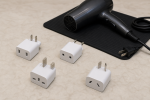
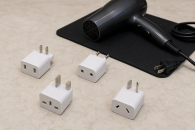
First confirm the destination supply from an authoritative source. Then determine whether the appliance accepts that supply directly. A dual-voltage appliance set exactly as directed may need only a compatible plug-shape adapter, while a single-voltage appliance may remain prohibited even when a converter appears large enough. Do not substitute a transformer, electronic converter, adapter, extension cord, or power strip for another device class. Keep appliance heat, electrical supply, hair handling, cleaning chemistry, storage, and travel questions separate. A nearby accessory cannot change the limits of the hair tool or transfer permission from another model.
Inspect everything while disconnected
Inspect the disconnected converter, appliance, cords, strain reliefs, plugs, receptacle, housing, vents, controls, fuse access, and heat-safe placement area. Keep every component dry and visible, provide the stated clearance on all vented sides, place the converter on its permitted stable surface, and connect no chained adapter, extension, splitter, timer, or unrelated load. Bright light should reveal each relevant housing, edge, support, seam, closure, vent, control, cord, strain relief, plug, contact, and lining. Do not hide damage with tape, product, a cover, or an improvised repair.
Prepare a dry controlled station
Separate outlets and energized equipment from inspection, cooling, cleaning, and packing zones. Keep sinks, product bottles, aerosols, towels, paper, sharp tools, children, pets, and walkways outside the work area. Give every disconnected plug and cooling tool a stable visible position.
Follow the bounded procedure
Follow the exact connection and startup order only after every rating and permission matches. Keep the appliance supervised, keep converter vents open, limit operation to the permitted duty cycle, and stop for unstable motor speed, irregular heat, unexpected shutdown, hot housing beyond directions, buzzing, arcing, odor, smoke, loose fit, or intermittent power. Switch off and disconnect in the stated order. Stop before force, uncertain compatibility, blocked airflow, unstable support, trapped moisture, cord loading, excessive heat, electrical abnormality, or loss of visibility. Repetition does not turn an unsupported setup into an approved one.
Keep normal appliance controls primary
An accessory never replaces switching off, unplugging by the plug, supervision, a suitable dry outlet, appliance cooling, cord inspection, or the manufacturer’s service route. Do not bypass a switch, grounding feature, polarized plug, protective device, guard, vent, stand, or stated cooling interval.
Use observable evidence
Record destination supply and source, appliance input and load, motor or electronic-control disclosure, converter input and output, capacity basis and margin, duty cycle, plug and grounding, connection order, operation interval, ventilation, sound, odor, heat observations, shutdown, cooling, fuse event, inspection, and retirement. Physical fit or one completed use does not establish continuing compatibility. Use model-specific facts rather than popularity, appearance, an immediate result, or an undocumented specification. Include the stop rule and any unresolved question so another person does not repeat an unsafe or inconclusive setup.
Compare voltage converter considered for a hair tool options without a fault challenge
Compare converter documentation while all equipment remains disconnected, using the same verified destination supply, appliance nameplate, load class, required capacity margin, duty cycle, grounding, ventilation map, connection order, inspection list, and stop rule. Do not compare converters by energizing an appliance that lacks explicit compatibility. Return every item to the same cool, dry, disconnected baseline before a second observation. A deliberate overload, heat challenge, drop, water exposure, forced fit, repeated flex, or energized fault simulation is outside a reader comparison.
Read authoritative sources within their limits
The U.S. Consumer Product Safety Commission hair-dryer guidance supports electrical-shock and protective-device context for hand-supported dryers; it does not approve a particular voltage converter considered for a hair tool. The American Academy of Dermatology gentle hair-care guidance supports conservative heat and handling boundaries without comparing accessories. The FDA hair-products overview provides federal cosmetics context and does not establish electrical compatibility, tool performance, travel acceptance, or material durability.
Clean and maintain only as directed
Disconnect every component and allow the appliance and converter to cool. Remove dry loose debris from vents only by the stated method, keep liquid out of openings and contacts, inspect the housing, receptacle, controls, cord, plug, fuse area, and feet, and store without attached loads or tightly wrapped cords. Cleaning is not the same as disinfection, electrical repair, material restoration, or performance validation. Never improvise with immersion, spraying into openings, household solvents, boiling water, abrasive tools, glue, tape, or internal access.
Verify cooling and complete drying
Inspect hidden seams, vents, cord pockets, padding, bristle bases, folds, feet, closures, and contact recesses that apply. A cool handle does not prove that every heated surface is cool, and a dry exterior does not prove that an enclosed area is dry. Do not cover or pack the item until both endpoints are satisfied.
Set a clear retirement or service point
Stop use for missing manufacturer permission; unknown destination supply; mismatched voltage, frequency, load class, grounding, or duty cycle; inadequate capacity; loose receptacle; blocked vent; cracked or discolored housing; bent blades; damaged cord or strain relief; hot connection; buzzing, arcing, odor, smoke, intermittent output, abnormal appliance behavior, repeated shutdown, or failed fuse. A lower setting, lighter pressure, another outlet, a larger adapter, extra padding, tape, glue, or a longer wait cannot restore uncertain electrical integrity, damaged material, failed geometry, or missing manufacturer permission.
Use related guides for separate decisions
The beauty-supply checklist helps with placing the item inside a complete tool routine. The salon equipment guide covers planning dry zones, clearances, storage, and maintenance. Use the flat-iron guide for keeping appliance temperature and hair-section decisions separate. These pages do not replace the exact voltage converter considered for a hair tool directions, ratings, or service limits.
Keep the claim boundary explicit
No universal hair-tool compatibility, voltage stability, overload prevention, fire prevention, burn prevention, damage-free use, destination approval, travel acceptance, performance result, or medical benefit is claimed. The article organizes observable decisions and stop conditions. It does not certify a product, reproduce a laboratory standard, diagnose a fault, or authorize a setup that either manufacturer excludes.
Log the final decision
Record destination supply, appliance model and input, motor and controls, converter model and type, ratings, load margin, duty cycle, plug and grounding, ventilation, connection order, use interval, observations, shutdown, cooling, inspection, service, and retirement. Keep the item only while its role remains defined, the complete setup stays within instructions, and every relevant component can be inspected, cooled, cleaned, dried, stored, and retired predictably.
Decision table
| Check | Useful evidence | Stop or revise when |
|---|---|---|
| Identity | Exact models, materials, ratings, and directions are known | Any component or permission is uncertain |
| Condition | All relevant surfaces, cords, plugs, supports, and closures are intact | Damage, heat marks, residue, looseness, or distortion appears |
| Fit | The one defined tool and task fit without force or blocked clearance | The setup depends on pressure, chaining, crowding, or improvised support |
| Procedure | Switch-off, unplugging, cooling, cleaning, and drying remain visible | A normal appliance control or endpoint would be skipped |
| Retirement | Stop rules and service routes are documented | Continued use depends on repair guesses or missing evidence |
Final checklist
- The exact voltage converter considered for a hair tool, tool, task, and current directions are documented.
- Every applicable material, support, housing, cord, plug, vent, and closure passes inspection.
- The station is dry, stable, visible, disconnected when required, and free of chained devices.
- Switch-off, unplugging, cooling, cleaning, complete drying, and storage remain separate steps.
- Damage, abnormal heat, odor, arcing, moisture, force, or uncertain permission ends use.
A hair-tool voltage converter is a destination-supply, appliance-input, load-class, capacity, duty-cycle, grounding, ventilation, and permission decision. When any part of that chain is unknown, choose a directly compatible appliance instead of improvising a conversion setup.