How to Choose and Use Hair Color Supply Organizers at Home

Direct answer: choose a hair color supply organizer with a stable base, smooth cleanable surfaces, compartments sized for the tools you actually use, and a layout that separates clean supplies from active color and cleanup waste. Use shallow open sections for frequently reached tools, closed dry storage for reserve gloves and wipes, and a separate tray for bowls and brushes during application. Keep every product in its original container with directions and identifying information. Organization should shorten searching and reduce cross-contact; it does not make incompatible products suitable or replace label directions.
The right organizer is a workflow system, not a decorative container. Start by defining clean, active, and used zones, then select the size and material that support those boundaries.
Map the supplies before choosing a format
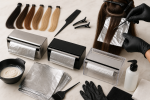
List the items used before, during, and after color: gloves, cape, clips, combs, bowls, brushes, applicator bottles, measuring tools, foil, towels, barrier items, timer, mirror, and cleaning supplies. Note which items are reusable, disposable, wet, sharp, or sensitive to contamination.
Measure tall bottles, long tail combs, wide brushes, stacked foil, and glove boxes. A compartment that fits a bottle loosely may be too shallow to prevent tipping. A deep drawer can hide small tube keys and clips unless it has dividers.
Do not plan storage for every possible tool. Empty capacity invites unrelated cosmetics and household items into the same space. Choose a footprint that supports one clear hair color workflow and leaves the counter usable.
Separate clean, active, and used zones
The clean zone holds unopened or freshly cleaned items: reserve gloves, dry towels, clips, foil, and product directions. The active zone holds the current bowl, brush, timer, and sectioning tools. The used zone receives items that have touched hair, skin, or color until they can be cleaned or discarded.
These zones can be separate trays rather than permanent compartments. Color and rinse water should never travel through the clean drawer to reach a used-tool cup. Place the used zone nearest the cleanup route and the clean zone farthest from the sink splash area.
Use a disposable liner only where it does not cover ventilation, create a slip, or hide spilled product. A liner does not replace cleaning the organizer beneath it.
Choose materials by cleanability
Smooth polypropylene, acrylic, sealed coated metal, and glazed surfaces are usually easier to wipe than unfinished wood, fabric, woven fiber, or deeply textured plastic. Clear walls make small items visible but show staining and scratches. Opaque walls reduce visual clutter but require a deliberate compartment map.
Check manufacturer care directions before using disinfectant, alcohol, peroxide cleaner, or abrasive pads. Some clear plastics cloud or crack, coatings lift at seams, and adhesives loosen when soaked. A removable insert is useful only if liquid cannot collect invisibly beneath it.
Inspect corners, drawer tracks, mesh, handles, and feet. Narrow crevices around active-color storage are difficult to clean. If a material remains stained, tacky, cracked, swollen, rusty, or odorous after appropriate cleaning, replace that part or the organizer.
Balance open access with closed storage
Open cups and divided trays make brushes, clips, and combs easy to reach during a timed application. They also expose items to aerosol, dust, steam, and splashes. Closed drawers protect reserve supplies but are slower to access with gloves.
Keep the active set open only for the current session. Store clean reserves in closed dry compartments. Avoid opening reserve drawers with color-covered gloves; place enough clean gloves and towels in the session zone before mixing.
For vertical organizers, keep heavier bottles low and lightweight disposables high. Do not place glass, large developer containers, or a full bowl where pulling one brush can tip the unit.
Build compartments around tool shape
Store tint brushes bristles up only when they are completely clean and dry; otherwise follow the tool maker’s storage guidance. Long tail combs need height and enough spacing so pointed ends do not project into the hand path. Clips can sit in a shallow bin where all jaws are visible.
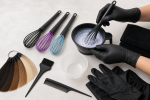
Bowls and applicator bottles belong in a wide washable tray rather than a narrow stationery cup. Keep measuring cylinders and scales protected from impact and separate from general clutter. Foil should remain flat, dry, and away from sharp tools.
The at-home hair color application guide helps identify which tools belong in the active session and which steps must follow the product directions.
Preserve product identity and directions
Keep hair color, developer, lightener, remover, and related products in their original containers. Do not decant them into unlabeled organizer bottles or drawers. Original packaging carries identity, warnings, lot information, storage directions, and use instructions.
Keep cartons or instruction sheets with the matching product until it is finished or discarded. Do not separate two components of a kit into different unlabeled bins. If a container leaks, isolate it according to its directions rather than pouring the contents into a convenient bottle.
The hair color chart guide explains why shade and developer information must remain tied to one manufacturer’s system.
Stage the organizer before mixing
Start with a clean, dry counter. Place the organizer outside the sink splash zone, confirm that drawers open fully, and set out only the products and tools required for the plan. Put the instructions where they remain readable.
Prepare sections, mirror positions, cape, timer, gloves, and cleanup materials first. Keep a clean-hand path to the phone or timer without crossing the bowl. If the organizer rolls, lock the wheels; if it sits on a counter, check that its feet do not slide.
The at-home color planning guide covers timing limits and when a complex correction exceeds a manageable home setup.
Control cross-contact during application
Assign one slot to clean spare tools and another to tools already in use. Never return a coated brush to the clean brush cup. Change gloves before opening drawers, touching reserve towels, or handling the product instructions.
Wipe drips promptly according to product and surface directions. Do not let active mixture dry in drawer tracks or mesh. Keep food, medicines, contact-lens supplies, toothbrushes, and children’s items out of the color workspace.
Do not store mixed color for later. Dispose of remaining mixture and single-use materials as directed. Clean reusable tools before returning them to closed storage.
Clean, dry, and reset after each session
Remove all contents so hidden spills can be found. Discard single-use items and damaged supplies appropriately. Wash reusable tools according to their material, then allow them to dry fully outside closed drawers.
Clean organizer inserts from least contaminated to most contaminated areas. Avoid flooding drawer slides, hollow bases, wheels, or seams. Dry every surface before restocking to limit odor, corrosion, and trapped moisture.
Reset the clean zone only with clean dry items. Record supplies that need replacement on a separate planning list rather than mixing empty packaging with usable tools.
Review the setup periodically
Remove expired, unidentified, leaking, or incompatible items according to their directions and local disposal rules. Confirm that labels remain readable and caps close securely. Do not retain an unknown product because its shade appears familiar.
Check drawer stops, wheels, handles, mesh, dividers, feet, and fasteners. A unit that tips, exposes sharp edges, traps residue, or no longer keeps zones separate has reached its replacement point.
Simplify the layout when several compartments are rarely used. Fewer clearly assigned spaces are easier to clean and audit than many mixed-purpose bins.
Safety boundaries
The U.S. Food and Drug Administration advises reading and following hair-dye directions, completing the directed skin check before every use, wearing gloves, keeping dye away from the eyes, observing processing time, and rinsing the scalp well. Storage order cannot change these requirements.
Keep color supplies away from children and pets and follow each label’s storage conditions. Do not use scalp hair dye on eyebrows or eyelashes. Do not proceed on an irritated or damaged scalp. Seek qualified help when prior color, fragility, movement, vision, or application complexity makes the workflow unsafe.
Common organizer mistakes
- Choosing by appearance before measuring tools.
- Mixing clean reserves with used brushes.
- Storing products in unlabeled bottles.
- Opening clean drawers with coated gloves.
- Putting heavy containers in a high narrow unit.
- Returning damp tools to closed storage.
- Ignoring residue in seams and drawer tracks.
- Keeping unidentified or leaking products.
Final organizer checklist
- Inventory and measure the actual session supplies.
- Define clean, active, and used zones.
- Choose stable, compatible, cleanable materials.
- Keep reserve supplies dry and closed.
- Keep products in original identified containers.
- Stage the session before mixing.
- Clean, dry, inspect, and reset after use.
- Replace unstable, cracked, corroded, or uncleanable storage.
Sources and scope
The FDA hair dyes guidance supports the direction, skin-check, glove, timing, eye-area, rinse, and storage-boundary statements. The FDA cosmetics labeling summary supports keeping identity and required information associated with the cosmetic container. Neither source endorses an organizer design, material, compartment plan, product combination, application formula, or outcome.