Virgin Hair Color Application: Placement, Sectioning, and Upkeep Guide

Direct answer: a virgin hair color application means applying color to hair that has not previously received artificial color. Plan it by confirming that the full canvas is genuinely untreated, dividing the hair into clean working sections, estimating enough product for complete saturation, and following the exact manufacturer’s order for roots, mid-lengths, and ends. Do not assume every product uses the same sequence. Hair density, length, porosity, target shade, and whether the formula lifts or only deposits all change the practical plan.
The most useful preparation is a representative strand test completed with the exact product and label timing. View the dried result in daylight and indoor light. It can reveal whether the target is realistic on the current depth, whether the ends absorb more pigment, and whether the planned placement needs adjustment. It cannot guarantee an identical whole-head result.
Confirm what virgin hair means for this application
Virgin hair is untreated by permanent, demi-permanent, semi-permanent, direct, metallic, henna, lightener, or other artificial color. Natural regrowth can be virgin even when the lengths are colored, but that is a regrowth or correction plan rather than a full virgin application. Temporary color residue, mineral buildup, styling coatings, and unknown prior services can also change how a formula spreads or develops.
Assess the hair in dry, neutral lighting. Record natural level, visible warmth, gray distribution, density, strand thickness, length, and signs of dryness or breakage. Check the underside and ends instead of relying only on the crown. If any zone has artificial pigment, highlights, bands, or uncertain history, map it separately and use the product’s guidance for previously colored hair.
For a broad comparison of base, shade, and care decisions, see the red hair color ideas guide. If the goal involves a more complex multi-tone effect, the oil slick hair color guide shows why placement and starting canvas must be planned together.
Choose the result and formula route before sectioning
Define the target in practical terms: darker deposit, same-depth tonal change, gray blending or coverage, modest lift on natural pigment, or a substantially lighter result. Product categories are not interchangeable. A direct color may add visible pigment without lifting natural depth. A permanent oxidative system may alter natural pigment and create ongoing regrowth. A major lightening goal can exceed a reasonable home-use boundary, especially on long, dense, fragile, or highly textured hair.
Use the manufacturer’s shade chart and starting-level guidance for the exact system. Shade numbers, developer strengths, mixing ratios, and processing times are not universal. Never substitute a stronger developer or combine unrelated products unless the label expressly permits it. The at-home hair color selection guide provides additional context for comparing color formats without assuming one format fits every target.
A strand test should use hair that represents the planned area. On very dense or varied hair, test more than one location. Note the formula, strand location, start time, rinse time, dried shade, texture, and whether the section reached even saturation. If the result is too dark, too warm, too cool, or uneven, revise the product or placement plan rather than extending the time beyond the label.
Build a clean sectioning map
Four quadrants are a common starting map: divide from the center forehead to the nape, then from ear to ear across the crown. Clip each quadrant securely without pulling. Very dense, coily, or long hair may need smaller subsections inside each quadrant so the product can reach both sides of every strand. The correct subsection is narrow enough to saturate evenly without repeated brushing.
Choose a start point before mixing. Many oxidative color labels specify a particular order because scalp warmth and exposure time can affect development. Some virgin-application directions place color on mid-lengths and ends before the root area; others specify a different sequence based on the shade, formula, or gray-coverage goal. Follow the current package directions rather than using a universal roots-first or ends-first rule.
Keep the map simple enough to repeat:
- Quadrants: establish four stable working areas.
- Subsections: use consistent slices suited to density and texture.
- Zone order: record the label-directed order for roots, mid-lengths, and ends.
- Special areas: note resistant gray, finer hairline sections, or porous ends without inventing extra timing.
- Completion check: confirm saturation and clean separation before moving to the next quadrant.
Estimate supplies and product quantity
Running short can create patchy coverage and inconsistent exposure time. Check the package coverage estimate, then account for length, density, strand thickness, and the amount needed to coat both sides of each subsection. Long or dense hair often requires more than one package. Buy all required units from the same exact shade and system when possible, and inspect package integrity and expiration information before starting.
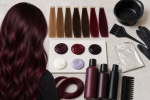
Prepare only label-approved tools. Typical supplies may include nonmetallic bowls if required, tint brushes, sectioning clips, gloves, a tail comb, a timer, protective cape or towel, petroleum-free barrier material only when permitted, and clean water access for rinsing. Do not improvise a storage container for mixed oxidative color. Mix only when the hair, workspace, and application order are ready.
Protect floors, counters, clothing, and nearby porous surfaces. Keep children and pets away from the workspace. Ensure adequate ventilation according to label directions, and keep every component in its original container until use so warnings and ingredient information remain available.
Apply for even saturation without unnecessary overlap
Work methodically through the planned order. Use the brush or applicator to cover both sides of each subsection, then check with gloved fingers only as the label permits. Saturation means uniform coverage, not excessive dripping. Avoid dragging color repeatedly across already coated hair because extra mechanical stress does not improve a correctly saturated section.
Start the timer exactly as directed by the manufacturer. Do not extend processing to compensate for slow application. If the full head cannot be completed within a reasonable application window, use smaller planned areas or seek professional assistance. Keep color away from the eyes, and never use scalp hair dye on eyebrows or eyelashes.
The U.S. Food and Drug Administration hair dye guidance advises following package directions, wearing gloves, completing the directed skin test before every use, observing the stated time, and rinsing the scalp well. A preliminary skin test does not guarantee that a reaction will not occur. Do not apply color to an irritated, scratched, or sunburned scalp. Stop use if a reaction occurs and obtain appropriate professional guidance; this article does not diagnose reactions or provide medical care.
Rinse, assess, and record the result
Follow the label’s rinse and after-color steps. Do not add an unrelated shampoo, mask, acidifier, or heat step unless the manufacturer directs it. Rinse until the product instructions are satisfied, handle wet hair gently, and allow the hair to dry before judging the final depth and tone.
Assess the result by zone in consistent lighting. Look for root-to-end balance, missed subsections, overly dark ends, visible warmth, and texture changes. Do not immediately apply another oxidative service to correct a disappointing result. Preserve the product information and your timing notes, then seek qualified help for strong banding, scalp discomfort, unexpected breakage, or a result requiring major correction.
Plan upkeep before the first application
A permanent virgin application creates a future regrowth boundary. Record the initial date, formula, shade, ratio, processing sequence, and dried result. At the next service, the new growth and previously colored lengths are different canvases. Repeating permanent color through the full length can deepen pigment or increase avoidable stress, so use the exact brand’s regrowth and refresh directions.
The American Academy of Dermatology coloring guidance recommends conservative shade changes for home coloring and notes that greater lightening generally requires more peroxide and can increase damage. It also recommends spacing chemical services and using care practices that reduce dryness and brittleness. That supports a cautious upkeep plan, not a promise of damage-free color.
- Use cleansing and conditioning products suitable for colored hair.
- Limit unnecessary high heat and protect hair during heat styling.
- Reduce prolonged sun exposure that can contribute to fading and dryness.
- Track how the tone changes before choosing a color-depositing refresh.
- Strand-test any future refresh on porous ends.
- Keep regrowth application separate from length maintenance unless the label directs overlap.
Virgin hair color application checklist
- Verify that the entire planned canvas is genuinely untreated.
- Define whether the target requires deposit, gray coverage, lift, or professional lightening.
- Read the complete package and confirm the product is intended for the goal.
- Complete the directed skin test and a representative strand test.
- Divide the hair into stable quadrants and density-appropriate subsections.
- Estimate enough product for full saturation before mixing.
- Record the label-directed zone order and timing.
- Protect the workspace and keep warnings and ingredient information available.
- Apply systematically, avoid unnecessary overlap, and do not exceed stated time.
- Document the dried result and plan future regrowth separately from colored lengths.
A successful plan is not defined by speed or by copying a generic technique. It connects a verified untreated canvas, realistic target, exact product instructions, clean sectioning, sufficient product, representative tests, and a future regrowth strategy. When the history is uncertain or the target requires substantial lift, correction, or work on fragile hair, a qualified color professional is the safer planning route.
Sources and scope
The FDA source supports label-following, skin-test, glove, timing, eye-area, scalp-condition, and reaction boundaries. The AAD source supports conservative shade-change planning, service spacing, and care intended to reduce avoidable damage. Neither source provides a universal sectioning pattern, formula, processing time, or promise of one cosmetic outcome. Always use the current directions supplied with the exact product.