Shadow Roots: Placement, Sectioning, and Upkeep Guide

Direct answer: a shadow root is an intentionally deeper root zone used to add contrast, soften the start of lighter lengths, or make regrowth part of the design. Plan it by choosing the visible depth difference, mapping how far the shadow extends in each area, testing the depositing formula on representative roots and lightened strands, and controlling the transition edge. A shadow root should be a measured color zone, not an improvised dark band.
This page focuses on deliberate root depth and width. A root melt usually emphasizes a longer, more seamless gradient between multiple zones. A shadow root can remain shorter and more visibly contrasted. Defining that distinction before sectioning prevents two pages and two services from collapsing into the same vague technique.
Choose the purpose of the shadow before the shade
Decide what the deeper root must accomplish. It may echo the natural base, reduce a harsh highlight line, create dimensional contrast, connect gray or natural regrowth to colored lengths, or establish a fashion-color anchor. Each purpose changes the required width and tonal relationship.
Describe the target with four variables:
- Depth: how much darker the shadow appears than the mids.
- Width: how far the root zone extends at the hairline, part, sides, and crown.
- Tone: neutral, warm, cool, or another label-supported direction.
- Edge: crisp, softly feathered, or diffused into selected highlights.
The red hair color ideas guide provides a broader example of how base depth, tonal direction, and placement work together before a color formula is selected.
Map the root zone in the normal part
Examine dry hair in the part and styles normally worn. Mark the front hairline, temples, highest point of the head, crown, nape, and any alternate part. Note cowlicks, recession, density changes, short perimeter hairs, and sections that expose more root when tied back.
Choose a measurement for each area instead of using one arbitrary width everywhere. A narrow front shadow can preserve brightness around the face while a slightly deeper crown zone creates stronger dimension. A wide shadow at the part can look like unresolved regrowth if it does not connect with the haircut and highlight pattern.
Photograph the map from the front, both sides, crown, and back. Record the intended boundary on a simple head diagram so future upkeep can follow the same design.
Assess roots, old color, and pale lengths separately
Record natural depth, gray distribution, previous root color, highlight placement, porous lightened sections, bands, and fragile areas. The natural root may absorb deposit differently from a previously colored band. Pale porous strands can become darker or cooler faster than stronger hair.
A shadow-root service is often deposit-led, but product capabilities vary. Do not assume it can remove old dark color, lighten resistant roots, or correct severe banding. If the canvas requires substantial lift, removal of artificial pigment, or correction beside fragile blonde, use a qualified colorist.
The gray hair transition guide helps frame natural depth, gray distribution, and the decision to blend or preserve visible regrowth without assuming one coverage goal.
Select depth by dry strand-test evidence
Test the exact depositing plan on a representative natural root, a previously colored root band, a highlighted section at the proposed blend edge, and a porous end only if that end could receive product. Reproduce the labeled formula, ratio, section size, saturation, timing, rinse, and after-color steps.
Dry the tests fully. Compare depth, undertone, coverage transparency, edge softness, shine, and texture. A wet swatch can appear darker, making an already deep formula look deceptively suitable. The test may support a lighter root shade, a narrower zone, a shorter labeled exposure, or a professional correction instead.
Testing one hidden strand cannot prove whole-head uniformity. Use multiple samples when roots, bands, gray, and highlights have different histories.
Build a repeatable sectioning map
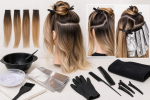
Start with clean quadrants or another controlled pattern supported by the application plan. Within each quadrant, use subsections thin enough for even deposit and clear visibility of the boundary. Keep the map consistent from one side to the other while allowing for part direction and density.
At the front hairline, use smaller subsections and a deliberately chosen root width. Around the crown, follow the natural fall so the shadow does not form a circular dark cap. At the nape, account for shorter hair and reduced visibility. Clip completed zones securely without dragging color onto lengths intended to remain lighter.
Record section width, product placement order, root measurement, and whether the edge is painted straight, feathered, or staggered through selected strands.
Control the transition edge
The edge determines whether the shadow looks intentional. A hard horizontal line creates strong contrast and demands precise symmetry. A feathered edge uses controlled, shallow strokes to vary the boundary. A staggered edge may extend slightly farther on selected lowlights or interior strands while preserving brighter surface pieces.
Do not repeatedly comb dark deposit through pale lengths to force softness. That can spread pigment beyond the map and create muddy or uneven ends. Use only the application method and tools supported by the product instructions, and keep each subsection visible as the edge is built.
Wipe tools and gloves when needed so accidental transfer does not enlarge the shadow zone.
Match undertone without erasing dimension
A shadow usually relates to the natural base or to a deliberate deeper tone in the lengths. It does not have to be identical. A neutral-cool shadow beside very warm blonde can appear flat or smoky; a strongly warm shadow can intensify brassiness. Compare the dried test beside the actual mids and ends under neutral light.
Dimension depends on the difference between zones. If the root formula is too close to the mids, the shadow may disappear. If it is too dark, the result can look disconnected. Evaluate depth difference and tonal harmony as separate decisions.
Prepare product and timing by zone
Estimate product from density, root width, and subsection count. Prepare gloves, clips, timer, cape, towels, nonmetallic bowl and brush when required, and enough color to saturate the mapped root zone consistently. Keep every package and ingredient list available.
Plan an application order that keeps the first and last sections inside the labeled timing window. Dense hair, multiple formulas, gray variation, or a very detailed edge may take longer than one person can apply evenly. Do not compensate with unapproved heat, a stronger developer, or extra processing time.
Protect clothing and surfaces, maintain suitable ventilation, and keep color away from the eyes and off areas outside the mapped root zone.
Follow hair-color safety boundaries
The U.S. Food and Drug Administration hair dye guidance advises following package directions, wearing gloves, completing directed preliminary tests, observing stated time, keeping dye away from the eyes, and rinsing the scalp well. It warns against using scalp hair dye on eyebrows or eyelashes.
Do not color an irritated, scratched, or sunburned scalp. Stop use if a reaction occurs and obtain appropriate professional guidance. This article does not diagnose reactions or provide medical care.
The American Academy of Dermatology coloring guidance supports cautious shade changes and attention to chemical-service stress. These sources do not provide one shadow-root formula, depth, zone width, timing, or outcome.
Evaluate placement before changing tone
Rinse and complete all after-color steps as directed, then dry the hair. View the normal part, alternate part if used, hairline, crown, sides, nape, and tied-back styles. First check root width, left-right visual balance, crown shape, and edge consistency. Then assess depth and undertone.
A suitable tone can still be placed too widely. A well-mapped shadow can still dry too dark. Separate these findings so a placement issue is not mistaken for a tonal issue. Avoid an immediate second chemical service when the hair or scalp is not suitable.
Plan regrowth and tonal fade as separate tasks
A shadow root can make new growth less abrupt, but it does not remove maintenance. Natural roots will continue to extend beyond the deposited zone, while the shadow and lightened lengths may fade at different rates. Track the design in comparable lighting rather than following one universal calendar.
Save the root measurements, formula, ratio, subsection plan, application order, timing, and dried photos. At the next service, decide whether the task is to rebuild the root zone, refresh deposit, adjust the edge, or leave the lengths unchanged. The hair gloss guide helps separate a deposit-only tonal refresh from new lightening.
- Keep future color inside the current map unless the design intentionally changes.
- Protect pale lengths from repeated dark overlap.
- Use gentle cleansing and conditioning for color-processed hair.
- Limit avoidable high heat and prolonged sun exposure.
- Test porous sections before any broad tonal refresh.
Shadow-root planning checklist
- State whether the goal is contrast, softer highlight starts, regrowth integration, or another defined purpose.
- Choose target depth, undertone, root width, and edge type.
- Map hairline, part, crown, sides, and nape in the normal fall.
- Assess natural roots, gray, old bands, highlights, porosity, and fragility.
- Test representative zones and judge every sample fully dry.
- Use controlled subsections and record the root measurement.
- Keep the transition edge visible while applying deposit.
- Follow exact label directions for tests, ratio, timing, rinsing, and eye-area limits.
- Evaluate placement, depth, undertone, and condition separately.
- Reuse the map for regrowth and tonal upkeep.
A shadow root works when the dark zone has a clear purpose, measured width, tested depth, and repeatable boundary. The design should remain recognizable through the normal part and crown while preserving the lighter lengths that create its contrast.
Sources and scope
The FDA source supports label-following, preliminary-test, glove, timing, eye-area, scalp-condition, rinsing, and reaction boundaries. The AAD source supports conservative color-change and chemical-service decisions. Neither establishes a universal shadow-root technique or cosmetic result. Follow the current directions for every exact product.