Red Hair Color Correctors: Formula, Directions, and Compatibility Guide

Direct answer: use a red hair color corrector only when the visible problem and the exact color system call for red pigment. Red most directly opposes a green cast in a simplified color-wheel model and can restore missing warmth before some darker color services, but it is not a universal solution for blue, violet, orange, yellow, or every dull result. Identify the formula class, target level, maximum amount, approved activator, timing, and compatibility rules; then complete every directed skin test and a fully dried representative strand test.
A color-wheel relationship identifies a direction, not a recipe. Existing artificial color, starting depth, porosity, gray distribution, previous lightening, shade background, and pigment concentration determine whether red restores balance or becomes visibly copper, scarlet, dark, or uneven. The safest decision is the smallest line-approved correction supported by test strands.
Confirm that red is the missing pigment
Inspect clean, dry hair in neutral light. Map roots, midlengths, ends, highlights, gray, banding, and porous zones separately. Decide whether the unwanted cast is green, blue-green, blue, violet, yellow, orange, or simply less warm than expected.
Red relates most directly to green. A blue-green cast may require a different line-specific balance, and pure blue is not automatically corrected by adding more red. If the hair is yellow, orange, or red-orange, a red additive can intensify warmth instead of correcting it. Do not choose red only because the result is described as ashy, muddy, or dull.
Identify why the cast appeared. Common possibilities include excessive ash pigment, direct-dye residue, mineral discoloration, incompatible layers of artificial color, uneven fading, or missing underlying warmth after lightening. A red corrector deposits pigment. It does not remove buildup, lift a dark band, reverse chemical damage, or establish that another color service is suitable.
Separate correction, filling, and deliberate red color
A corrective red additive is intended to balance an unwanted green influence within a compatible formula. A warm filler replaces selected underlying pigment before an approved darker-color process. A red fashion shade makes red visible by design. These goals may use different products, amounts, timing, and application sequences.
The red hair dye shade and base guide explains how starting level and undertone shape a deliberately red result. That information is useful for predicting visible warmth, but a fashion-color formula should not be copied as a correction recipe.
If a technical chart calls for warm red, red-orange, copper, gold, or a combination at a particular target depth, follow that chart. Do not substitute pure red because it appears to be the strongest warm pigment. Filling too red can distort the final shade or remain visible as the top color fades.
Identify the red product class
Read the label, directions, technical chart, and component list. Determine whether the red product is a concentrated mix tone, oxidative shade, direct pigment, warm filler, toner, conditioner, mask, or shampoo. Similar color in a bowl does not mean the products share chemistry or mixing rules.
A direct red dye may be ready to use, while an oxidative additive may belong only in a named color line with a specific activator. A maintenance mask may deposit a small amount during conditioning but cannot be assumed to perform a measured corrective service. Never combine unrelated products solely because their visible colors look compatible.
The red dye formula comparison guide can help distinguish direct, semi-permanent, demi-permanent, and permanent color goals. Use the exact manufacturer’s directions as the authority for the chosen product.
Match level, porosity, and previous color
Record the current level, intended level, artificial-color history, percentage and distribution of gray, lightened sections, and porosity by zone. A small red adjustment in a brunette formula has a different visual effect from the same concentration on pale or highly porous hair.
Light or porous ends can hold red more strongly than resistant roots. Deep artificial color may prevent a translucent red maintenance product from changing the dominant cast. Gray hair can reflect added warmth differently from pigmented hair. One full-head formula is not supported when materially different zones produce different dry strand results.
If the hair is gummy, breaking, unusually rough, or unable to tolerate another directed service, stop. Added pigment does not repair structural damage. Color correction can also require a licensed professional when the history, chemistry, or zone pattern cannot be established reliably.
Keep the formula inside one compatible system
Confirm that the red corrector is approved for the manufacturer, product line, formula class, base shade, target level, and activator. Check whether it may be used alone, must be mixed into a shade, or may be diluted only with a named clear or neutral product. Observe maximum amounts and prohibited combinations.
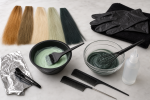
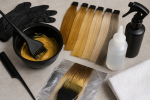
Do not infer ingredients from the editorial image. Water, conditioner, shampoo, developer, bleach, powder, food coloring, paint, or household pigment does not belong in a formula unless the exact product directions name it. A blank bottle or mixing bowl does not establish a mixing method.
Developer is not a neutral diluent. Changing its strength or ratio can change an oxidative system and cannot be used as a shortcut for stronger correction. Do not add red pigment to lightener unless the manufacturer expressly provides that use.
Measure red pigment and activator precisely
Write down every component and unit before mixing: base shade or toner, red corrector, approved clear or neutral if applicable, and activator. Measure by weight, volume, approved drops, or the method in the technical directions. Do not estimate concentration from the mixture’s visible color.
Determine whether the corrector counts toward the color portion used to calculate activator. If the directions combine base shade plus additive before applying the ratio, calculate from that total. If the chart supplies a fixed amount or different method, follow it. There is no universal red-corrector dose across lines and levels.
Record the complete formula. Notes such as “a little red” cannot reproduce a strand result and are especially unreliable with concentrated additives.
Use separate safety and color tests
Follow every preliminary skin-test instruction provided with the dye. The U.S. Food and Drug Administration’s hair-dye guidance advises following package directions, wearing gloves, observing timing, rinsing thoroughly, avoiding an irritated or damaged scalp, and completing the directed preliminary test before each use.
A skin test does not predict the color result. For the strand test, select hidden strands that represent the green cast, resistant roots, porous ends, gray, highlights, and any previous-color band. Measure the exact formula, saturate evenly, use the directed timing, rinse as instructed, and dry the strand completely.
Evaluate remaining green, excess red or copper, depth shift, darkening, gray appearance, evenness, and hair feel in neutral light. Wet hair can appear darker and cooler. Repeat only within product directions when the first test does not answer the compatibility question.
Plan application by zone
Prepare gloves, accurate measuring tools, a nonmetallic bowl or applicator when directed, clips, timer, protective covering, and enough product for even saturation. Mix in the specified order so concentrated pigment is distributed uniformly.
Apply to dry, damp, washed, or unwashed hair only as directed. Use thin subsections and the sequence supported by strand tests. Porous ends may need less exposure or a separate approved formula, while resistant areas may need the full directed process. Avoid unnecessary overlap on previously processed hair.
Start timing at the point named in the instructions. Do not extend processing, add heat, increase activator strength, or add more red during application to force a visible change. Keep scalp hair dye away from eyelashes and eyebrows.
Preserve intentional red placement
Not every red area is an error. Red panels, copper ribbons, burgundy depth, and warm face-framing pieces may be deliberate parts of a color design. The red hair color placement guide helps distinguish intentional warm placement from an unwanted cast.
When only one zone is green, target that zone within product directions instead of warming the entire head. A full-head red deposit can alter unaffected highlights, gray, neutral roots, or carefully placed cool sections.
Know the stop conditions
Stop before mixing if the undertone diagnosis is unclear; the product identity, line compatibility, level range, maximum amount, activator, or timing is missing; previous chemistry is uncertain; labels are incomplete; the scalp is irritated or damaged; or representative strands do not support the plan.
During use, stop and rinse as directed if there is intense burning, swelling, blistering, breathing difficulty, spreading rash, eye exposure, or another concerning reaction. Seek appropriate medical help for a serious reaction. The American Academy of Dermatology’s hair coloring and chemical-service guidance supports manufacturer testing and conservative changes rather than stacking stressful services.
Rinse, assess, and document
Rinse with the method and water temperature specified for the formula, keeping runoff away from the eyes. Use only the directed cleanser, conditioner, or finishing step. Assess the result only after the hair is fully dry in consistent neutral light.
Document the line, base formula, red amount, activator, starting cast by zone, application sequence, timing, and dry result. Track how porous zones retain and release warmth. Never store mixed oxidative color for later use.
Red corrector checklist
- The visible problem is green or missing warmth that the exact technical chart assigns to red.
- Correction, filling, and deliberate red fashion color are separated.
- The product class, line, level range, maximum amount, activator, and timing are known.
- Roots, artificial-color bands, gray, highlights, and porous ends are mapped.
- No unrelated pigment, household material, or unapproved diluent is added.
- Directed skin testing and fully dried representative strand tests are complete.
- Excess red, copper, darkening, unevenness, damage, scalp, and reaction stop conditions are defined.
A useful red correction starts with a confirmed green target or a line-specified need for warmth. When the diagnosis, chemistry, amount, or strand evidence remains uncertain, delay the service instead of adding more red.