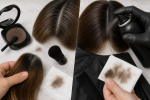
Hair Dye Stain Prevention: Skin, Fabric, and Surface Protection

Direct answer: prevent hair-dye stains by controlling the product before it is opened: verify the applicator and rinse plan, clear the work zone, protect compatible fabric and surfaces, wear the directed gloves, section the hair, and keep damp cleanup materials within reach. During application, keep color inside the intended hair zone and wipe fresh accidental contact according to the product and surface directions. Do not use household cleaners, bleach, solvents, or abrasive scrubbing on skin or hair.
Stain prevention is easier and safer than improvised removal. The useful plan separates skin, clothing, towels, floors, counters, fixtures, and tools because each material has different compatibility limits.
Read the package before preparing the room
Identify the formula class, shade depth, applicator, mixing method, glove requirement, processing time, rinse sequence, and disposal directions. A thin liquid in a nozzle bottle creates a different movement risk from a dense cream in a bowl. A direct blue, green, red, or black pigment can create a different visible stain problem from a pale tonal product.
The FDA hair-dye guidance emphasizes following directions, wearing gloves, timing the service, rinsing thoroughly, and avoiding use on an irritated or damaged scalp. It does not endorse a universal stain remover.
Create a clean application boundary
Remove jewelry, decorative towels, bath mats, loose clothing, paper products, and unrelated tools from the work zone. Keep food, drinks, medications, contact lenses, toothbrushes, and children’s items elsewhere. Close nearby drawers and cabinets before gloves become contaminated.
Choose a stable, well-lit area with enough room to move the applicator without crossing over protected and unprotected surfaces. Do not work above carpet, upholstery, unfinished wood, porous stone, or another hard-to-clean material when a safer location is available.
Protect surfaces with compatible barriers
Use a clean barrier that will not dissolve, leak, slide, or react with the product. Cover the counter and the floor area where drips are reasonably possible, while keeping walkways clear. A barrier should contain accidental color, not create a trip hazard or hide a spill until it spreads.
Do not assume every plastic sheet, tape, or cleaning product is suitable for every countertop, floor, tub, or fixture. Follow the surface manufacturer’s care information and test any permitted cleanup method in an inconspicuous place.
Choose clothing and towels for transfer control
Wear an old, dark, front-opening garment or a compatible color cape that can be removed without pulling wet color over the face. Keep sleeves, drawstrings, collars, and long accessories outside the application area. Use towels whose possible discoloration is acceptable.
Prepare separate towels for neck protection, hand drying, and the final rinse. Do not move a color-contaminated towel onto an unprotected counter or combine it immediately with ordinary laundry.
Use gloves as directed and change them when needed
Gloves reduce direct hand contact and keep pigment from moving from fingers to taps, phones, door handles, and clothing. Use the type and fit permitted by the package. Replace torn gloves and change contaminated gloves before touching clean objects.
Do not use the same gloves to adjust contact lenses, handle food, touch a child’s items, or clean the face. Prepare a hands-free timer and keep the package visible so contaminated hands do not need to search through drawers.
Protect the skin without inventing a barrier recipe
Keep color within the hair application zone and away from the eyes, eyebrows, eyelashes, lips, and other prohibited sites. Some product directions may permit a compatible barrier around, but not on, the hairline. Follow only the exact package; do not coat the scalp or hairline with an improvised household product.
A barrier is not permission for careless placement. Apply narrow sections and clean the boundary as work progresses. Stop for intense or persistent burning, swelling, blistering, breathing difficulty, or another concerning reaction and follow package and professional guidance.
Section hair before mixing
Prepare clips, partings, mirrors, applicator, bowl or bottle, timer, and rinse route first. Clean sections reduce the chance of swinging coated hair onto the face, shoulders, wall, or clothing. For long or dense hair, plan where completed sections will rest without touching unprotected material.
Do not use metal tools unless the exact product permits them. Keep tools dedicated to cosmetic use and never use food containers, drink bottles, or unlabeled household vessels for mixing or storage.
Control bottle, brush, and comb movement
For a nozzle bottle, direct the tip toward the intended root or strand zone and use controlled pressure. Do not point it toward the eyes or squeeze into the air. For a bowl-and-brush system, load only enough product to avoid dripping and wipe excess against the bowl as permitted.
Set used tools inside the protected work area. Do not place a coated brush across a sink edge or carry an open bowl through the room. Keep the container stable and close it when the directions allow.
Respond to fresh accidental contact by material
For skin contact outside the intended zone, follow the hair-color package directions and rinse or wipe gently as directed. Do not scrub aggressively or apply bleach, solvent, household disinfectant, laundry treatment, or abrasive cleaner to skin. For eye exposure, follow the package response immediately and seek appropriate help when directed.
For fabric or a hard surface, contain the spot without spreading it and follow that material’s care instructions. Blotting, rinsing, or washing may differ by material. More chemical strength is not automatically safer or more effective.
Keep vivid and dark pigments under tighter control
The blue hair dye guide and green hair dye guide explain why starting base, pigment family, saturation, fade, and transfer belong in one plan. Dark and vivid direct pigments can remain visible on porous hair and household materials after the brightest hair color fades.
Use gloves, smaller sections, controlled saturation, protected rinsing, and dedicated dark towels. Do not interpret the word “temporary” or “semi-permanent” as stain-free.
Plan the rinse before the timer starts
Clear the route to the sink or shower, place permitted rinse products within reach, and protect nearby textiles. Keep wet colored hair contained. Follow the package’s water temperature, rinse duration, shampoo, conditioner, and post-color directions.
Rinse in a fixture whose care instructions are compatible with the product. Watch for splashes at the curtain, grout, sealant, taps, wall, and floor. Clean fresh residue using permitted methods rather than waiting for it to dry.
Reduce wet-hair transfer after rinsing
Even when rinse water looks clearer, pigment can transfer from damp hair to towels, collars, pillows, hats, furniture, and car headrests. Use a dedicated towel, dry the hair as directed, and protect light textiles while transfer remains possible. Avoid sleeping with wet freshly colored hair.
The demi-permanent color guide separates formula and fade from stain behavior. Product category does not replace a transfer check.
Clean tools without cross-contamination
Discard leftover mixed product as directed. Never seal an activated mixture for later use unless the manufacturer explicitly provides that system. Rinse or clean compatible reusable tools according to the product instructions, and discard single-use items appropriately.
Keep color tools separate from food preparation, household cleaning, and personal-care tools used around the eyes or mouth. Preserve the product name, shade, lot information, date, and directions until cleanup and any reaction-monitoring period are complete.
Do not confuse stain prevention with reaction prevention
A skin barrier or prompt wipe can reduce visible pigment outside the hairline, but it cannot prevent an allergic or irritant reaction. Complete every package-directed preliminary test. The FDA notes that a reaction can still occur even when the preliminary test does not show a visible problem.
The American Academy of Dermatology coloring guidance supports following manufacturer testing and notes that chemical services can contribute to dryness and brittleness. Stain control does not establish that the scalp or hair can tolerate the formula.
Build a compact stain-prevention station
- Exact product, directions, timer, and permitted applicator.
- Directed gloves plus a spare pair.
- Clips, mirror, and preplanned sections.
- Compatible counter and floor barriers with a clear walkway.
- Old dark clothing, dedicated towels, and protected rinse textiles.
- Damp disposable materials or the package-directed fresh-contact supplies.
- A stable tray for contaminated tools.
- Surface-specific care instructions available before a spill occurs.
Final prevention checklist
- The formula texture, pigment depth, applicator, timing, and rinse route are known.
- Skin, clothing, fabric, counters, floors, fixtures, and tools have separate controls.
- Gloves can be changed before clean objects are touched.
- Hair is sectioned and long coated strands have a protected resting position.
- Fresh contact will be handled with package and material directions, not improvised chemicals.
- Wet-hair transfer protection continues after the visible application is finished.
- Reaction precautions and stain precautions remain separate.
The best stain-prevention plan limits where color can travel and defines what happens when it crosses that boundary. Pause before mixing if the room, clothing, rinse route, cleanup method, or product directions are not ready.