Nail Glue for Press-Ons, Tips, and Artificial Nails

Nail glue is worth choosing by nail type, applicator control, label directions, wear plan, and removal plan rather than by a single universal pick. For most press-on nails and tips, a small tube or brush-on cosmetic nail adhesive is enough; the cleaner choice is the one you can place in a thin amount and remove without forcing the nail or skin.
Quick Answer: How to Choose Nail Glue
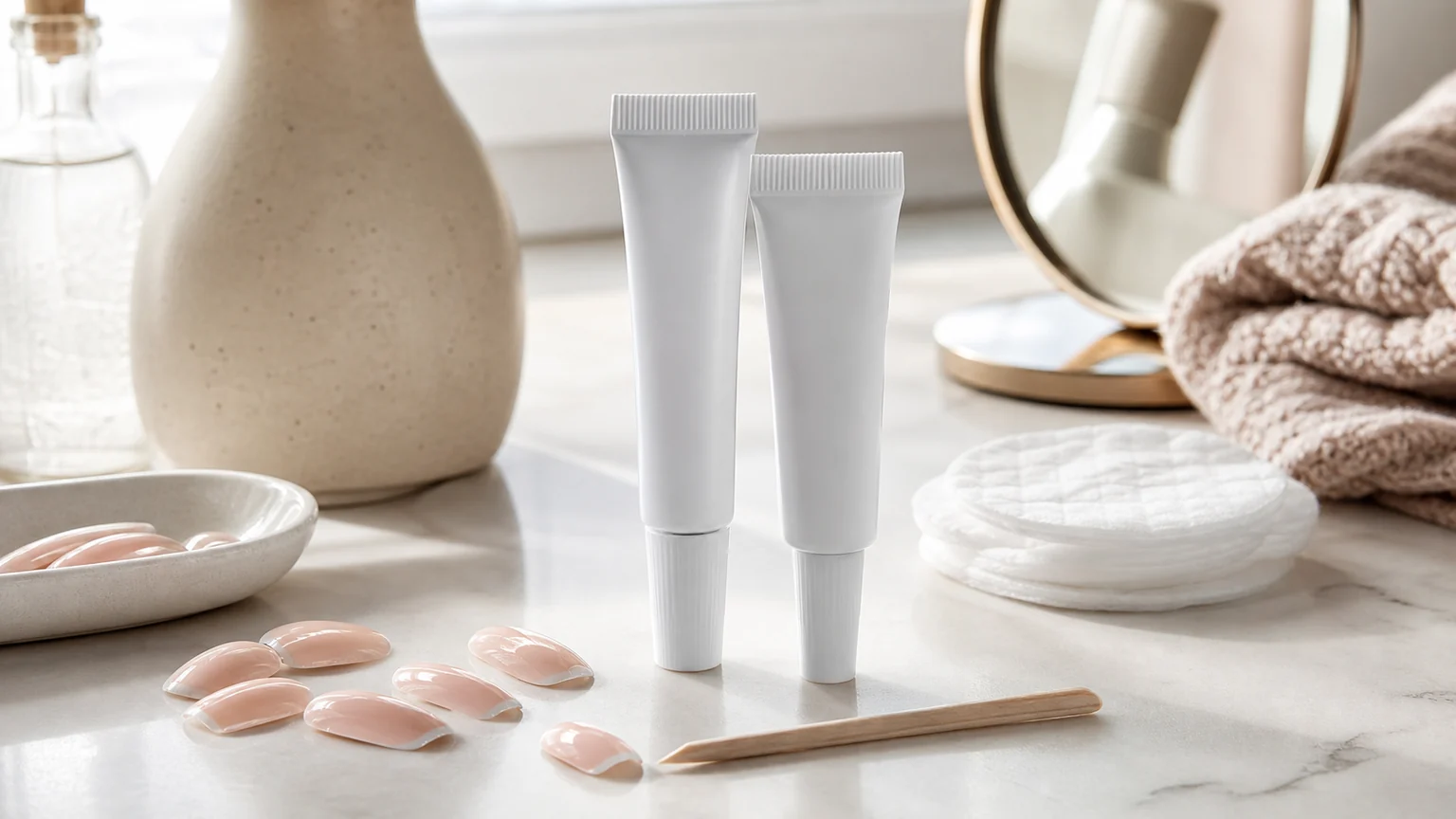
Choose nail glue by matching the adhesive format to the way you apply artificial nails. A tube gives strong placement control for tips and small fixes. A brush-on bottle is easier for press-on sets when you want a thin, even layer. A gel-style adhesive may feel neater for small accents, but the label directions still matter most. Keep skin contact minimal, cap the bottle between nails, and plan removal before you start.
| Use case | Better glue format | What to check | Related page |
|---|---|---|---|
| Press-on nails | Brush-on or small tube | Thin layer, clear dry time, easy cap control | This guide |
| Nail tips before overlay | Tube with narrow nozzle | Placement accuracy and label directions | This guide |
| Small nail edge fix | Tube or brush-on | Use only as the product label allows | Nail tool control |
| Skin cleanup question | No new glue; remove residue gently | Warm water, oil, and exposure stop points | Nail glue on skin |
Nail Glue Types Compared
Most artificial-nail glues are fast-setting adhesives, so the applicator is often the real difference for at-home use. Compare the way the product comes out, how quickly you can cap it, and whether the amount is easy to keep away from cuticles and fingertip pads.
| Format | Best fit | Pros | Watch-outs |
|---|---|---|---|
| Small squeeze tube | Tips, small fixes, targeted placement | Precise nozzle and compact storage | Can release too much if squeezed hard |
| Brush-on bottle | Press-on sets and even coverage | Thin coat is easier to spread | Brush can touch skin if rushed |
| Gel-style glue | Small accents or slower placement | May stay where placed longer | Still needs label-supported use |
| Multi-pack mini tubes | Occasional use or travel kits | Less waste after opening | Caps and tips can clog |
| Household super glue | Not a beauty shortcut | Not needed for cosmetic nail routines | Use products labeled for the nail task instead |
What to Check on the Label
The FDA lists artificial nails, adhesives, nail polish, and removers among nail-care products and advises consumers to follow label directions. For a buying guide, that means the label is not a side detail: it should tell you how the product is intended to be used, stored, and kept away from sensitive areas.
| Label detail | Why it matters | What a clean choice looks like |
|---|---|---|
| Intended use | Separates cosmetic nail adhesive from unrelated glue | Clearly says it is for artificial nails, tips, or nail edge fix |
| Directions | Controls amount and drying time | Simple placement steps and drying guidance |
| Warnings | Shows where not to use it | Clear cautions around eyes, mouth, children, and skin contact |
| Storage | Reduces spills and clogged caps | Cap tightly, store upright, keep away from heat and children |
| Removal notes | Prevents forceful pulling later | Mentions remover or gentle loosening steps |
Press-On Nails vs Tips vs Edge Fixes
Press-on nails usually need a thin layer across the artificial nail contact area. Tips need careful placement at the tip edge. Edge fixes need a smaller amount and a clear reason to use adhesive at all. If the natural nail is painful, lifted, cracked deeply, or bleeding, do not use glue as a workaround.
| Nail task | Glue amount | Placement focus | Stop point |
|---|---|---|---|
| Full press-on nail | Thin, even coat | Artificial nail contact area | Glue floods onto side skin |
| Tip application | Small line or dot | Tip well area | Tip shifts or bends after placement |
| Small edge fix | Minimal amount | Only the affected nail area | Pain, deep split, or lifted natural nail |
| Decor accent | Tiny dot | Accent back or nail surface | Glue touches skin repeatedly |
Application Routine That Keeps Glue Controlled
At-home nail glue is easier to manage when the layout is ready before the bottle opens. Place the nails in order, keep cotton pads nearby for the workspace, and work one nail at a time. Avoid holding the open glue bottle over fabric, eyes, lips, or a crowded counter.
- Dry fit first: Match sizes and order before opening the adhesive.
- Use a small amount: Start with less than you think you need, then add only if the label directions support it.
- Keep glue off skin: Aim for the artificial nail contact area, not the cuticle or sidewalls.
- Press evenly: Hold the nail in place as directed without sliding it around.
- Cap between nails: This lowers spill risk and keeps the applicator cleaner.
- Plan removal: Read remover guidance before the set is worn, not after a nail lifts.
Storage and Cleanup Checklist
Storage and cleanup are part of the buying decision because a messy bottle is harder to control the next time you apply a set. Choose packaging that closes tightly, stands upright, and gives you enough control to keep glue away from surrounding skin and fabric.
| Checklist item | Why it matters | Better habit |
|---|---|---|
| Cap design | Loose caps dry out faster and spill more easily | Close the bottle between nails |
| Nozzle or brush size | Large openings release too much product | Pick the smallest applicator you can control |
| Work surface | Glue can mark fabric and finished surfaces | Use a washable mat or disposable pad |
| Storage spot | Open access increases spill risk | Store upright and away from children |
Wear Time and Removal Planning
A nail glue guide should not promise a fixed wear time for every person. Wear depends on nail prep, nail shape, water exposure, product amount, and how the artificial nail fits. Removal should be planned around the product directions and gentle loosening rather than pulling.
| Question | Better answer | Why |
|---|---|---|
| How long should nail glue last? | Follow the product directions and watch for lifting | Wear time varies by routine and fit |
| Can I add more glue under a lifting nail? | Remove and reset when the label supports it | Adding glue under a dirty or wet gap can trap residue |
| Can I pull off a stuck press-on? | No, loosen according to directions | Force can stress the natural nail |
| What if glue touches skin? | Use gentle loosening guidance | Skin contact is handled differently from nail placement |
Skin Contact and Acetone Boundaries
Poison Control explains that cyanoacrylate super glue can bond skin quickly and that acetone can help loosen glue in some situations. Keep this as an exposure boundary, not a beauty hack. For glue near eyes, lips, mouth, broken skin, children, or uncertainty, use Poison Control guidance instead of experimenting.
| Situation | First move | Avoid | Resource |
|---|---|---|---|
| Small glue spot on intact hand skin | Warm soapy water, oil, or petroleum jelly first | Sharp scraping | Skin cleanup guide |
| Fingers stuck together | Soak and gently roll as it loosens | Pulling hard | Poison Control |
| Near eyes, lips, or mouth | Get exposure guidance | Acetone or force | Poison Control |
| Artificial nails causing discomfort | Stop the set and reassess | Covering discomfort with more glue | AAD artificial nail guidance |
How This Page Fits With Other Nail Guides
This page is about choosing and using nail glue for artificial nails. For remover substitutions, use the separate nail polish remover guide. For brush shape and cleanup control, use the nail polish brush guide. For nail color planning, use the nail color guide.
Sources
- FDA: Nail care products
- Poison Control: Super glue exposure guidance
- AAD: Reduce artificial nail damage
- AAD: Manicure and pedicure safety
- AAD: Gel polish removal tips
FAQ
Which nail glue is best for press-on nails?
For press-on nails, choose a cosmetic nail adhesive with an applicator you can control. Brush-on glue is often easier for thin coverage, while a small tube works when you need more precise placement.
Is brush-on nail glue better than tube nail glue?
Brush-on glue can be cleaner for full press-on sets. Tube glue can be better for tips and small fixes. The better choice is the one that lets you apply less product in the right place.
Can I use household super glue for artificial nails?
Use products labeled for the nail task instead of using household glue as a beauty shortcut. Nail products should be used according to their own directions and warnings.
What should I do if nail glue gets on my skin?
Start with warm soapy water and a gentle loosening method. Keep acetone away from eyes, lips, mouth, broken skin, and children, and use Poison Control guidance when exposure is uncertain.
Does nail glue damage nails?
Artificial nails and removal habits can stress nails when they are forced, picked, or worn in a way that does not fit well. Follow product directions and stop when the nail feels painful or lifted.
Should I choose fast-dry nail glue?
Fast dry time can be useful if the applicator is easy to control. If you are new to press-ons, a slower, neater routine may matter more than the fastest bond.
How do I keep nail glue from clogging?
Cap the bottle between nails, wipe only as the label allows, and store it upright. Mini tubes can also reduce waste for occasional use.