How to Get Nail Glue Off Skin: Removal Safety Guide

Quick answer: Start with warm soapy water and gentle rolling rather than pulling bonded skin apart. Use stronger removal steps only when appropriate for the location and stop if skin, eyes, or breathing are affected. This independent editorial page does not claim first-hand product testing or universal outcomes.
To get nail glue off skin, start by softening the bond instead of pulling at it. Soak the area in warm soapy water, work in a small amount of oil or petroleum jelly, and give the glue time to loosen. Use acetone only on small skin areas away from the face, eyes, lips, and broken skin.
Quick Answer: What to Do First
The first step is patience. Nail glue and super glue harden quickly, and forcing the skin apart can make the problem worse. Begin with warm water and soap, then add oil or petroleum jelly. If the glue is near the eye, mouth, nose, or a child is involved, use Poison Control guidance instead of experimenting.
| Situation | First choice | Use acetone? | Stop and get guidance when |
|---|---|---|---|
| Glue spot on intact finger skin | Warm soapy soak, then oil or petroleum jelly | Possible in a small amount | Skin hurts, cracks, or becomes very red |
| Two fingers stuck together | Soak and roll gently side to side | Possible after soaking | The bond will not loosen or skin pulls hard |
| Glue near cuticle or nail fold | Warm water and oil first | Use cautiously | There is broken skin or swelling |
| Glue on face, lips, eyelid, or around eyes | Do not use acetone | No | Contact Poison Control or urgent care guidance |
| Child, large spill, or product swallowed | Do not experiment | No | Contact Poison Control right away |
Step-by-Step Nail Glue Removal
Use the gentlest method that is working. Move to a stronger option only when the glue is on a small patch of intact hand skin and the label or source guidance supports it.
- Wash first: Rinse the area with warm water and mild soap to remove loose product and soften the edge.
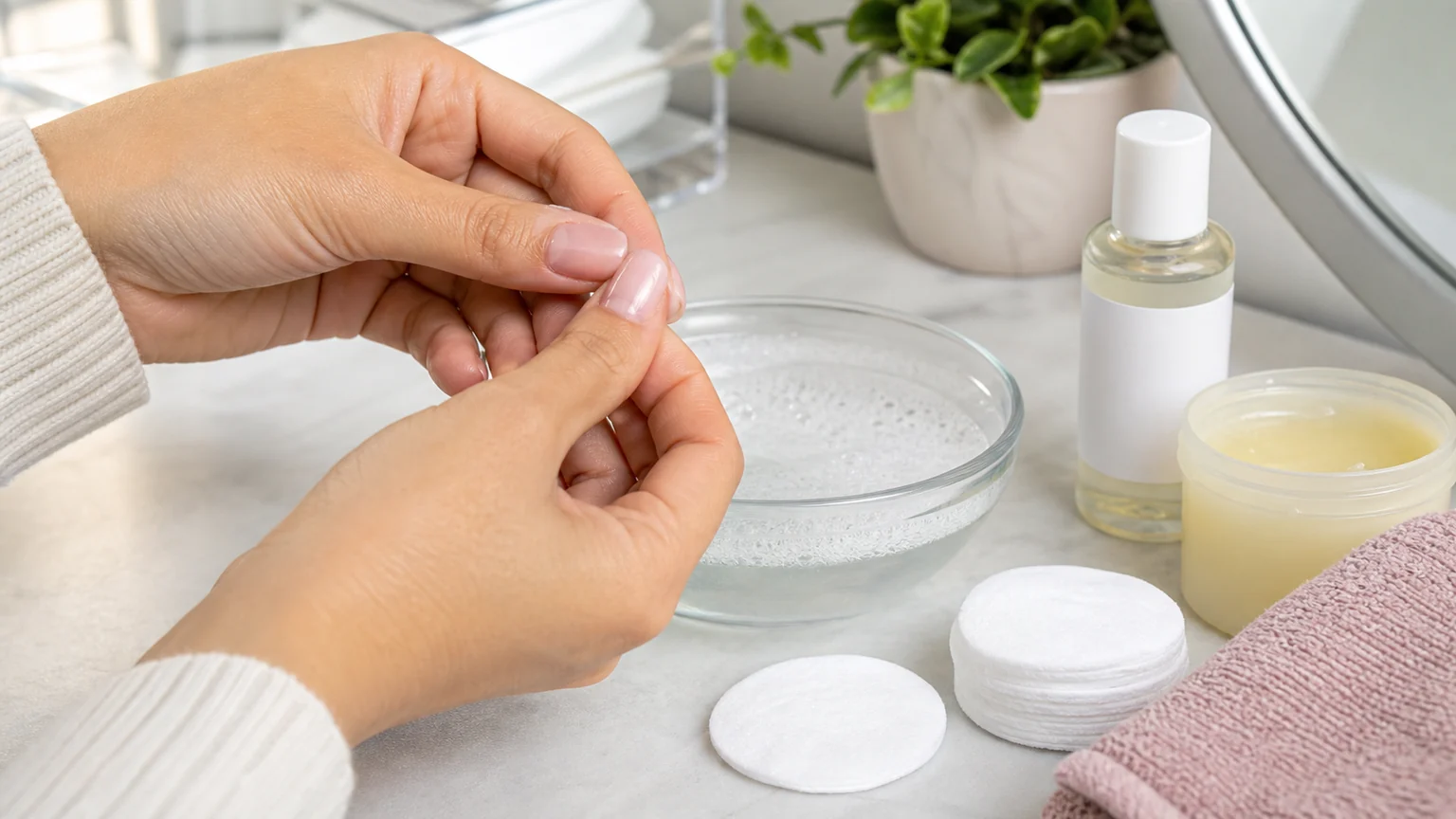
- Soak: Keep the skin in warm soapy water for several minutes. Rewarm the water if it cools.
- Add slip: Massage mineral oil, vegetable oil, or petroleum jelly around the glue edge. Do not scrape with a sharp tool.
- Roll, do not pull: If fingers are stuck, gently roll them side to side after soaking. Stop if the skin stretches hard.
- Use acetone only when appropriate: For a stubborn spot on intact hand skin, apply a small amount with cotton, then wash the area after the glue loosens.
- Moisturize afterward: Wash with soap and water, pat dry, and use a bland moisturizer if the area feels dry.
Warm Water, Oil, Petroleum Jelly, and Acetone Compared
| Method | Best use | Why it helps | Main caution |
|---|---|---|---|
| Warm soapy water | First step for most small skin spots | Softens the glue edge and cleans residue | Takes time and may need repeat soaking |
| Mineral or vegetable oil | Finger skin and glue edges | Adds slip so the bond may loosen gradually | Can make tools and surfaces slippery |
| Petroleum jelly | Dry glue edge on hand skin | Stays in place while the bond loosens | Needs washing afterward |
| Nail polish remover with acetone | Small stubborn spot on intact hand skin | Can dissolve cyanoacrylate glue | Keep away from face, eyes, lips, broken skin, and children |
| Sharp scraping | Do not use | Not needed for normal glue residue | Can cut or tear skin |
How to Use Acetone More Carefully
Acetone is common in nail polish remover and can help loosen nail glue, but it is not a universal answer. Poison Control notes that nail polish and glue removers can cause problems when used incorrectly, inhaled heavily, or swallowed. Use only a small amount, with ventilation, and keep it away from sensitive areas.
| Acetone check | Better habit | Avoid | Why it matters |
|---|---|---|---|
| Amount | Dampen cotton lightly | Soaking a large skin area | Less contact usually means less dryness |
| Location | Small patch of hand skin | Face, lips, eyelids, eyes, nose, or broken skin | Those areas need different guidance |
| Timing | Try water and oil first | Starting with repeated acetone rounds | Gentle methods may work without solvent |
| After use | Wash, dry, and moisturize | Leaving remover on skin | Remover can leave skin dry or uncomfortable |
| Storage | Cap it and keep it away from children | Leaving open remover nearby | Nail products should be used and stored as directed |
What to Do if Fingers Are Stuck Together
Do not yank stuck fingers apart. Soak them in warm soapy water, add oil or petroleum jelly at the seam, and gently roll them side to side as the bond loosens. If the skin is pulling hard or there is strong discomfort, stop and get guidance.
Face, Eyes, Mouth, and Children: Stop Points
Use a different threshold when glue is near the face or a child is involved. Do not put acetone near the eyes, lips, nostrils, or mouth. Poison Control is the right source for exposure questions in the United States at 1-800-222-1222 or through its online help tool.
| Exposure | Do this | Do not do this | Why |
|---|---|---|---|
| Glue in or near the eye | Follow Poison Control or urgent care guidance | Use acetone or pry eyelids | The eye area needs immediate, specific guidance |
| Glue on lips or in mouth | Contact Poison Control | Use remover or force separation | Swallowing and lip bonding need exposure guidance |
| Glue on a child | Contact Poison Control if unsure | Use strong remover without guidance | Children are more likely to rub eyes or swallow residue |
| Large spill | Remove contaminated clothing and get guidance | Cover it with more products | Large exposure is different from a tiny finger spot |
Before Your Next Press-On or Artificial Nail Set
The FDA groups artificial nail products, adhesives, nail polish, and removers under nail care products and advises consumers to follow label directions. The AAD also recommends careful artificial-nail habits to reduce nail problems. A small setup change can prevent glue from spreading to skin.
| Before applying glue | Why it helps | Simple habit |
|---|---|---|
| Read the glue label | Different adhesives have different directions | Check amount, drying time, and warnings first |
| Use less glue | Excess glue spreads onto sidewalls and cuticles | Start with a tiny dot or thin line |
| Protect surrounding skin | Cleaner placement means less cleanup | Keep glue off cuticles and fingertip pads |
| Work one nail at a time | Reduces rushed placement | Cap the bottle between nails |
| Store products carefully | Reduces accidental spills | Keep glue and removers closed and away from children |
Common Mistakes
- Pulling bonded skin apart before soaking.
- Using acetone near eyes, lips, or broken skin.
- Scraping with tweezers, blades, nail tools, or files.
- Assuming nail glue and ordinary nail polish remove the same way.
- Ignoring label directions or leaving glue and remover open around children.
Sources
- Poison Control: Super glue
- Poison Control: Nail polish and glue remover
- FDA: Nail care products
- AAD: Reduce artificial nail damage
- Poison Control: Eye injuries
FAQ
Can I peel nail glue off my skin?
No. Peeling or pulling can tear the skin, especially if two fingers are stuck together. Soak first, add oil or petroleum jelly, and separate slowly only when the glue has loosened.
Does acetone remove nail glue from skin?
Acetone can help dissolve nail glue on a small spot of intact hand skin. It should stay away from the face, eyes, lips, broken skin, and children, and the area should be washed after use.
What if nail glue is near my eye?
Do not use acetone near the eye and do not pry at the eyelid. Use Poison Control or urgent care guidance for eye exposure because the eye area needs specific instructions.
How long does nail glue stay on skin?
A tiny residue spot may loosen after repeated washing, oil, and normal skin shedding. A thicker glue patch can take longer, so the better approach is to soften the bond gradually instead of scraping.
Can oil remove nail glue?
Oil can help loosen the edge of nail glue by adding slip, especially after warm soapy soaking. It may not dissolve every glue spot, but it is a useful first option before acetone on hand skin.
When should I call Poison Control?
Call Poison Control for glue near the eye or mouth, swallowed product, a child exposure, a large spill, strong discomfort, or any situation where you are unsure what to do next.
Related Beauty Supply Reviews guides
Continue with this related guide and this next-step guide. Both links are included for reader navigation, not as proof of a product or outcome claim.
Core editorial sources
- https://www.fda.gov/cosmetics/cosmetic-products/nail-care-products
- https://www.aad.org/public/everyday-care/nail-care-secrets/basics/healthy-nail-tips