Blue Black Hair Dye: Shade, Base, and Fade Guide

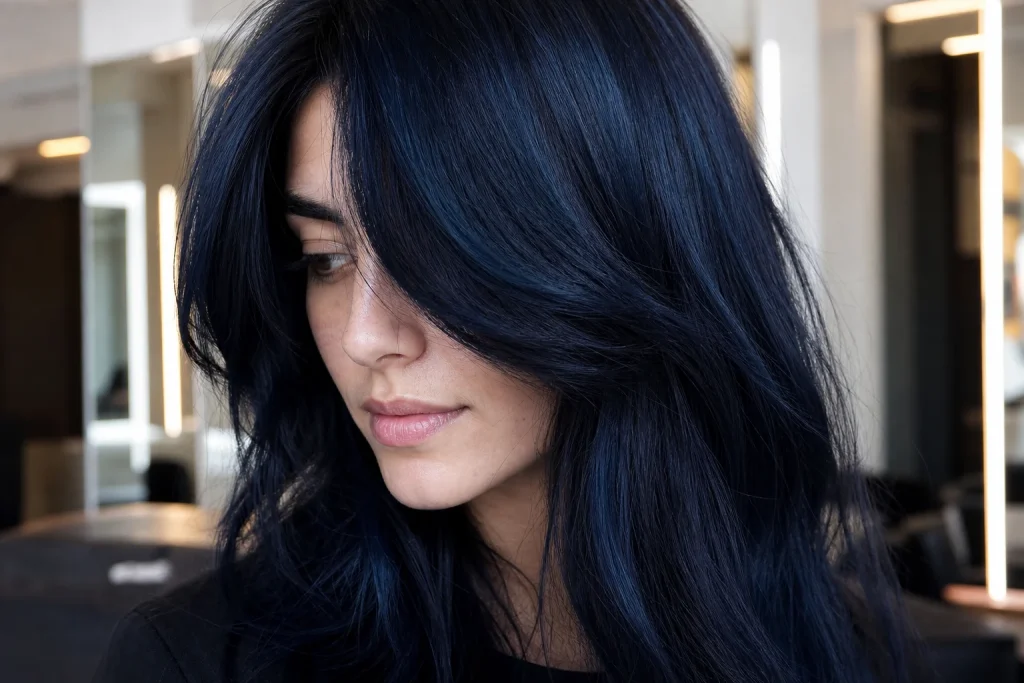
Blue black hair dye works best when you use it as a deep cool-black shade choice, not as a vivid blue fantasy color. The main decisions are your starting base, whether you want a soft navy sheen or a stronger cool cast, which formula type matches your upkeep level, and how much touch-up work you can manage at the roots and lengths.
Quick Answer: How to Choose Blue Black Hair Dye
Choose blue black hair dye when you want black hair that looks cooler and slightly navy in direct light. If you want a brighter blue result, use the site guide to blue hair dye instead. If your goal is a neutral black or gray-coverage plan first, the site black hair dye guide is a better fit.
| Goal | Best direction | What it looks like | Better page if different |
|---|---|---|---|
| Cool black with subtle navy reflection | Blue-black permanent or demi color | Mostly black indoors, blue cast in light | This page |
| Visible vivid blue | Semi-permanent or fashion blue on a lighter base | Noticeably blue, not near-black | Blue dye guide |
| Neutral or soft black coverage | Black dye by undertone and gray-coverage goal | Black without a clear navy cast | Black dye guide |
| Cool jewel-tone purple-black look | Dark purple formulas | Plum or violet depth instead of navy | Dark purple guide |
| Wash-count planning after color day | Duration planning | Fade expectations instead of formula choice | Hair dye duration guide |
Starting Hair Base and Expected Result
Blue-black is more forgiving than pastel or vivid blue because it starts from a dark target. Even so, the starting base still changes whether the result reads neutral black, navy black, or a softer smoky blue cast.
| Starting hair | Likely blue-black result | What to watch | Practical note |
|---|---|---|---|
| Natural black or very dark brown | Subtle cool sheen more than visible blue | Result can look almost black indoors | Good fit if you want low-drama cool depth |
| Medium brown | Cooler dark brunette to soft blue-black | Warm undertones may still peek through as it fades | Strand test if older warm color is still in the hair |
| Light brown or dark blonde | Stronger navy cast and darker overall finish | Blue undertone can read more obviously in sunlight | Choose the darkest target if you want a truer near-black look |
| Previously lightened hair | Can grab blue more strongly than expected | Porous ends may read cooler than roots | Test roots, mids, and ends separately |
| Gray-resistant hair | Coverage depends on the specific formula, not only the shade name | Not every blue-black formula targets resistant gray | Read the package claims and timing carefully |
Formula Types Compared
Wella explains that temporary, semi-permanent, demi-permanent, and permanent color all behave differently. Blue-black shade planning becomes easier when you decide the commitment level before choosing the exact box or salon formula.
| Formula type | Best for | Commitment | Main tradeoff |
|---|---|---|---|
| Temporary wash-out color | One-event cool cast or low-risk testing | Shortest | Usually too soft for a rich near-black finish |
| Semi-permanent blue-black | Testing a cooler black direction without full commitment | Wash-based | Can fade faster or show more blue on porous hair |
| Demi-permanent blue-black | Gloss, shine, and cooler depth | Medium | Usually less durable than permanent root coverage |
| Permanent blue-black | Longer-wear dark color and routine root touch-ups | Highest of these four | New root contrast and tone correction take more planning |
| Color-depositing conditioner or mask | Refreshing an existing cool-black cast | Maintenance use | Not the same as a full first-time color result |
Blue-Black vs Blue vs Black vs Purple
Blue-black sits between classic black and vivid blue. It is usually chosen for depth and cool reflection, not for a bright fashion-color statement. Keeping those boundaries clear prevents mismatched expectations.
| Shade family | How it reads | Best use case | Not the same as |
|---|---|---|---|
| Blue-black | Black base with navy reflection | Cool dark color for daily wear | Bright cobalt or electric blue |
| Blue dye | Visible blue cast or full blue color | Fashion-color goal | Near-black office-friendly depth |
| Black dye | Neutral, warm, or cool black depending on undertone | Coverage-first black result | A deliberate navy sheen |
| Dark purple | Plum, violet, or blackberry depth | Cool jewel-tone variation | Navy-cast black |
| Hair dye duration advice | Fade and refresh planning | After choosing the shade family | The buying decision itself |
Label and Patch-Test Checks
FDA hair-dye guidance says to follow the package directions, use gloves, do the skin test when required, keep dye away from the eyes, and never use scalp hair dye on eyebrows or eyelashes. AAD hair-color guidance also supports taking extra care when the hair has already been colored or stressed.
| Check | Why it matters | What to do |
|---|---|---|
| Patch-test directions | Blue-black formulas can still trigger sensitivity concerns | Follow the exact pre-use test on the package |
| Timing instructions | More time does not reliably create a better result | Use the labeled processing window and rinse directions |
| Gray-coverage note | Some formulas target coverage better than others | Check whether the package is built for resistant gray |
| Eye-area warning | Hair dye is not for brows, lashes, or the eye area | Keep scalp hair dye away from the eyes |
| Strand test | Previously colored lengths may grab blue unevenly | Test roots, mids, and ends if the base is mixed |
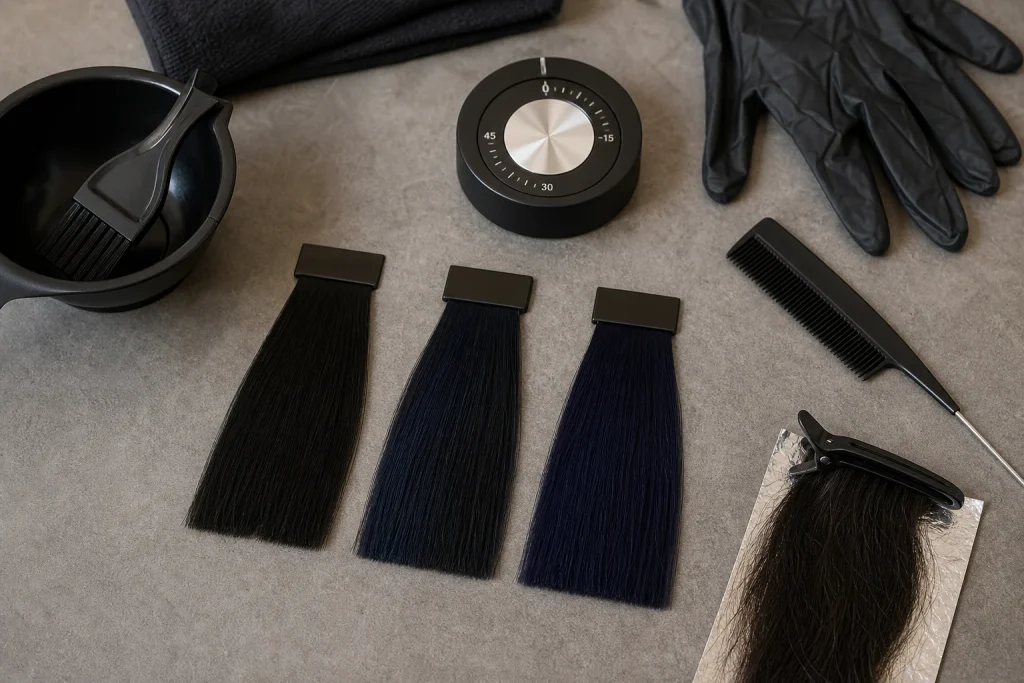
Simple At-Home Application Routine
- Decide whether you want a subtle cool-black sheen or a stronger visible navy cast.
- Match the formula type to your upkeep tolerance before choosing the exact shade name.
- Read the full package directions, especially patch-test, gloves, eye-area, and timing instructions.
- Do a strand test if your roots, mids, and ends are not the same base.
- Protect clothing, towels, and the hairline before applying color.
- Rinse and aftercare according to the product label, not by guessing from another formula.
Fade and Touch-Up Planning
Blue-black usually fades by losing the coolest cast first, then looking softer, flatter, or warmer. If your real question is how many washes a blue formula lasts, the site also has a dedicated guide to semi-permanent blue dye duration.
| Issue | Likely reason | Adjustment next time |
|---|---|---|
| Looks black but not visibly blue | Base was already very dark | Expect a navy sheen rather than bright blue |
| Ends turn cooler than roots | Porous lengths grabbed more pigment | Use a strand test and watch the ends more closely |
| Fades warm after several washes | Underlying warm pigment is showing through | Choose a cooler formula or refresh only when the cast no longer fits |
| Root line appears sooner than expected | Permanent dark color creates visible contrast | Plan touch-up timing before choosing a high-commitment formula |
| Looks too blue in direct sun | Lighter or more porous base than expected | Use a deeper black-leaning shade next time |
Who Blue-Black Hair Dye Fits Best
Blue-black usually fits people who want dark color with cooler depth, who do not need a bright fantasy result, and who are comfortable with touch-up planning if they choose a permanent formula. It is often easier to live with than vivid blue, but still needs realistic expectations.
| Good fit | Why | Maybe choose another page instead |
|---|---|---|
| Very dark hair wanting cooler shine | Blue-black adds depth without a loud color jump | Use black dye guide if gray coverage is the main concern |
| Medium brown hair wanting a dramatic dark shift | Color can read rich and glossy without going bright blue | Use blue dye guide if you want a visible fashion shade |
| People wanting office-friendly cool depth | Usually looks near-black indoors | Use dark purple guide if you want plum instead of navy |
| People willing to do strand tests | Helps predict how much blue the hair will hold | Delay coloring if you cannot follow the label directions |
Common Mistakes
- Expecting vivid blue from a shade designed to stay near-black.
- Choosing permanent blue-black without planning visible root maintenance.
- Skipping the package patch test or strand test on previously colored hair.
- Using scalp hair dye on brows, lashes, or near the eye area.
- Trying to fix a warm fade by leaving dye on longer than directed.
- Confusing a refreshing color mask with a full first-time dye result.
Sources
- FDA: Hair Dyes
- FDA: Cosmetics Safety Q&A: Hair Dyes
- FDA: Color Additives and Cosmetics Fact Sheet
- AAD: Coloring and Perming Tips
- Wella: Hair Color Types Guide
- Wella: Semi vs Demi-Permanent Hair Color
FAQ
What is blue black hair dye?
Blue black hair dye is a dark hair-color shade that reads mostly black but shows a cool navy or blue cast in light. It is usually chosen for cool depth rather than a bright visible blue result.
Does blue black hair dye work on dark hair?
Yes, blue-black can work well on dark hair because the goal is often a cooler sheen instead of a pale or vivid blue result. The darker the starting base, the more subtle the blue effect may look indoors.
Is blue black the same as black hair dye?
No. Blue-black is a cool-black shade family, while black hair dye can be neutral, soft black, or warmer depending on the undertone and formula. Blue-black is chosen for a navy cast, not only for darkness.
Should I use permanent or demi blue black hair dye?
Use demi when you want gloss and cooler depth with a lower commitment than permanent root maintenance. Use permanent when you want a longer-wear dark result and are prepared for visible root maintenance planning.
Will blue black hair dye damage my hair?
The result depends on the specific formula, the current condition of the hair, and whether other chemical services are involved. Follow the label directions, do the patch test and strand test when needed, and be more cautious if the hair is already stressed or previously processed.
Can I use blue black hair dye on eyebrows or eyelashes?
No. FDA consumer guidance says scalp hair dye should not be used on eyebrows or eyelashes. Keep hair dye away from the eye area and use products only as labeled.
How long does blue black hair dye last?
Fade timing depends on the formula type, your washing routine, your starting base, and how porous the hair is. Blue-black often fades by losing the coolest cast first, while new root contrast can become visible before the lengths look faded.