Long Hairstyles: Texture, Tension, and Upkeep

Quick answer: Choose a long hairstyle by the hair's actual length, density, texture, layers, condition, and available styling time. Start with a style family that matches the occasion and maintenance burden, then adapt placement and hold instead of following a universal face-shape rule. This independent editorial guide does not claim first-hand product testing, diagnose, prescribe, or guarantee a result.
Start with the length that is usable today
Measure where the shortest face-framing and crown layers fall, not only the longest back section. A high bun that works for one-length waist hair may release short layers around the nape, while a low twist may capture them. Shrinkage, curl spring, and the amount of stretched length also affect which anchors are realistic.
Photographs labeled as long hairstyles often rely on extensions, padding, hidden pins, or a different density. Treat them as construction references rather than guaranteed outcomes. Decide whether the goal is to display length, move hair away from the face, protect ends from friction, create volume, or support an accessory.
Match the style family to density and texture
Loose waves display movement but may lose definition in humidity. Braids divide and control length, yet small tight sections take time and can stress fragile edges. Ponytails are fast but concentrate weight at one anchor. Twists and buns contain the ends, though dense hair may need multiple anchors rather than one overloaded elastic.
Fine hair can gain visual fullness from broad bends, soft texture, and a lower-tension anchor instead of heavy products. Dense hair benefits from staged sectioning so pins secure manageable amounts. Curly and coily hair may be styled in its natural pattern, stretched within a suitable routine, or arranged in sections without assuming straightening is required.
Use layers as design information
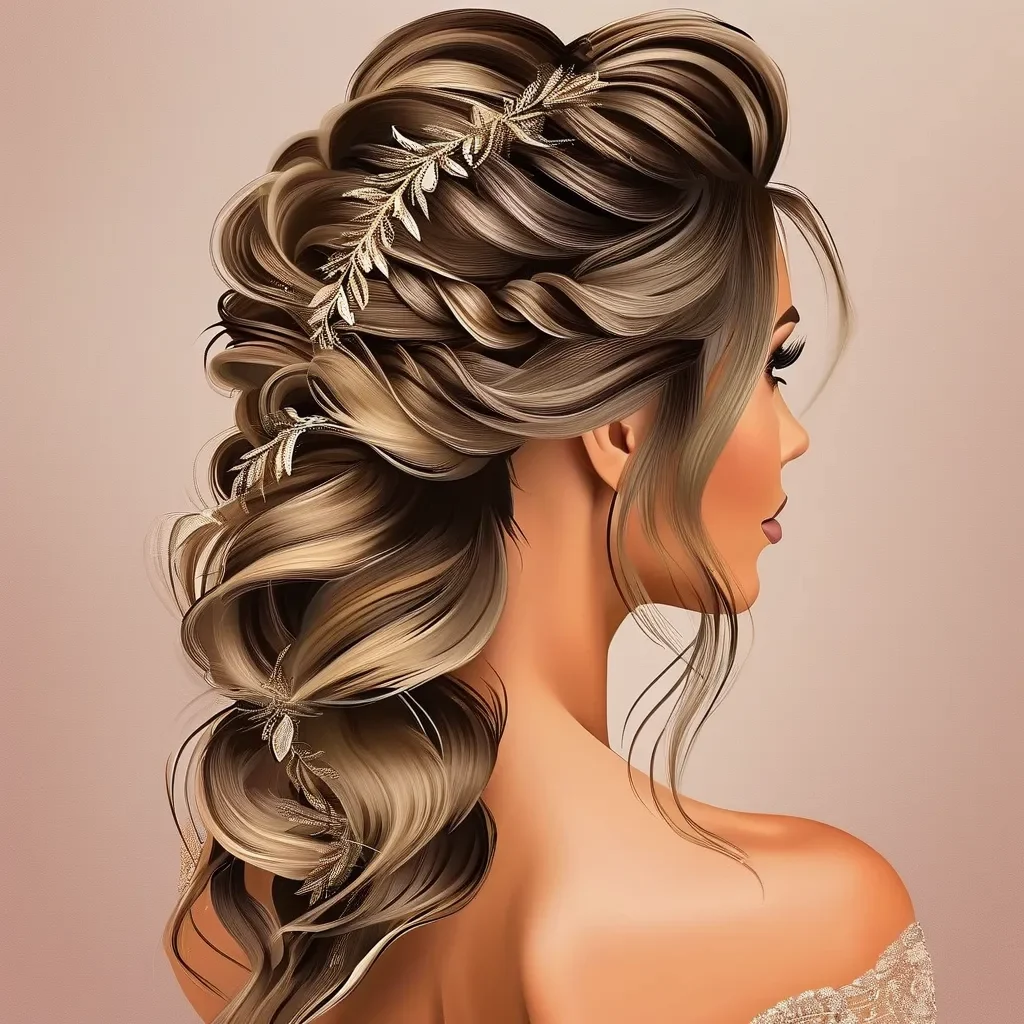
Short layers can create intentional softness around the face or become flyaways when a sleek surface is expected. Map where they end before choosing the part and anchor. A braid beginning near the hairline can collect some layers gradually, while a half-up style leaves lower length loose and reduces the amount that must fit one structure.
Do not force every short piece under a tight pin. A small compatible styling product, a change in parting, or a planned loose tendril can solve the visual issue with less tension. If a layer repeatedly escapes, the design may need a lower anchor or a second section rather than more pressure at the scalp.
Build volume with structure instead of roughness
Volume can come from root direction, larger sections, curl pattern, a supported bun form, or controlled backcombing. Choose the least disruptive method that meets the design. Aggressive teasing, repeated brushing, and high heat can increase tangling and breakage, especially on lightened, weathered, or already fragile long hair.
Place volume where the style needs balance: crown lift changes the profile, side fullness changes width, and end movement emphasizes length. Inspect the style from front, side, and back before adding more. A large silhouette is not automatically more flattering, and a smooth low-volume style is not automatically severe.
Distribute the weight across secure anchors
Long hair can make a ponytail, braid, or bun physically heavy. Use sectioned anchors, appropriately sized pins, or two connected ponytails when one point pulls. Pins should follow the structure and rest against hair rather than scrape the scalp. Remove and reset any anchor that causes headache, numbness, or localized pain.
Rotate placement across repeated wear instead of stressing the same hairline and crown area every day. The AAD advises avoiding hairstyles that continuously pull. A polished result should not require sharp tension, and the style should be loosened or removed when comfort changes during normal movement.
Plan heat and product by the intended finish
A glossy straight finish, defined curl set, airy blowout, and textured braid need different preparation. Read tool and product directions, use only compatible combinations, and select the lowest effective heat for the task. Let hair dry appropriately before prolonged heated-tool contact and avoid repeatedly passing over one section to chase perfection.
Apply styling products in small amounts and distribute them where their function is needed. Root lift, mid-length smoothing, end definition, and humidity control are separate jobs. Layering multiple strong-hold products can create stiffness or residue that complicates restyling and removal without necessarily improving the architecture.
Rehearse event styles under real conditions
For a wedding, prom, performance, or long workday, test the complete style before the event. Wear it long enough to evaluate weight, slipping, hairline comfort, weather response, and accessory security. Photograph all angles in the lighting that matters and note which pins or sections need adjustment.
Build a small repair kit from items already proven compatible: spare pins, matching elastics, a compact comb, and the exact product needed for a limited touch-up. Do not introduce a new adhesive, color spray, heat setting, or scalp product at the last minute. A rehearsal is a fit check, not evidence of universal all-day wear.
Schedule gentle removal and next-day care
Remove decorative pieces, pins, and elastics in the reverse order of construction. Support the hair near each anchor and unwind braids or twists before brushing. Separate product-stiffened sections with fingers and an appropriate detangling method rather than pulling through hidden crossings and shed hair.
After removal, check the scalp, edges, and ends. Persistent pain, broken hairs around anchors, or worsening thinning calls for less tension and possibly dermatologic evaluation. The best long-hairstyle rotation is one that fits the person's hair condition, daily tasks, and care capacity; it does not need fifty variations or a promised transformation.
Edit the plan to fit the morning
Estimate the real construction time, including detangling, drying, sectioning, heat-tool cooling, pinning, and cleanup. A style that needs forty uninterrupted minutes is not a practical ten-minute default. Save a simplified version with fewer sections or a lower anchor for rushed days, and reserve the more elaborate arrangement for occasions that allow rehearsal and unhurried removal.
Related Beauty Supply Reviews guides
Editorial sources
- https://www.aad.org/public/everyday-care/hair-scalp-care/hair/healthy-hair-tips
- https://www.aad.org/public/diseases/hair-loss/causes/hairstyles