Brunette Color Refreshers: Finish, Transfer, Fade, and Removal Guide

Direct answer: choose a brunette color refresher by matching both depth and undertone to the faded hair. Decide whether the needed direction is cool ash, neutral brown, chocolate, or warm golden brown, then test the exact conditioner, mask, gloss, or liquid deposit format on representative roots and porous ends. Apply only where color is missing and track cumulative darkening before repeating.
Brown is not one pigment direction. A refresher can reduce warmth, restore warmth, deepen faded lengths, or add a red-brown cast depending on its formula and the starting base.
Describe the brunette target precisely
Record target depth plus undertone: light cool brown, medium neutral brown, medium chocolate, warm golden brown, or deep red-brown. Avoid choosing from brunette alone because labels and swatches can group different directions under the same word.
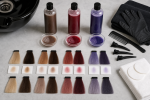
The hair color chart guide helps organize depth and undertone before a refresher is selected.
Map roots, mids, and ends separately
Assess natural regrowth, artificial color, highlights, gray, banding, porosity, and fade on each zone. Natural roots may need no deposit while colored mids look warm and ends already look dark.
A refresher cannot reliably lighten dark hair or replace an oxidative gray-coverage formula. It adds surface pigment to the base that is present.
Choose cool, neutral, or warm direction
Ash deposit can reduce visible orange but may look dull, greenish, or too dark on a pale or porous base. Neutral brown reinforces depth without a strong directional shift. Chocolate often includes richer warm or red-brown character. Golden brown increases warmth and reflection.
Use a dry baseline in neutral light. Do not choose cool pigment merely because every warm reflection has been labeled brassiness. The blue hair guide provides contrast for understanding cool pigment visibility without making blue deposit the default brunette correction.
Identify the refresher format
Conditioner, mask, gloss-like liquid, foam, shampoo, and direct color differ in concentration, distribution, dwell, and conditioning feel. Read whether the formula is ready to use and whether it belongs on wet, damp, or dry hair.
Do not add developer or mix formats unless the maker provides that exact method. The direct-color guide explains adjacent deposit behavior without making formats interchangeable.
Complete required checks and dual-zone tests
Follow every warning and skin-check direction. Test the most faded mid-length and the most porous end separately. If roots will receive product, include a representative root section.
Use the intended amount, dilution only when directed, dwell, and rinse. Dry all tests before judging depth, undertone, shine, texture, transfer, and next-wash fade.
Apply to the actual deficit
If mids have lost depth but ends remain dark, target mids and limit or omit ends only through a label-supported placement plan. If warmth is uneven, divide zones rather than dragging one cool formula through the whole head.
Section cleanly and saturate each chosen zone evenly. Patchy application can create brown bands that are harder to diagnose than the original fade.
Control porous-end darkening
Porous ends can absorb brown pigment rapidly and appear several levels deeper. Check them early only if the product directions allow. Do not assume conditioner base prevents over-deposit.
Record end depth after drying. Repeated full-length refreshes can create a dark perimeter even when roots and mids remain balanced.
Evaluate brunette tone under several lights
Compare indoor neutral light, daylight, and ordinary room light. Look for green-gray cast, excess orange, red-brown depth, hollow-looking neutral areas, and banding. Camera processing can alter warm brown, so use unfiltered references.
Separate shine and smoothness from actual pigment change. A conditioning film can make brown look richer without adding the expected tone.
Check transfer and rinse endpoint
Follow rinse directions and protect light towels until runoff reaches the stated endpoint. After hair is dry, press a clean white tissue lightly against a hidden section and inspect collars and pillowcases during early wear.
No brunette refresher should be assumed transfer-free. Damp hair, oil, friction, and excess deposit can increase rub-off.
Track fade direction, not only depth
Brown can fade warmer, redder, flatter, lighter, or unevenly. Record the dry result after several washes. An ash refresher that fades back to orange calls for a different decision than chocolate deposit that leaves ends red-brown.
Use the observed shift to set the next interval. Do not refresh on a fixed calendar when the hair still holds sufficient depth.
Correct excess coolness or darkness conservatively
Stop adding pigment and use the maker’s normal wash or fade route. Test any cleanser change on a section. Allow several washes to show the true residual direction before layering a warm refresher over excess ash.
Do not use household solvents, bleach mixtures, or aggressive remover by default. Seek formula-specific professional help for severe bands or incompatible prior color.
Understand gray and highlighted hair limits
Gray and light highlights can display brunette deposit more strongly than neighboring dark hair. A low-contrast refresh may create visible stripes if those zones are not included in the section test.
Do not promise gray coverage from a deposit-only refresher. The result can be translucent and can fade differently across mixed bases.
Brunette refresher checklist
- Name target depth and ash, neutral, chocolate, or golden direction.
- Map roots, mids, ends, gray, highlights, and porosity.
- Identify the exact deposit format.
- Complete required checks and dual-zone strand tests.
- Apply only to the zones with a color deficit.
- Limit porous-end exposure through label-supported placement.
- Dry and inspect under several lights.
- Check transfer and protect light fabric.
- Track fade direction and cumulative darkening.
- Pause deposit before attempting a conservative correction.
Sources and scope
The FDA hair dye guidance supports label-directed use, instructed skin checks, gloves, eye-area restrictions, timing, rinsing, and scalp-condition boundaries. The American Academy of Dermatology coloring guidance supports cautious use and attention to hair condition. Neither source defines brunette tone, endorses a refresher, or promises depth, undertone, gray coverage, transfer resistance, fade, or removal.