Color-Depositing Conditioner: Finish, Transfer, Fade, and Removal Guide

Direct answer: choose a color-depositing conditioner by the visible starting base, pigment family, intended wash-day frequency, and acceptable transfer and fade direction. It adds surface pigment while conditioning as its label describes; it does not lighten hair or create the same result on every base. Use the required skin check if directed, verify a hidden strand, wear gloves, distribute the product through the intended zones, and rinse exactly as instructed. Track repeated applications because porous ends can accumulate more pigment than roots.
This format is often used as a periodic color refresh within a wash routine. Its practical questions are frequency and buildup, not only the first application.
Read the starting base in dry neutral light
Deposit shows most clearly on light or previously lightened hair. On medium and dark hair, the same conditioner may create a subtle reflection rather than a vivid shade. Existing yellow, orange, red, blue, or green influences the visible blend.
Map roots, mids, and ends separately. Natural roots may resist visible deposit while porous ends become dense or cool. Gray and white strands can also respond differently from pigmented hair.
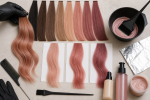
The hair color chart guide helps separate depth from tone before choosing a deposit direction.
Define refresh, shift, or creative color
A refresh reinforces an existing red, copper, brown, blonde, violet, blue, or pink direction. A shift changes the visible tone, such as moving warm blonde toward cooler beige. Creative use adds a clearly artificial hue on a suitable base.
These are different goals. A low-pigment refresh may not create vivid color, while a vivid conditioner can overtake a delicate toner. Read the label and shade description without assuming all products in the category have equal concentration.
Compare finish after hair is dry
Evaluate shine, softness, depth, tonal evenness, and strand separation after complete rinsing and drying. Wet hair looks darker and can hide patchiness. Heavy residue can also make hair appear smoother before the next wash reveals the actual color distribution.
Conditioning feel is product-specific. Do not infer repair or damage reversal from slip alone. Use the product only for the claims and directions stated on its current label.
The direct color guide provides context for base dependence and pigment fade without equating conditioner with a standard direct dye.
Plan frequency before the first use
Decide whether the conditioner will replace a regular conditioner on selected wash days or be used less often. Follow the stated frequency and do not assume more frequent application is better.
Photograph or record the dry color under consistent light after each use. Stop adding pigment when the tone reaches the target. Repeated automatic use can make ends darker, cooler, or duller while roots remain unchanged.
If the label permits mixing only with a named companion product, follow that direction. Do not dilute with an unrelated conditioner to invent a lower concentration.
Use a hidden strand to map uptake
Select a strand that includes the most porous or lightened zone as well as a representative mid-length. Apply the exact amount and timing planned for the full use.
After rinsing and drying, inspect color depth, uneven bands, unwanted green or violet cast, and whether the finish remains acceptable. A strand can reveal rapid uptake that the shade swatch does not show.
Complete any label-required allergy alert before use. Strand response does not predict skin compatibility.
Apply by zone rather than habit
Follow the directions for wet, damp, or dry hair. Divide hair into manageable sections, wear gloves, and use enough product for even distribution without extending the directed amount or time.
Apply first to zones that need the most refresh only when the label permits that sequence. Highly porous ends may need shorter exposure or less frequent use. Comb through only if directed and if the tool does not scrape the scalp.
The blue hair color guide shows how base warmth and porosity influence cool pigment and later fade.
Control transfer during use and wear
Protect clothing, towels, grout, porous counters, and shower surfaces. Rinse splashes promptly using methods compatible with the surface. Dark and vivid pigments can remain visible even when the product is described as temporary.
After rinsing, transfer can continue from damp hair to towels, collars, pillowcases, and hands. Use practical fabric choices and dry hair fully before contact with light materials.
Do not promise that transfer ends after one wash. Product, shade, amount, base, rinse, and porosity all matter.
Understand likely fade behavior
Warm red and copper refreshes may reveal orange or gold as they fade. Violet over yellow can move toward beige or leave patchy cool areas. Blue on a warm base can move toward teal or green. Pink can become peach over yellow.
Repeated use can create a slower, less even fade than a single application. Roots, mids, and ends may move through different colors at the same time.
Judge fade in dry hair under consistent light rather than from colored rinse water alone.
Respond to buildup conservatively
If color becomes too dark or dull, pause further deposit and return to the label-compatible wash routine. Do not add the opposite color blindly; complementary pigment can create gray, brown, or muddy areas.
Strong clarifying routines may increase dryness and still leave pigment in porous hair. Use a hidden strand before any removal product or major color change.
Plan removal before an event or new shade
Temporary does not mean removal by a specific date. Pale porous hair can retain direct pigment. Allow multiple wash cycles and observe the actual fade rather than relying on a calendar.
For a move to very blonde, a clean pastel, or an opposite hue, seek professional assessment when residue is uneven or the hair is fragile. Do not layer permanent color solely to hide a fading direct pigment.
Clean tools and storage areas
Keep the product in its original identified container and close it with clean dry hands. Wipe the opening before storage, and follow temperature and expiration guidance on the label.
Wash gloves, combs, clips, bowls, and shower surfaces as appropriate. Do not use hair color tools for food. Discard single-use liners and stained wipes responsibly.
Safety boundaries
The U.S. Food and Drug Administration advises following hair-dye directions, completing the directed skin check before every use, wearing gloves, keeping dye away from the eyes, observing timing, and rinsing the scalp well. Do not use scalp hair color on eyebrows or eyelashes.
Do not proceed on an irritated or damaged scalp. A conditioner format does not establish universal skin suitability or remove the need to read every warning.
Common conditioner mistakes
- Expecting deposit to lighten the base.
- Choosing by bottle color without mapping hair depth.
- Using every wash without tracking buildup.
- Applying equally to resistant roots and porous ends.
- Judging the finish while hair is wet.
- Assuming transfer ends after the first rinse.
- Adding an opposite pigment to correct buildup.
- Planning removal from a fixed calendar.
Final conditioner checklist
- Map dry depth, tone, porosity, and previous color.
- Define refresh, shift, or creative-color intent.
- Read the exact directions and frequency.
- Complete required skin and hidden-strand checks.
- Apply by zone and monitor porous ends.
- Evaluate dry finish, transfer, and fade.
- Pause when buildup reaches the target.
- Use a strand-first plan for removal or a new hue.
Sources and scope
The FDA hair dyes guidance supports the label, skin-check, glove, timing, eye-area, rinse, and scalp-condition boundaries. The American Academy of Dermatology coloring guidance supports conservative changes and damage-reduction limits. Neither source endorses a color-depositing conditioner, shade, frequency, duration, removal route, or result.