Copper Hair Color Correctors: Formula, Directions, and Compatibility Guide

Direct answer: choose a copper hair color corrector only when the unwanted cast or the manufacturer’s filling chart specifically calls for orange-led warmth. Copper most directly relates to a blue cast in a simplified color-wheel model, but copper products vary from concentrated oxidative additives to direct pigments and warm shades. Verify the current level, target level, formula class, approved amount, activator, timing, and prior-color compatibility, then complete the directed skin test and fully dry representative strand tests before wider application.
Copper is not simply “more warmth.” It usually combines orange with a red or gold influence, and the balance differs by product line. Too much can make a neutral goal visibly orange, deepen porous ends, or create bright bands. Too little may leave the blue influence visible. The technical chart and dry strand result, not the bowl color, determine whether the formula is suitable.
Decide whether the visible cast is actually blue
Examine clean, dry hair under neutral illumination. Separate the root, midlength, end, highlight, gray, and previously lightened areas. Identify blue, blue-green, green, violet, gray-violet, yellow, orange, and red-orange rather than grouping them under “ashy” or “muddy.”
Orange and blue oppose each other in a simplified model, which makes copper relevant to some blue-leaning results. Green relates more directly to red, while violet relates to yellow. A blue-green cast may need a line-specific combination rather than a generic copper additive. Existing yellow or orange can become stronger if copper is added without a clear target.
Find the likely cause. Excess cool pigment, direct-dye residue, overlapping toner, mineral discoloration, uneven fading, a missing warm foundation, and porous uptake can look different but are not solved by one recipe. Copper deposits warm pigment. It cannot lift dark artificial color, remove buildup, or reverse damaged texture.
Define the job: correction, filling, or copper color
A corrective formula uses a controlled copper component to rebalance a blue influence while preserving the intended depth. A filler replaces selected warm background pigment before an approved darker-color service. A copper shade intentionally creates visible orange-red warmth. Write down which of these three outcomes is intended before choosing a product.
For filling, follow the exact chart for the starting and target levels. One transition may call for gold, another for copper or red-orange, and another for a blended warm formula. Replacing the chart with pure copper can distort the final shade, affect gray appearance, or leave orange bands when the top color fades.
The ginger hair color guide shows how gold, orange, red, starting depth, and placement influence an intentionally warm result. Use it to clarify the visual goal, not as a corrective recipe.
Read the copper product as a chemical system
Identify whether the product is an oxidative mix tone, permanent or demi-permanent shade, direct dye, filler, gloss, toner, conditioner, mask, or shampoo. Check the named color line and whether the product is ready to use, mixed with a base shade, combined with a dedicated activator, or diluted only with an approved clear.
The direct hair color formula guide helps distinguish a ready-to-use pigment from oxidative color. A direct copper dye should not be poured into permanent color merely because both look orange. A maintenance mask should not be activated with developer or used beyond its stated contact time.
Review the level range, maximum additive amount, gray directions, mixing order, application surface, timing, rinse method, and prohibited combinations. If these details are absent or the container cannot be identified, do not improvise.
Map level, color history, and porosity
Record the natural level, present artificial level, desired level, prior lightening, direct-dye history, gray percentage, highlights, bands, and porous zones. The same copper concentration can appear subtle in a deeper formula and vivid on pale, porous hair.
Resistant roots may show less deposit while compromised ends collect orange-red pigment rapidly. Gray can reflect warmth more brightly than neighboring pigmented strands. Dark artificial color can block a translucent copper maintenance product from changing the dominant cast. These differences justify separate strand tests and, when directions allow, separate zone formulas.
Do not apply another chemical service to hair that is gummy, breaking, unusually elastic, or unable to withstand directed handling. Added copper pigment changes appearance; it does not restore structural strength.
Build only a manufacturer-approved formula
Keep the base shade, copper additive, clear or neutral, and activator inside one compatible line. Confirm whether the additive is counted as part of the color portion when calculating the activator. Follow a fixed chart maximum when one is supplied.
Developer is not a color-removal aid or harmless thinner. Increasing strength or changing the ratio alters an oxidative formula. Do not combine copper pigment with bleach, unrelated toner, shampoo, conditioner, food coloring, paint, or household ingredients unless the exact product directions expressly name the component.
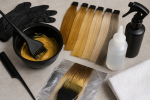
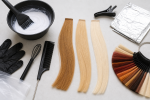
The pictured bowls, applicators, and clear containers demonstrate organized preparation only. They do not identify ingredients or authorize water, developer, or another liquid in every copper formula.
Measure the formula so it can be repeated
List each component and unit before opening the color: base shade, copper corrector, approved modifier, and activator. Use a scale, volume markings, approved drop count, or the method provided by the line. Keep one unit system throughout the calculation.
If the line instructs users to total the base and corrector before applying an activator ratio, calculate from that combined color amount. If it provides a separate additive limit, use that limit. Never convert a formula from another brand by matching shade names; “copper” does not represent a standard pigment strength.
Write the batch formula, target zone, starting cast, and planned processing time. A record such as “one bowl with some copper” cannot support a reliable test or later adjustment.
Complete safety testing and dry color tests
Follow all preliminary testing instructions supplied with the dye. The U.S. Food and Drug Administration’s hair-dye guidance advises consumers to follow label directions, wear gloves, observe timing, rinse thoroughly, avoid an irritated or damaged scalp, and perform the directed preliminary test before each use.
A skin test addresses the instructed reaction precaution; it does not establish shade compatibility. Select hidden strands from the blue area, natural or gray root, colored midlength, pale highlight, porous end, and any distinct band. Apply the exact measured formula, process and rinse as directed, and dry each sample fully.
Under neutral light, compare remaining blue, new orange or red, depth, gray visibility, evenness, and hair feel. If the blue cast persists in one zone while another becomes bright copper, revise the zone plan within the product directions or stop and seek qualified color assistance.
Apply according to the successful zone evidence
Prepare gloves, timer, clips, protective covering, accurate measuring tools, and a nonmetallic bowl or applicator when specified. Mix in the directed order and make enough product for consistent saturation.
Apply to dry, damp, washed, or unwashed hair exactly as directed. Work in thin sections. Use the strand-supported sequence instead of automatically starting at the roots or ends. Avoid unnecessary overlap on previously processed areas and keep scalp color away from eyelashes and eyebrows.
Begin timing at the stage named by the manufacturer. Do not add heat, extend processing, strengthen the activator, or brush extra copper over resistant sections to force a result.
Protect deliberate warm placement
A copper ribbon, ginger panel, warm root, or red-orange face frame may be an intentional part of the design. The red hair placement guide helps separate chosen warm sections from an unwanted blue cast.
If only one zone needs correction, do not warm unaffected blonde, gray, neutral roots, or cool highlights without strand evidence. Targeted placement can preserve contrast and reduce unnecessary pigment overlap when the product directions permit it.
Stop when the plan or reaction is unsafe
Do not mix when the cast, product identity, previous chemistry, compatible line, maximum amount, activator, level range, or timing is unknown. Also stop for an irritated scalp, incomplete labels, severe breakage, or strand tests that show excessive orange, red, darkening, unevenness, or poor hair condition.
During application, follow the label’s stop and rinse directions for intense burning, swelling, blistering, spreading rash, breathing difficulty, eye exposure, or another concerning reaction. Seek appropriate medical help for a serious reaction. The American Academy of Dermatology’s hair coloring guidance supports manufacturer testing and conservative changes rather than stacking stressful services.
Assess and record the finished result
Rinse using the specified method and water temperature, keeping runoff away from the eyes. Use only the directed finishing cleanser or conditioner. Wait until the hair is completely dry before judging warmth and depth.
Record the formula, activator, starting cast by zone, placement, processing time, and dry outcome. Note how quickly porous sections release copper during later washing. Never retain mixed oxidative color for another application.
Copper corrector decision checklist
- The target is a confirmed blue influence or a line-specified need for orange-led filling pigment.
- Correction, filling, and visible copper color have separate goals.
- The product class, compatible line, target level, maximum amount, activator, and timing are documented.
- Gray, roots, bands, highlights, and porous ends have representative dry strand evidence.
- No unrelated brand, household pigment, bleach, or unapproved diluent enters the formula.
- Directed preliminary testing is complete and reaction instructions are available.
- Excess orange, red, darkening, unevenness, damage, scalp, and reaction stop conditions are defined.
Copper correction works only when an orange-led direction matches the diagnosed cast and the exact formula system. If the canvas, chemistry, measurement, or strand result is uncertain, postpone the service rather than guessing with more copper.