Copper Hair Color Refreshers: Finish, Transfer, Fade, and Removal Guide

Direct answer: choose a copper refresher by defining depth and the desired balance of gold, orange, red, and brown. Compare that target with the faded roots, mids, and ends, then strand-test the exact format on both typical and porous zones. Refresh only the areas missing copper and stop before ends become neon orange, overly red, or darker than the rest.
Copper is not identical to orange. Natural-looking copper usually includes a depth anchor and a controlled relationship among gold, orange, and red.
Define the copper target
Use phrases such as light golden copper, balanced medium copper, warm copper-red, or deep copper-brown. This separates a luminous warm target from true orange, true red, auburn, and golden blonde.
The orange and copper guide provides adjacent shade and starting-base context.
Map the starting level and fade
Record natural roots, colored mids, porous ends, highlights, gray, banding, and prior pigment. Note whether faded copper looks yellow-gold, pale peach, brown, red, or uneven.
A refresher deposits tone but does not reliably lighten a base that is too dark for the target. Dark roots may remain brown while light ends become vivid.
Balance gold, orange, red, and brown
Gold increases yellow warmth and luminosity. Orange provides the central copper direction. Red deepens and enriches copper, while brown anchors the result at a natural depth. Too much of one component changes the family.
Use dry swatches in neutral light. Do not call all orange reflection unwanted brassiness when copper is the intended result.
Select the product format
Conditioner, mask, gloss-like liquid, shampoo, and direct dye vary in concentration, spread, conditioning feel, and dwell. Read application condition, glove directions, timing, frequency, and rinse endpoint.
Do not add developer or mix separate products unless the maker gives that method. The direct-color guide supplies adjacent deposit context without making formulas interchangeable.
Complete required checks and zone tests
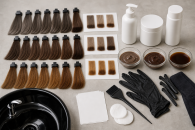
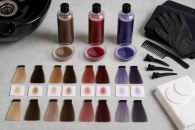
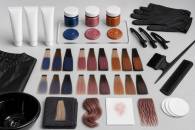
Follow every warning and skin-check direction. Test a faded mid-length, a porous end, and any pale highlight that will receive product. Use the exact planned dwell and rinse.
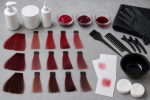
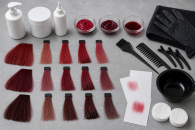
Dry the swatches before comparing brightness, depth, gold-orange-red balance, texture, transfer, and later fade.
Apply according to the missing copper
If mids look dull but ends remain bright, begin with mids and limit ends only through a label-supported plan. If the hair has yellow and brown bands, use sections rather than applying one amount everywhere.
Even saturation matters, but saturation does not mean repeated coating of already vivid ends.
Prevent overly orange porous ends
Light porous ends can grab orange pigment rapidly. Observe the strand-test response and record how much deeper or brighter the ends become. Do not assume a mask base makes unlimited deposit safe.
Repeated full-length use can create an orange perimeter while upper sections stay balanced.
Distinguish copper brightness from damage or dryness
Evaluate color, shine, smoothness, movement, and surface feel separately. A conditioning refresher can increase shine without correcting tone, and rough texture can scatter light in a way that makes copper look dull.
Do not extend pigment dwell to solve a texture issue.
Inspect under neutral and natural light
Look for yellow roots, orange ends, red bands, brown dullness, and uneven highlights. Compare unfiltered photographs only when exposure and white balance are consistent.
The red hairstyle guide can help define warm placement while keeping copper and true red as separate color decisions.
Check rinse transfer
Rinse to the stated endpoint and protect light towels. When dry, press a clean white tissue against a hidden section and monitor collars, pillowcases, and hats after early wear.
Dampness, friction, oil, and excess deposit can increase rub-off. Copper pigment visibility in runoff does not establish the final dry shade.
Track the copper fade path
Record whether the shade becomes more gold, peach, brown, red, pale, or uneven. That direction determines whether the next refresh needs orange, red, gold, depth, or no additional pigment.
Do not refresh on a fixed interval while the hair still holds sufficient copper. Cumulative deposit can hide the starting level.
Respond to excess orange conservatively
Stop adding copper and use the maker’s normal wash or fade guidance. Test any routine change on a strand. Do not immediately layer strong blue pigment across the whole head; the result depends on the exact orange level, base, porosity, and residual color.
Seek formula-specific professional help for major banding or a planned lightening service.
Keep a copper decision record
n
Save the product identity, selected copper direction, application condition, zone map, amount, dwell, and dried strand-test photographs. After each use, record which zones became brighter, darker, more gold, more orange, or more red and how many ordinary washes preceded the next shift. A consistent record prevents lighting changes from being mistaken for pigment loss and helps avoid automatic full-length refreshes when only one band needs deposit.
n
Copper refresher checklist
- Name depth and gold-orange-red-brown balance.
- Map roots, mids, ends, highlights, and porosity.
- Identify the exact deposit format.
- Complete required checks and multiple zone tests.
- Apply only where copper is missing.
- Limit porous-end loading through label-supported placement.
- Judge color and texture separately.
- Inspect under neutral and natural light.
- Check transfer and record the fade path.
- Pause before correcting excess orange.
Sources and scope
The FDA hair dye guidance supports label-directed use, instructed skin checks, gloves, eye-area restrictions, timing, rinsing, and scalp-condition boundaries. The American Academy of Dermatology coloring guidance supports cautious use and attention to hair condition. Neither source defines copper balance, endorses a refresher, or promises brightness, transfer resistance, fade, removal, or suitability.