HD Lace Wigs: Fit, Material, and Construction Guide

Direct answer: Evaluate an HD lace wig by verifying the seller's exact material and construction description, then inspecting whether its fine mesh, thread consistency, knot field, edge, color, stretch recovery, and seam transition remain intact. HD is not a regulated universal mesh grade and does not promise an invisible edge, skin match, durability, or easy installation. Handle the dry lace on a broad support, compare it across controlled matte backings, keep adhesives and removers within the wig directions, and retire or repair fraying, runs, widened holes, pulled knots, permanent waves, lifted seams, or hardened residue.
Verify what HD means for this exact wig
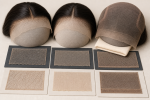
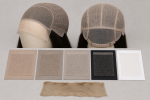
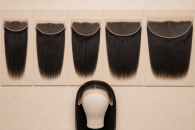
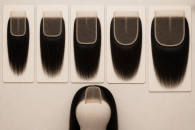
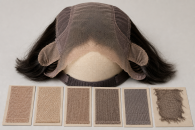
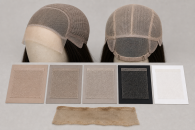
Save the maker's current HD lace description, disclosed fiber, lace dimensions, color, mesh image, care limits, attachment method, and exclusions. Photograph the dry front, reverse knot field, ear corners, parting area, and seam transition over matte light, medium, deep, and gray backings. Record opening consistency, thread fineness, sheen, edge contrast, stretch recovery, repairs, and handling history.
Capture the seller definition before comparing
Record whether HD describes thread fineness, mesh openness, color, supplier family, lace area, or only a product name. Save the listing date and exact cap model because terminology can vary. Do not translate HD into a fixed denier, hole count, transparency percentage, strength, or wear life unless supported by a current specification.
Inspect fine mesh on broad backing
Support the lace without stretching and view several zones over matte contrasting cards. Compare opening shape, thread uniformity, crossed points, local density, and whether the structure changes near knots. Fine mesh should be described, not praised as automatically better. Look for isolated enlarged openings, broken filaments, snag paths, and flattened regions that disappear against one backing.
Audit the knot field at normal cap shape
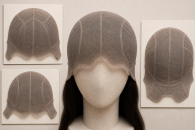
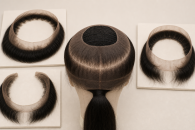
Place the cap on a compatible rounded support so the lace is neither slack nor extended. View knot spacing, size variation, clustering, pulled hairs, missing hairs, widening around knots, and transition into the part or hairline. Do not pick, tweeze, bleach, tint, or pull knots as an inspection shortcut. Each procedure changes evidence and can load already fine mesh.
Compare edge contrast without claiming disappearance
Observe the uncut or documented edge over multiple matte tones under fixed diffuse light and from ordinary viewing distance. Record lace color, sheen, shadow, curling, serration, and the contrast created by hair density. A camera close-up, bright exposure, makeup, adhesive, or filter can change edge appearance. Report conditions instead of stating that the lace melts or vanishes.
Check ear corners and high-load turns
Inspect where the front edge changes direction near temples and ears, where a cut may terminate, and where straps or tabs influence the panel. Fine mesh can concentrate force at corners. Look for tiny runs, stretched openings, rough cuts, adhesive accumulation, and asymmetrical pull. Do not correct a lifting corner by adding tension before confirming cap geometry.
Trace the seam from fine lace to the cap
Follow the entire junction into wefts, monofilament, closed fabric, or reinforcement. Record seam width, stiffness, overlap, thread, tape, and whether the transition lies flat in the intended shape. A delicate front panel can remain intact while a bulky or lifting seam creates the fit problem. More adhesive at the edge cannot correct a distorted transition.
Measure recovery with minimal permitted movement
Use only the maker's supported inspection range and record relaxed dimensions first. Observe whether a small extension changes opening shape, knot position, edge curl, or seam load and whether it returns. Do not stretch HD lace to demonstrate fineness, compare strength by pulling two samples, or infer cap size from panel elasticity.
Plan attachment from the cap contract
Use only the stated glueless, strap, comb, clip, tape, adhesive, or other route for that model. Confirm that the cap fits product-free before placing anything on the lace. Review adhesive and remover contact zones, drying requirements, and release order. HD terminology does not authorize stronger adhesive, repeated layers, shortened drying, or contact on irritated or broken skin.
Remove with edge support and full release
Release straps, combs, clips, tape, and adhesive through their separate supported sequence. Keep the lace on a broad support as each bonded area releases; free caught hair individually. Do not lift by the hair, peel a dry edge against resistance, scrape residue, or cut near skin. Inspect the knot field and corners immediately after removal.
Clean residue without scrubbing fine intersections
Follow the exact product and wig directions for softening, lifting, rinsing, and drying. Work from supported areas in small increments, keeping fingernails and tools away from mesh. Avoid rubbing lace against itself, high heat, unlisted solvent, and repeated abrasion. After complete drying, compare color, edge, openings, knots, seam, and relaxed dimensions with baseline.
Retire fine-mesh failure early
Set aside the wig for a run, connected enlarged openings, torn corner, fraying edge, pulled knot field, permanent ripple, seam separation, discoloration, hardened residue, failed stretch recovery, or repeated lifting caused by structural distortion. Cosmetic coverage or stronger attachment does not restore mesh continuity.
Decision table
| Checkpoint | Continue when | Stop or replace when |
|---|---|---|
| HD claim | Exact seller meaning, model, material, and date are preserved | Universal grade, strength, or invisibility is inferred |
| Fine mesh | Openings and intersections remain uniform at rest | Run, break, widening, snag path, or flattened zone |
| Knots | Spacing and surrounding mesh remain stable in cap shape | Pulled field, enlarged openings, missing hair, or cluster damage |
| Edge | Color, sheen, corners, and cut condition match baseline | Fray, curl, tear, residue, contrast change, or repeated lift |
| Transition | Fine lace joins the cap flat without concentrated load | Bulky seam, separation, distortion, or hardware pull |
Use health guidance as a stop rule, not HD validation
AAD guidance supports avoiding painful pulling and damaging attachment but does not define HD lace. FDA context applies to cosmetics, adhesives, and removers only within their own directions. Seller evidence, fine-mesh inspection, cap fit, and observed condition control the decision.
- AAD traction guidance: Do not use a tighter edge to compensate for cap geometry.
- AAD extension precautions: Keep attachment and removal gentle and the system clean.
- FDA hair-products overview: Evaluate cosmetics used near the lace separately from the HD label.
Resolve the complete hair system outside the HD label
The related extension pages help classify hair and attachments. They do not verify fine-mesh grade, knot condition, edge contrast, seam transition, or attachment compatibility.
- hair extension selection guide: keeping extension fiber and attachment choices outside this wig-equipment decision
- hair extension type guide: separating extension formats from a complete wig and cap system
- hair crown extension guide: handling shade and placement as a separate reader task
Final checklist
- Seller meaning, material, model, lace area, color, and care limits are recorded.
- Fine mesh, knots, corners, edge, stretch recovery, and seam transition are inspected at rest.
- Backing comparisons document conditions without promising disappearance or a universal match.
- The cap passes a product-free fit before any permitted attachment.
- Runs, widened holes, fray, pulled knots, seam lift, permanent waves, or residue trigger service or retirement.
HD is not a universal performance standard
This guide does not promise an invisible edge, skin match, comfort, airflow, strength, wear duration, easy application, secure hold, or damage-free removal.
An HD lace wig is an evidence, fine-mesh, knot, edge, corner, seam, fit, attachment, removal, care, and early-failure decision.