Purple Hair Dye for Dark Hair: Base Guide

Quick answer: Purple dye can show on dark hair without bleach when the target is a deep plum, violet-black, burgundy-purple, or a subtle light-reflective tint. Pale lavender and vivid cool purple usually need a lighter base. Choose the target depth before deciding on lightening, then complete label-required allergy testing and a separate strand test. This guide does not claim first-hand testing or guarantee lift, color accuracy, or freedom from damage.
Choose a purple depth that can exist on the starting base
| Starting hair | No-lightener expectation | Possible direction |
|---|---|---|
| Black | Color may be visible mainly in bright light. | Violet-black, blue-purple sheen, or burgundy-purple. |
| Dark brown | Deep purple may read clearly while pale shades remain muted. | Plum, aubergine, wine-purple, or dark violet. |
| Medium brown | More visible deposit is possible, especially on porous hair. | Rich violet, berry-purple, or magenta-purple. |
| Previously lightened pieces | Highlights can become much brighter than the base. | Dimensional purple with careful strand testing. |
| Previously dyed dark hair | Artificial pigment may block or distort new color. | Professional color correction may be needed. |
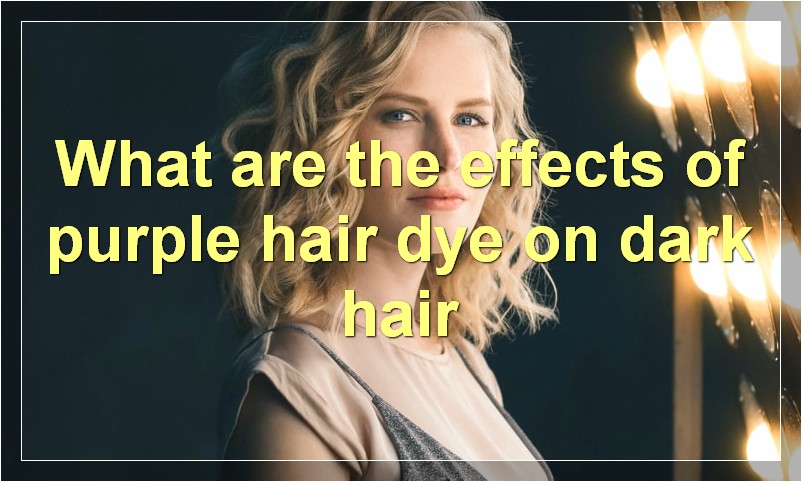
A photograph labeled “purple on dark hair” may use strong lighting, edited contrast, extensions, or a pre-lightened base. Ask what the starting level was before treating the image as a forecast.
Decide whether lightening belongs in the plan
Lightening is not required for every purple goal. It becomes more relevant as the target gets lighter, cooler, and more saturated. The cost is additional chemical stress and the possibility of uneven lift, especially over permanent dark dye. Hair with breakage, gummy wet texture, overlapping bleach, relaxer history, or scalp irritation should not be pushed toward a pale reference simply because the dye itself looks bright in the tube.
If lightening is necessary, staged professional work can be more realistic than one aggressive session. Discuss the acceptable first-stage color, not only the final ideal.
Compare purple color formats
| Format | Best question to ask | Commitment |
|---|---|---|
| Temporary spray, wax, or chalk | How much transfer occurs on dark hair and fabric? | Short wear with product-specific removal. |
| Direct-deposit semi-permanent dye | How visible is the shade on the current base without developer? | Gradual fade that varies with porosity and washing. |
| Color-depositing conditioner | Is it designed to create color or only maintain an existing purple? | Repeated use may build deposit. |
| Demi-permanent color | What developer and starting levels does the system specify? | Longer wear with oxidative processing. |
| Permanent purple color | Does it provide lift on virgin hair, and how does old dye change that? | Root maintenance and permanent chemical change. |
Perform allergy and strand checks for different reasons
The FDA’s hair-dye guidance emphasizes following product directions and warnings. Complete the allergy test exactly as the label requires. Separately, apply the planned color sequence to hidden representative hair. Dry it fully and inspect it in daylight, indoor light, and flash. Check color, condition, transfer, and whether porous ends grabbed more pigment.
Do not use a successful strand test as proof that a skin reaction cannot occur, and do not use a clear allergy test as proof that the shade will be even.
Plan a sectioned application on dark hair
- Document the starting color and all previous chemical services.
- Read the full label and prepare gloves, clips, timer, towels, and surface protection.
- Divide hair into sections small enough for even saturation.
- Follow the formula’s order for roots, lengths, and porous ends.
- Use the stated processing time rather than extending it to force visibility.
- Rinse and condition according to the same product system.
- Evaluate the dry result before planning another deposit or correction.
Predict the fade direction before coloring
Purple formulas can fade toward pink, red, blue, gray, or a muted brown depending on the pigment blend and the base underneath. Warm brown hair may make violet appear burgundy. A blue-heavy shade over yellow lightened hair can become dull or greenish as pigments fade unevenly. Ask how the brand describes fade and use the strand test through several washes when the outcome matters.
For a broader discussion of wear, see how long hair dye remains visible.
Keep purple from transferring everywhere
Fresh direct dye can transfer to towels, pillowcases, collars, shower grout, and hands, especially while wet. Use dark or older fabrics at first, rinse as directed, dry hair before contact with light upholstery, and clean splashes promptly with a surface-compatible method. More rinse water does not always mean the color is defective; follow the formula’s endpoint.
Maintain depth without over-depositing
Use a cleansing schedule that keeps the scalp comfortable and a conditioner that supports detangling. A color-depositing product can refresh purple, but repeated use on porous ends may make them darker or cooler than the roots. Apply by section and reduce exposure where pigment builds fastest.
Heat, ultraviolet exposure, hard water, and washing can change visible tone, but no single aftercare step stops all fading. Compare a specific blue option with light blue hair dye planning before assuming all cool fashion shades need the same base.
Troubleshoot dark-hair purple results
| Result | Likely issue | Next decision |
|---|---|---|
| Purple is barely visible | The base is too dark for the chosen depth. | Accept a subtle tint, choose a deeper shade, or discuss controlled lightening. |
| Highlights are neon | Lightened strands took far more pigment. | Use section-specific timing in future and avoid coating every area equally. |
| Color looks red | Warm base or red-heavy pigment dominates. | Check the formula undertone before adding blue correction. |
| Ends look almost black | Porous lengths accumulated deposit. | Reduce refresh exposure on the ends. |
| Hair breaks or scalp burns | Chemical stress or reaction may be occurring. | Stop, follow response directions, and seek professional or medical help as appropriate. |
Dark-hair purple purchase checklist
- Target shade shown on a base similar to the actual hair.
- Formula category and whether it lifts, deposits, or only refreshes.
- Allergy-test, timing, glove, eye-area, and ventilation instructions.
- Amount required for hair length and density.
- Transfer, stain cleanup, and fade direction.
- A realistic plan if the first result is subtle.
Save the strand-test notes with the product name and shade. Record the starting color, processing time, lighting, and wash count. Those details are more useful for a future refresh than a single photograph whose exposure or white balance may have changed.