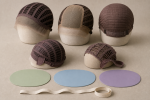
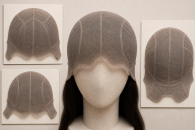
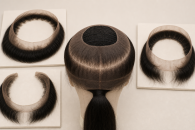
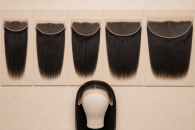
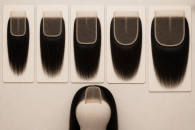
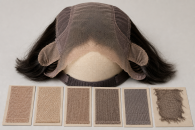
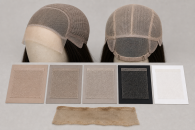
Wig Head Measurement: Fit, Material, and Construction Guide

Direct answer: Measure a head for a wig only after preparing the hair in the intended wear state and identifying consistent landmarks. Record circumference, front to nape, ear to ear over the crown, ear to ear across the forehead when required, temple to temple, and nape width using the maker's exact routes. Keep the tape flat, level where specified, and gently in contact without compressing hair or skin. Repeat each route from a fully reset tape, document meaningful differences or asymmetry, and preserve raw measurements without converting them into a cap size on this page.
Fix the preparation and landmarks before reading the tape
Document the hair preparation that will actually sit under the wig, including braid pattern, wrap, liner, bulk, and any permitted protective layer. Mark the front reference, natural hairline or intended front, ear landmarks, crown, occipital curve, and nape reference. Use one flexible nonstretch tape and record the route, units, tension convention, reader, and repeated values.
Prepare hair exactly as it will be worn
Measure after the intended braids, wrap, smoothing, liner, or other supported preparation is complete. Record bulk at crown, sides, and nape. A loose-hair reading cannot reliably represent a compact preparation, while maximum compression can understate required space. Do not change the preparation halfway through the set.
Choose one front reference
Identify the maker-required natural hairline, intended wig front, or other defined point and photograph it without exposing private identifying detail. Use the same front reference for circumference, front-to-nape, and forehead routes. Moving the start point by feel can create internally inconsistent numbers even when each tape reading looks precise.
Acquire circumference on its named route
Route the tape around the front reference, above or around the ears as specified, across the occipital prominence, and back to the start. Keep it untwisted and level at required segments. Read at gentle contact without pulling the ends together. Reset completely and repeat rather than sliding the first loop tighter.
Measure front to nape through the crown
Place zero at the fixed front reference and carry the tape over the center crown to the named nape point. Keep the path centered relative to the prepared hair, not merely the visible part. Record crown bulk or an asymmetric ridge that changes the route. Do not shorten the path by cutting diagonally around a bun or braid.
Separate the two ear-to-ear routes
Ear to ear over the crown describes a different arc from ear to ear across the forehead. Use the exact ear landmark and route named by the cap maker, and label the values separately. Do not substitute one for the other or infer the missing arc from circumference. Keep the tape clear of thick jewelry or remove permitted obstructions before restarting.
Record temple-to-temple without guessing
Define the temple landmarks and whether the route passes over the crown or around the back according to the requested chart. Photograph or diagram the route in the private fitting record. If a landmark is unclear, note uncertainty and obtain appropriate fitting help rather than choosing a convenient point to complete the table.
Measure nape width on a stable boundary
Use the specified lower hairline or cap boundary and measure across the nape without following loose tendrils or pulling the tape around the neck. Record irregular hairline shape separately. Nape width is not neck circumference and does not establish strap extension, elastic range, or cap size by itself.
Hold tape tension constant
Use the same tape, units, posture, and gentle-contact rule across readings. The tape should lie flat without a gap but should not indent skin, flatten braid ridges, or compress a liner. If another person reads the tape, agree on the tension convention first. A tightly pulled repeat is not confirmation of a looser initial value.
Repeat from a neutral reset
Remove the tape, let the preparation return to baseline, and repeat every route independently. When values differ, check landmarks, twist, level, posture, preparation shift, and reading angle. Record both observations before deciding whether a third reading is useful. Do not average measurements that followed visibly different routes.
Preserve asymmetry and uncertainty
Note left-right differences, high or low ears, uneven hairline, occipital shape, crown volume, sensitive zones, and routes affected by preparation. These observations help a later fitting decision but do not diagnose a condition. Keep the raw record, date, units, route images, and uncertainty so a cap chart is not built on false precision.
Decision table
| Checkpoint | Continue when | Stop or replace when |
|---|---|---|
| Preparation | Hair, liner, and bulk match intended wear | Loose, changing, or maximally compressed baseline |
| Landmarks | Front, ears, crown, temples, and nape are fixed | Route starts move or a point is guessed |
| Tape | Flat, untwisted, gently contacting, and correctly routed | Gap, compression, diagonal shortcut, or twisted tape |
| Repeat | Independent values agree after a full reset | Different route, posture, tension, or preparation |
| Record | Raw values, units, route, date, and uncertainty are preserved | Unlabeled number, hidden discrepancy, or premature size conversion |
Use scalp guidance to avoid force during measurement
AAD sources support avoiding painful pulling around wigs and extensions but do not define measurement routes or cap sizes. FDA hair-product information does not control tape placement. Use the selected wig maker's current chart for route definitions and preserve the raw acquisition record.
- AAD traction guidance: Measurement should not rely on painful compression or pulling.
- AAD extension precautions: Keep the intended hair preparation visible and low tension.
- FDA hair-products overview: Use any styling product in the preparation only under its own directions.
Classify the hair system before fixing the preparation
Related extension resources can help distinguish hair formats and attachment choices. They do not replace the maker-specific landmark routes or raw measurements.
- hair extension selection guide: keeping extension fiber and attachment choices outside this wig-equipment decision
- hair extension type guide: separating extension formats from a complete wig and cap system
- hair crown extension guide: handling shade and placement as a separate reader task
Final checklist
- Hair preparation and liner match the intended wear state.
- Every front, ear, crown, temple, and nape landmark is fixed before reading.
- The same un-stretched tape, units, posture, and gentle-contact rule are used.
- Each route is repeated from a full reset and discrepancies remain visible.
- Raw values are preserved without assigning a cap size in the acquisition record.
Measurements are observations, not a fit guarantee
Repeatable routes improve the record but do not promise comfort, cap fit, secure wear, hairline protection, or compatibility with a seller's chart. The result applies to the documented preparation and date.
Wig head measurement is a preparation, landmark, route, tape-tension, repeat, and uncertainty-control process. Sizing begins only after that record is complete.