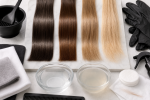
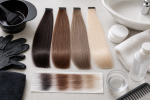
Tinted Hair Gloss: Finish, Transfer, Fade, and Removal Guide

Direct answer: choose a tinted hair gloss by matching its pigment direction to the dry starting level and visible undertone, then confirm whether the formula is direct, demi-permanent, no-mix, or activator-based. A tinted gloss can deepen, refresh, warm, cool, or mute visible tone within its label claims; it does not reliably lighten old artificial color or create the same shade on every base. Map roots, mids, and ends, complete required skin and hidden-strand checks, and evaluate the result dry before repeating it.
The central decision is tonal direction. Finish and shine matter, but they should not hide an unsuitable color choice.
Map depth and undertone separately
Estimate how light or dark roots, mid-lengths, ends, highlights, and gray sections appear. Then name the visible tone: yellow, orange, red, gold, copper, violet, blue, green, beige, or a mixture.
A cool gloss on pale yellow hair can look different from the same gloss on orange medium blonde. A warm brown gloss over faded green can become muted rather than rich. Dark hair may show only a reflection.
The hair color chart guide helps separate level and tone before selecting a gloss.
Define refresh, correction, or shift
A refresh reinforces an existing shade family. A correction reduces the visual dominance of an unwanted tone. A shift moves the color toward a different warm, cool, red, copper, brown, or fashion direction.
Do not choose one bottle to perform all three tasks across uneven zones. Previously lightened ends may need less pigment than faded mids, while natural roots may show little change.
Read the formula route
Some tinted glosses deposit directly. Others require a named activator and precise ratio. A ready-to-use gloss should not receive developer, and an activated system should not be diluted with an unrelated conditioner.
Follow the tools, component order, timing, and application method on the current label. Product names such as gloss, toner, demi, and glaze are not interchangeable instructions.
The hair gloss overview provides category context without replacing a product’s directions.
Select pigment direction conservatively
Violet relates to yellow, blue relates to orange, and green relates to red, but a color wheel shows direction rather than dose. Strong complementary pigment can create dull, gray, khaki, blue, or violet areas on porous hair.
Gold and copper glosses can restore warmth, while red or violet can shift the shade family more visibly. Neutral and brown labels vary by manufacturer and may still contain warm or cool pigment.
Do not transfer a shade code from one brand to another.
Account for prior color and porosity
Permanent dye, direct pigment, toner, henna, metallic salts, and lightened sections can change uptake. A gloss generally cannot produce a clean lighter result over accumulated dark artificial color.
Porous ends can become deeper or cooler than the root. Unknown bands and fragile hair deserve professional assessment before another formula is layered.
Use a hidden strand as the decision gate
Complete every label-required allergy alert or skin check. Select a strand containing the most representative depth and the most porous zone.
Apply the exact formula, ratio, saturation, and timing. Rinse and dry fully. Evaluate depth, tone, shine, evenness, weight, and transfer.
If the unwanted tone remains, do not extend time beyond the label. Reassess whether the starting depth, pigment direction, or formula class is wrong.
Plan application by zone
Section hair before mixing. When the directions permit zone timing, apply to the areas needing the most correction first and protect ends that already hold enough pigment.
Use consistent section thickness and enough product for even coverage. A glossy wet surface can hide dry inner strands.
The direct color guide explains why base color and porous-zone response govern deposit and fade.
Judge color and finish after drying
Wet gloss appears darker and can reflect a cool cast. Compare the dry result in neutral light with the original base map.
Check whether the target tone appears in roots, mids, and ends; whether the color deepened too much; and whether shine is even. Keep styling products and lighting consistent during comparison.
Expect possible transfer
Tinted formulas can mark towels, pillowcases, collars, gloves, grout, and counters, especially while hair is damp. Protect surfaces and clean drips promptly.
Transfer depends on formula, shade, amount, rinse, and porosity. Do not state that it ends after a fixed wash count.
Predict the fade direction
Cool violet over yellow can fade toward beige or reveal yellow again. Blue over orange can reveal warmth or move through teal on some bases. Copper can leave gold or orange. Red can soften toward copper, pink, or the starting brown.
Different zones may release components at different rates. Record dry color after each wash rather than relying on rinse-water color.
Pause before correcting a fading gloss
Do not immediately add more pigment when the first change appears. Observe whether the fade is even and whether ends retain more tone.
Layering complementary glosses can create muddy bands. Use a hidden strand before changing pigment direction.
Removal is pigment-specific
A gloss may fade gradually, but temporary or demi-permanent language does not establish complete removal by a date. Porous lightened hair can retain direct or oxidative pigment.
Strong cleansing may increase dryness and still leave uneven residue. Seek professional help before major lightening, an opposite creative shade, or color correction over multiple gloss layers.
Safety boundaries
The U.S. Food and Drug Administration advises following hair-dye directions, completing the directed skin check before every use, wearing gloves, keeping dye away from the eyes, observing processing time, and rinsing the scalp well.
Do not use scalp hair dye on eyebrows or eyelashes. Do not proceed on an irritated or damaged scalp. A lower-commitment color description does not make warnings optional.
Common tinted-gloss mistakes
- Choosing tone before identifying depth.
- Expecting gloss to lift old dark color.
- Using one formula on resistant roots and porous ends.
- Transferring shade codes between brands.
- Extending time when a strand stays warm.
- Judging color while wet.
- Layering opposites to chase an uneven fade.
- Assuming complete removal by a fixed date.
Final tinted-gloss checklist
- Map depth, undertone, porosity, and prior color.
- Define refresh, correction, or shift.
- Identify direct, no-mix, or activated formula type.
- Choose one manufacturer’s tone direction.
- Complete required skin and hidden-strand checks.
- Apply by zone within label timing.
- Evaluate dry color, finish, transfer, and fade.
- Use a strand-first removal or next-color plan.
Sources and scope
The FDA hair dyes guidance supports the label, skin-check, glove, timing, eye-area, rinse, and scalp-condition boundaries. The American Academy of Dermatology coloring guidance supports conservative changes and damage-reduction limits. Neither source prescribes a tinted gloss, pigment direction, ratio, shade, fade duration, removal method, or result.