Burgundy Hair Color: Starting Level, Undertone, Formula, and Upkeep Guide

Direct answer: plan burgundy hair color by deciding whether you want a brown-based wine shade or a brighter red-violet result, then compare that target with your current depth, existing artificial color, porosity, and visible warmth. Burgundy is not one fixed formula. On dark brown hair it may appear as a subtle wine reflection; on a lighter brown or blonde base it can look much brighter and more violet. A representative strand test is the most useful preview. Follow the exact product label, and use professional help when the goal requires major lightening, uneven color removal, or correction across fragile bands.
This guide focuses on the decisions that change the result: starting canvas, red-to-violet balance, permanent versus deposit-only color, zone-by-zone application, and upkeep. It does not provide a universal mixing recipe because shade codes, developers, ratios, processing times, and permitted combinations vary by manufacturer.
Define the burgundy target before choosing a product
Burgundy usually sits between deep red, violet, and brown, but product names can cover very different outcomes. One shade may be a dark brown with a wine reflection, another may be a saturated red-violet, and another may lean toward plum. Begin with three visual decisions:
- Depth: Do you want a near-black wine result, a medium brunette burgundy, or a visibly bright red-violet?
- Color balance: Should the finish read more red, more violet, or evenly wine-toned?
- Visibility: Should the color be subtle indoors and stronger in daylight, or clearly vivid in most lighting?
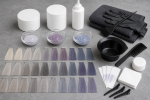
Use the manufacturer’s own swatches for the exact color system. Shade numbers and letters are not universal between brands. The front-of-box image is also not a prediction for every starting canvas. Compare any starting-color chart with your actual roots, mid-lengths, and ends rather than choosing only by the model photograph.
If you are comparing burgundy with a clearer red direction, the bright red hair dye guide explains how a warmer target changes base and upkeep decisions. For a more violet direction, the dark purple hair dye guide provides a useful contrast in pigment visibility and fade behavior.
Read the starting canvas by zone
Evaluate dry hair in indirect daylight. Assess natural roots, previously colored mid-lengths, and ends as separate zones. Record the natural depth, visible warmth, prior permanent or direct dye, highlights or lightened sections, texture, and porosity. A single all-over formula cannot be assumed to behave uniformly when those zones differ.
Dark brown or black starting hair
A deposit-only burgundy on very dark hair may create a restrained red-wine reflection rather than a vivid result. The effect can be strongest in sunlight and less obvious indoors. If the target image is several levels lighter or distinctly vivid, the plan may require lightening. Do not assume that choosing a lighter burgundy box will evenly lift old dark permanent dye.
Medium brown starting hair
Medium brown often supports a recognizable brown-based burgundy without requiring the palest canvas. Existing orange or red warmth may reinforce the red side of the result, while a violet-heavy shade may create a cooler wine balance. The exact outcome still depends on whether the hair is untreated or already colored and whether the selected system lifts, deposits, or does both.
Light brown, blonde, or highlighted hair
On lighter hair, burgundy pigments can look more saturated and may show more violet. Porous highlights and ends can absorb pigment quickly, become darker than expected, or retain a pink, red, or purple cast as the color fades. Test more than one representative zone if the hair contains both untreated and lightened sections.
Previously colored or uneven hair
Old permanent dye, direct pigment, henna, banding, and repeated root applications can change the route completely. Artificial color does not reliably behave like natural pigment. If you cannot identify the chemical history or the hair contains fragile lightened bands, a qualified colorist can assess separate zones and perform test sections before a corrective service.
Choose the red-violet balance from the visible base
A burgundy target is a balance, not simply the strongest available red and purple. A red-heavy formula can look warmer and brighter, while a violet-heavy formula can look cooler, deeper, or more plum. A natural or brown component can make the finish more restrained. The starting hair contributes its own depth and warmth, so the same labeled shade can read differently on two people.
Use a dried strand test to answer practical questions: Is the result dark enough? Does it look more red or violet than intended? Are porous ends absorbing too much? Is the color visible in both daylight and indoor lighting? Record the product, shade, test section, timing, and dried appearance. If the test is too dark or too violet, adding more processing time is not a sensible correction. Reassess the target or choose a different approved product route.
Skin undertone can inform personal preference but should not be treated as a rule. A cooler burgundy may create stronger contrast; a balanced wine-brown can be more muted; and a warmer burgundy can emphasize red. The hair color guide for olive skin can help compare contrast and undertone choices without limiting which shade someone may wear.
Select a color format based on the job
Permanent oxidative color
Permanent color may be selected when the label supports durable deposit, gray blending or coverage, and some change to natural pigment. It creates an ongoing regrowth plan and adds to the hair’s chemical history. Use the included components and follow the stated ratio, application order, and timing. Do not substitute a stronger developer or combine unrelated systems unless the manufacturer explicitly directs it.
Demi-permanent color
Demi-permanent color is often considered when the current depth is already close to the target and the main need is deposit, darkening, gloss, or a wine-toned refresh. It generally should not be chosen with the expectation of major lift. Porous lengths may still take the shade more deeply than roots, and label-directed allergy precautions still apply.
Semi-permanent or direct color
Direct burgundy pigments can be useful for vivid deposit or temporary refresh on a suitable base. Visibility depends strongly on starting depth. They may stain porous hair and surrounding surfaces, and their red and violet components may fade at different rates. A direct dye is not a substitute for the lightening needed to create a brighter canvas.
Professional lightening or correction
Choose professional assessment when the target requires substantial lift, old dark dye removal, correction of bands, or work on fragile hair. The American Academy of Dermatology advises staying within three shades of natural color for at-home dyeing and notes that greater lightening generally requires more peroxide and can cause more damage. That supports a conservative boundary rather than a promise that a salon can guarantee one exact swatch.
Plan the application before mixing
Read the entire package first. Confirm the required gloves, timer, sectioning tools, amount of product, and any label-specified mixing container. Protect nearby surfaces because red-violet pigments can stain. Do not mix until the hair has been sectioned and the application sequence is understood.
Use the strand test to decide whether different zones need different handling. Untreated roots can process differently from porous ends, while previously colored mid-lengths may resist lift. Do not repeatedly coat the full length merely because the roots need attention. Follow the product’s directions for virgin application, regrowth, refresh, and rinsing rather than inventing one timing plan.
The U.S. Food and Drug Administration advises following package directions, performing the directed skin test before every use, wearing gloves, keeping hair dye away from the eyes, observing the stated processing time, and rinsing the scalp well. A reaction can occur even after previous uneventful use, and a preliminary test cannot guarantee that no reaction will occur.
Do not use hair dye on eyebrows or eyelashes. Do not proceed on an irritated, sunburned, scratched, or damaged scalp. The FDA advises waiting at least 14 days after bleaching, relaxing, or perming before using hair dye. Stop using the product if a reaction occurs and seek appropriate medical advice; this guide does not diagnose reactions or provide medical care.
Maintain burgundy by watching how it fades
Burgundy can shift as red and violet pigments fade and the underlying base becomes more visible. Some hair may look warmer and redder over time; other hair may retain a cooler stain in porous sections. Maintenance should respond to the observed shift rather than automatically adding the strongest red-violet product.
- Use a gentle cleansing routine suitable for colored hair and avoid hotter water than necessary.
- Limit avoidable heat exposure and use heat tools conservatively.
- Protect hair from prolonged sun exposure; the AAD notes that sun can contribute to fading, dryness, roughness, and brittleness.
- Refresh regrowth, faded mid-lengths, and porous ends according to their separate needs.
- Strand-test color-depositing masks, conditioners, or glosses before applying them to lightened ends.
- Keep notes on the initial dried result and each fade stage so the next decision is evidence-based.
A red-depositing refresh may strengthen warmth, while a violet-heavy refresh may cool the result or push it toward plum. Product pigment concentration varies, so start with label directions and assess gradually. If the color has become uneven because of porosity or overlapping permanent dye, repeated all-over deposit can deepen the problem rather than solve it.
Burgundy hair color decision checklist
- Define the target depth and whether it should lean red, violet, or brown.
- Assess natural roots, colored mid-lengths, highlights, and porous ends separately.
- Decide whether the job needs lift, deposit, gray coverage, or only a temporary refresh.
- Use the manufacturer’s own swatch system and instructions.
- Perform the directed skin test and a representative strand test.
- View the dried strand in daylight and indoor light before committing.
- Do not assume lighter color will evenly remove old permanent pigment.
- Plan future root and length maintenance before choosing a permanent route.
- Escalate major lightening, uncertain chemical history, banding, or fragile hair to a qualified professional.
A good burgundy plan connects a clearly defined wine-toned target to a known starting canvas. The shade name alone is not enough. Depth, red-violet balance, previous color, porosity, product format, label directions, and maintenance all shape the visible result.
Sources and scope
The FDA hair dyes guidance supports the label-following, skin-test, glove, timing, eye-area, scalp-condition, service-spacing, and reaction boundaries in this article. The American Academy of Dermatology coloring and perming guidance supports conservative shade-change planning and measures intended to reduce avoidable hair damage. Neither source provides a universal burgundy formula or guarantees a cosmetic result.