Neutral Hair Color Additives: Formula, Directions, and Compatibility Guide

Direct answer: identify what “neutral” means in the exact hair color line before adding it to a formula. A neutral or N-series shade may supply balanced background color, support a manufacturer’s gray strategy, moderate an intense reflect, or serve another line-specific purpose. A corrective neutralizer, clear base, and neutral shade are not the same product. Confirm the formula class, level, approved shade family, maximum or required amount, activator calculation, timing, and application directions. Complete every directed skin test and judge a measured strand test only after it is fully dry.
Neutral does not mean colorless, universally compatible, irritation-free, or certain to produce a beige or natural-looking result. The visible outcome still depends on the starting level, underlying pigment, previous color, gray distribution, porosity, chosen reflect, and the dye system.
Define the word neutral in this product line
Read the product identity, shade code, component list, directions, and technical chart. Determine whether the item is a neutral shade within a permanent or demi-permanent range, a concentrated additive, a natural-series base used in a gray formula, a corrective tone, or a clear product described with neutral language. Similar names do not create interchangeable chemistry.
A neutral shade commonly contains a balanced dye background intended to sit differently from an ash, gold, copper, red, violet, or other reflect family. That does not mean it contains no undertone. The manufacturer may define neutral differently at different levels, and the underlying hair can reveal warmth or coolness that changes the final appearance.
A neutral additive may be designed to soften a strong reflect or add background depth within a compatible formula. It should not be assumed to remove unwanted color. If the actual task is to counter orange, yellow, red, or another exposed undertone, first identify the tone and use only the corrective method supported by the line.
Separate neutral color from clear and intensifier products
Clear diluters reduce pigment concentration or serve as a gloss base in selected systems. Intensifier concentrates strengthen or shift a tone. Neutral color can contribute its own balanced pigment and depth. Substituting one for another can change opacity, tonal direction, activator balance, gray appearance, and fading.
The direct hair color formula guide helps distinguish ready-to-use pigment from oxidative color that requires a partner component. Resolve that formula class before deciding whether a neutral item can enter the mixture.
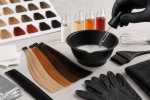
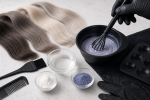
Do not infer ingredients from the editorial image. Transparent liquid, pale powder, conditioner, water, developer, masks, or household materials are not neutral additives unless the exact directions name that component. Use only the color, additive, activator, and tools approved for the same system.
Match the level and shade family
Compare the neutral shade level with the target formula and starting canvas. A level 5 neutral is not merely a stronger version of a level 8 neutral; it can add materially more depth. Mixing across levels may alter both tone and darkness. Follow the manufacturer’s mixing chart instead of averaging shade numbers by intuition.
Record the natural level, artificial color, highlights, exposed warmth, gray percentage, resistant areas, and porous sections. Old dark dye cannot be assumed to become lighter because neutral color is added. Prelightened ends may accept neutral pigment more rapidly and look deeper or duller than stronger roots.
Neutral also does not automatically equal the reader’s natural color. Hair can have warm, cool, muted, translucent, or mixed dimensions. A flat neutral formula over varied hair may reduce visible variation, leave some underlying warmth, or create different results across the head. The strand test should include the most important canvas differences.
Use gray strategy only when the line supports it
Some manufacturers recommend a natural or neutral series alone or combined with a reflect shade for gray blending or coverage. The required proportion can change with gray percentage, resistance, level, formula class, and desired transparency. Use the current chart for the exact range rather than importing a gray formula from another brand.
Gray blending and opaque coverage are different goals. A demi-permanent neutral may soften contrast without covering every white strand. A permanent neutral formula may be designed for more coverage, but hair texture, resistance, saturation, timing, and the selected shade still matter. No neutral additive by itself promises a uniform result.
The gray hair transition guide helps readers decide whether to blend, grow out, tone, or maintain visible gray before choosing a color formula.
Calculate every component explicitly
Write the base shade, neutral shade or additive, approved clear or intensifier if any, and activator as separate entries. Use the unit named by the manufacturer: weight, volume, approved drops, or another defined measure. Record the total color portion and determine whether the neutral component is included in the activator calculation.
If the directions count the base shade plus neutral shade as total color, calculate the activator from that combined amount at the stated ratio. If the line sets a fixed proportion or maximum addition, stay within that instruction. This is a method for reading a formula, not a universal ratio.
A description such as “add some neutral” is not reproducible. Small measurement differences can change depth, reflect, and gray appearance. Use accurate tools, keep units consistent, and document the final formula before application. Do not add extra water, conditioner, or developer to adjust texture.
Predict the undertone interaction
View the starting hair dry in neutral light. Identify whether unwanted warmth is yellow, yellow-orange, orange, red-orange, or red rather than using the broad word brassy. A neutral shade may contain enough balanced pigment to moderate a reflect, but it may not supply the targeted complementary tone needed for a correction.
Adding neutral to a vivid formula can reduce the visual dominance of that reflect while also adding depth or opacity. The red hair color placement guide shows how base, depth, placement, contrast, and maintenance shape a red result. Neutral color modifies that design; it does not replace it.
Porosity can magnify a muted or cool result on lightened ends. If different zones have different histories, test more than one representative strand. A single hidden root strand does not predict a porous highlighted length.
Complete skin and strand testing
Follow every preliminary skin-test instruction supplied with the hair dye. The U.S. Food and Drug Administration’s hair-dye guidance advises consumers to follow package directions, wear gloves, observe timing, rinse thoroughly, avoid use on an irritated or damaged scalp, and complete the directed preliminary test before each use. Adding a neutral shade does not remove those precautions.
A strand test answers the formula question. Choose a hidden section that represents the base, gray, old color, porosity, and target placement. Measure the formula accurately, saturate consistently, process for the directed interval, rinse as directed, and dry it completely. Review level, warmth, coolness, opacity, gray contrast, evenness, feel, and the relationship to adjacent hair.
If the strand is too dark, flat, warm, cool, translucent, opaque, patchy, or rough, pause. Recheck the neutral product identity, level, proportion, activator ratio, starting undertone, porosity, and service goal. Do not solve an unacceptable result by adding an unmeasured corrective pigment to the full batch.
Plan application, timing, and saturation
Prepare gloves, accurate measuring tools, a nonmetallic bowl or applicator when directed, tint brush, clips, timer, protective covering, and enough correctly mixed product. Follow the specified mixing order. Stir until the approved components are evenly distributed without adding materials outside the formula.
Apply to clean, dry or towel-dried hair as directed. Use thin subsections and complete saturation. Natural regrowth, resistant gray, previously colored lengths, and porous ends may need different sequencing only when the directions and strand evidence support it. Do not overlap fragile hair automatically.
Start timing at the point named in the instructions. Do not extend exposure, add heat, or increase developer strength to force coverage or compensate for a poor shade choice. Keep scalp hair dye away from eyelashes and eyebrows.
Know the stop conditions
Stop before mixing if the neutral item is not approved for the color line; its level, role, proportion, or activator method is unknown; component labels are missing; prior color chemistry is uncertain; the scalp is irritated, scratched, sunburned, or damaged; or the hair is gummy, breaking, or unable to tolerate another service.
During use, stop and rinse as the label directs if there is intense burning, swelling, blistering, breathing difficulty, spreading rash, eye exposure, or another concerning reaction. Seek appropriate medical help for a serious reaction. The American Academy of Dermatology’s hair coloring and chemical-service guidance supports manufacturer testing and conservative changes rather than stacking stressful services.
Rinse, assess, and record the formula
Rinse with the method and water temperature specified for the system, keeping runoff away from the eyes. Use only the directed cleanser, conditioner, or finishing step. Judge the result after the hair is fully dry in consistent light; wet hair can look deeper and conceal unevenness.
Record the product line, neutral component, base shade, exact amounts, activator, ratio, starting canvas, gray percentage, processing time, application sequence, and dry result. Note how porous areas and gray strands change through washing. Do not save mixed oxidative color for later use, and follow storage directions for opened unmixed components.
Neutral additive checklist
- The word neutral has a defined role in the exact product line.
- The item is a shade, additive, corrective product, or clear base as stated by its directions.
- The formula class, level, compatible shades, proportion, and activator method are known.
- The starting level, undertone, old color, gray distribution, and porosity are mapped.
- No water, powder, conditioner, developer, or unrelated product is inferred from appearance.
- Directed skin testing and fully dried representative strand testing are complete.
- The plan includes accurate measurement, saturation, timing, rinsing, and stop rules.
A dependable neutral formula begins with a precise product definition and a measured plan. When the role, level, ratio, canvas, or strand result is unclear, delay the service rather than using neutral as a catch-all correction.