High-Lift Permanent Hair Color: Formula, Directions, and Compatibility Guide

Direct answer: high-lift permanent hair color is a line-specific oxidative formula intended to lighten eligible natural pigment while depositing a target tone. Use it only within the manufacturer’s stated natural starting levels, shade chart, developer, ratio, application method, and processing time. It is not an interchangeable substitute for lightener, and it generally should not be expected to lift through existing artificial color. Complete every directed preliminary skin test and test the exact mixture on representative strands before a wider application.
The phrase “high lift” does not promise a fixed number of levels. Natural depth, underlying warmth, hair diameter, prior color, gray distribution, formula strength, heat from the scalp, and application control all influence the dry result. A high-lift shade that works on one eligible natural base can expose excessive warmth, stall dark, or stress another canvas.
Confirm that the hair fits the stated starting range
Identify the natural level at the root and compare it with the line’s high-lift chart. Separate natural regrowth from old permanent color, demi-permanent color, direct pigment, highlights, lowlights, and lightened ends. Record the target depth and tone rather than choosing a shade only because its swatch looks light.
High-lift color is commonly designed around natural pigment. Color applied over artificial color may add tone or create an uneven shift without producing the expected lift. A dark band from prior color, direct-dye residue, mineral discoloration, and natural regrowth are different canvases and should not be combined under one assumption.
The dark-hair deposit and lift guide helps separate color deposit, natural-pigment lift, and the limits created by existing artificial color. It does not replace the technical chart for the selected line.
Distinguish high-lift color from lightener
High-lift permanent color contains oxidative dye components and is formulated to lift and deposit within a named system. Powder, cream, oil, or clay lightener is a different product class used under its own directions. The two should not be substituted by matching developer strength or visual texture.
A high-lift formula may be appropriate when the chart includes the natural base and target. A separate lightening plan may be considered when the desired level falls outside that range, but that is not permission to improvise bleach use. Previously lightened, fragile, banded, or heavily colored hair can require professional assessment.
Do not add lightener powder to a high-lift shade or mix permanent color into lightener unless the manufacturer expressly provides that formula. Combining unrelated systems changes both chemistry and risk.
Read the shade code and tonal direction
High-lift shade families may include neutral, ash, violet, pearl, beige, gold, or blended directions. Decode the line’s letters and numbers from its own chart. Similar names across brands do not establish the same base pigment, concentration, or target.
Predict the underlying warmth likely to appear at the intended lift. A cool high-lift shade does not erase every yellow or orange stage, while excess cool pigment on a pale or porous area can look gray, violet, khaki, or dull. Neutral and warm shades can appear brighter or more golden than the swatch on an exposed warm base.
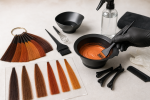
The hair color chart guide explains how to read level and tone separately. Verify every code against the current chart supplied for the exact product.
Keep shade, developer, and ratio in one system
Use only the developer type and strength named for the high-lift line. Check whether the required activator differs from the developer used with standard permanent shades in the same brand. Confirm the mixing ratio, measuring unit, batch size, mixing order, and whether additives are permitted.
A stronger developer is not an automatic route to a lighter or better result. Changing the developer or ratio can alter lift, deposit, timing, scalp exposure, viscosity, and hair condition. Conditioner, shampoo, water, oil, lightener, direct dye, or an unrelated booster should not enter the formula unless the instructions name it.
Measure by weight or volume according to the directions. Write down the amount of color and developer before mixing. Do not estimate the ratio from bowl consistency, and do not copy a ratio from another high-lift brand.
Check scalp and off-scalp directions
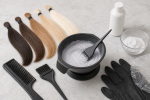
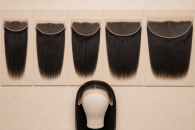
Determine whether the exact product is approved for on-scalp use, off-scalp use, or both, and under what conditions. Foils, plastic film, open-air sections, and scalp application can change heat, moisture, and product behavior. The editorial image shows organization materials; it does not authorize foil or enclosure for every formula.
Follow ventilation, bowl, tool, and protective-equipment directions. Use gloves and a nonmetallic bowl or applicator when specified. Prepare sections before mixing so processing is not extended by slow setup.
Never use scalp hair color on eyelashes or eyebrows. Do not apply to an irritated, abraded, sunburned, or otherwise damaged scalp.
Use separate safety and color tests
Follow all preliminary skin-test instructions included with the product. The U.S. Food and Drug Administration’s hair-dye guidance advises following package directions, wearing gloves, observing timing, rinsing thoroughly, avoiding a damaged scalp, and completing the directed preliminary test before each use.
The color strand test answers a different question. Choose hidden samples representing natural root, resistant hair, gray, an artificial-color band, a previously lightened section, and a porous end. Mix the exact shade, developer, ratio, and additive system intended for use. Apply, process, rinse, and finish exactly as directed.
Dry every strand completely. Compare achieved level, exposed warmth, tonal control, banding, gray appearance, breakage, elasticity, surface feel, and porosity. A wet strand can look darker and cooler and may conceal uneven lift.
Plan natural regrowth and old lengths separately
Do not automatically pull high-lift permanent color through previously lightened or colored lengths. Repeated overlap can add oxidative exposure while creating dull, porous, or uneven ends. If the old lengths need tonal refresh, use only a compatible method supported by the line and strand evidence.
For a first application on eligible natural hair, follow the manufacturer’s placement sequence and timing. Scalp heat can change root development, so root, midlength, and end timing should come from the directions rather than a generic rule. For retouch work, identify the exact regrowth boundary and avoid overlapping the established high-lift area.
If the head contains natural regrowth, dark artificial bands, pale highlights, gray, and fragile ends, one formula may not be capable of producing an even target. Stop and obtain qualified color help when the zone plan cannot be supported by tests.
Evaluate gray coverage separately
Do not assume that a high-lift shade provides the same gray blending or coverage as a standard permanent shade. Read the line’s gray percentage limits, required neutral component, developer, and target-level guidance. A formula selected only for maximum lift can leave gray brighter, warmer, cooler, or more translucent than adjacent hair.
Test representative gray and pigmented strands together. Assess the dry result in neutral light, including contrast at the hairline and temples. If the chart excludes the gray percentage or requires a different shade family, do not override it.
Understand why demi-permanent color is different
Demi-permanent color is commonly chosen for deposit or tonal adjustment rather than high natural-pigment lift. The demi-permanent formula guide helps compare formula goals, fading, and fit.
Do not replace a high-lift developer with a demi activator or use a high-lift shade in a demi line. Conversely, a deposit-focused demi formula should not be expected to create the natural-level change associated with an eligible high-lift process.
Control application and processing
Prepare enough product for saturation, use thin sections, and work at a pace consistent with the instructions. Start timing at the event specified by the manufacturer. Keep the formula within the directed temperature and enclosure conditions.
Do not add heat, extend processing, reapply fresh mixture over a slow section, increase developer strength, or add lightener to force more lift. These changes depart from the tested product system and can increase unevenness or damage.
Recognize stop conditions
Stop before mixing when the natural level, prior artificial color, target, shade code, compatible developer, ratio, application surface, or timing is unknown. Also stop for incomplete labeling, uncertain chemical history, a damaged scalp, fragile hair, or strand tests showing unacceptable warmth, banding, insufficient lift, breakage, or severe roughness.
During application, follow the label’s stop and rinse instructions for intense burning, swelling, blistering, breathing difficulty, spreading rash, eye exposure, or another concerning reaction. Seek appropriate medical help for a serious reaction. The American Academy of Dermatology’s hair coloring guidance supports manufacturer testing and conservative color changes rather than closely stacking stressful services.
Rinse, assess, and document
Rinse at the directed time and with the specified method, keeping runoff away from the eyes. Use only the named cleanser, conditioner, or finishing step. Evaluate level and tone after complete drying under consistent light.
Record the natural start, artificial-color map, shade, developer, ratio, batch amount, application sequence, timing, and dry result by zone. Keep this information for future regrowth planning. Never store mixed oxidative color for later use.
High-lift permanent color checklist
- The natural starting level and target fall within the exact line’s chart.
- Natural regrowth, artificial color, gray, highlights, and fragile ends are mapped separately.
- The shade code, dedicated developer, ratio, additives, timing, and scalp or off-scalp rules are confirmed.
- High-lift color is not being used as an improvised substitute for lightener.
- Directed preliminary testing and fully dried representative strand tests are complete.
- The application plan avoids unsupported overlap on previously colored or lightened lengths.
- Warmth, banding, insufficient lift, hair-condition, scalp, and reaction stop conditions are defined.
A high-lift result begins with an eligible natural base and one complete manufacturer-approved system. If the starting canvas, formula, or strand evidence does not support the target, revise the goal rather than forcing more lift.