Hair Chalk vs Color Wax: Finish, Hold, Transfer, and Removal

Direct answer: choose hair chalk when a dry, targeted streak or panel with minimal styling hold fits the event and transfer plan. Choose color wax when creamy color deposit plus product-specific shaping or hold is useful. Both are temporary surface-color categories, but either can transfer, stiffen hair, show unevenly on dark or porous bases, and require more than a casual rinse to remove.
The decision should follow the exact product, starting base, finish, section size, hair texture, transfer tolerance, removal directions, and scalp limits.
Confirm the actual formula category
Hair chalk can be a dry stick, compact, comb applicator, or liquid-chalk format. Color wax can range from a light styling cream with pigment to a dense paste with strong color and hold. Read the product identity, permitted use, application surface, drying or setting directions, and washout method instead of relying on the category name.
The FDA hair-dye guidance emphasizes following directions and keeping hair-color products away from prohibited eye-area uses. It does not establish either temporary format as universally safe or stain-free.
Chalk usually creates a drier finish
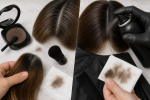
A dry chalk can add visible streaks without coating the entire style, but powder can create a matte or dusty appearance and can fall onto skin, clothing, floors, and nearby strands. Pressing harder may increase breakage, friction, fallout, and uneven deposit rather than improve color.
Use the directed applicator and small sections. Do not wet the hair or chalk unless the package specifically requires that method.
Color wax adds product weight and hold
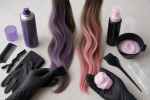
Color wax distributes as a cream or paste and may support definition, smoothing, separation, or another stated styling effect. Too much can make fine hair look heavy, reduce movement, create visible clumps, or leave dense pigment at the roots. Hold claims remain product-specific.
The hair wax guide separates hold, finish, hair type, amount, buildup, and washout without assuming every colored wax behaves like an ordinary styling wax.
Starting color controls visibility
Pale or gray hair may show pastel and vivid pigments strongly, while dark hair may show only brighter, opaque, metallic, or high-load shades. The existing hair color also mixes visually with a translucent deposit. A blue product on warm brown hair may not resemble the package swatch.
Test on a hidden dry section in the same lighting planned for wear. Do not lighten hair simply to match a temporary-color image unless a separate supported lightening plan exists.
Hair texture changes distribution
Chalk can catch on rough or highly textured sections and may need careful, low-friction placement. Wax can help group curls or coils, but excess handling can disturb the pattern or leave uneven pigment between the surface and interior. Straight fine hair may show every chalk edge or wax clump.
The hair mousse guide provides a useful hold-and-finish framework for comparing weight, definition, crunch, and washout, even though mousse is a separate category.
Build color with controlled sections
Plan streaks, tips, face-framing pieces, or broad panels before opening the product. For chalk, support the strand and use the permitted direction without repeated aggressive passes. For wax, start with a small amount, distribute through the intended section, and add only after the first layer is assessed.
Keep colored sections away from the face and eyes. Do not use either format on brows, lashes, lips, or another site not stated by the product.
Compare hold separately from color
Hair chalk generally supplies little reliable styling structure unless the product says otherwise. Color wax may add hold, but pigment and styling performance can change as the layer becomes thicker. Decide whether the hairstyle needs a separate compatible product or whether the wax can perform both roles.
The hair clay guide explains matte finish, grip, hold, residue, and removal boundaries that help evaluate styling texture without confusing clay with color wax.
Expect transfer until wear proves otherwise
Chalk dust can move through touch, brushing, wind, and friction. Wax can transfer while damp and may continue to mark fingers, hats, collars, headphones, pillows, furniture, and car headrests after setting. Sweat and rain can increase movement for either product.
Wear dark or protected clothing, use a compatible cape during application, and avoid light textiles while transfer remains possible. A setting spray should be used only when the temporary-color directions permit it.
Protect skin and surfaces
Use gloves when directed, cover the counter and floor, and keep a clean towel and material-compatible cleanup plan ready. Remove fresh accidental contact according to the product and surface instructions. Do not use household bleach, solvent, disinfectant, or abrasive cleaner on skin or hair.
Keep powder and wax away from food, drinks, contact lenses, children, pets, and ordinary makeup tools.
Plan removal before application
Follow the stated brushing, rinsing, shampooing, or repeat-cleansing method. Dry chalk may brush out partly before washing, but that can spread pigment into the room. Dense wax can require careful emulsification and cleansing, but aggressive scrubbing can tangle or stress hair.
Porous, pale, gray, or previously lightened strands may retain a residual cast. Do not promise one-wash removal from the word “temporary.”
Use a complete wear test
Test the exact amount and application method on a representative strand. Allow it to set, then assess color, finish, movement, hold, fallout, transfer to a disposable tissue, response to light moisture, and removal. Stop if the product creates unacceptable tangling, stiffness, irritation, or staining.
The American Academy of Dermatology coloring guidance supports manufacturer testing for chemical color services and notes that chemical processes can contribute to dryness and brittleness. Temporary surface color still needs its own label and condition checks.
Hair chalk versus color wax table
| Decision | Hair chalk | Color wax |
|---|---|---|
| Deposit form | Dry or chalk-like targeted layer | Creamy or paste-like pigmented layer |
| Finish | Often matte or dusty | Product-specific cream, matte, or sheen |
| Hold | Usually limited unless stated | May add shaping or definition |
| Transfer | Fallout and friction movement | Damp and dry surface transfer |
| Removal | Brush and wash as directed | Emulsify and cleanse as directed |
Final selection checklist
- The exact formula, permitted site, setting, and removal method are known.
- The starting base can show the intended temporary color.
- Finish, hold, weight, texture, and section size fit the hairstyle.
- Skin, clothing, floors, furniture, and tools are protected from transfer.
- A complete strand and wear test supports color, movement, and washout.
Choose chalk for controlled dry accents and color wax for deposit with styling structure only when the exact product supports that role. Stop when scalp condition, application site, transfer, texture response, or removal is uncertain.