Temporary Color Spray vs Mousse: Application Control and Wash-Out

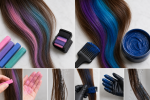
Direct answer: choose temporary color spray when fast surface coverage, visible accents, or a broad area fits the nozzle pattern and ventilation rules. Choose temporary color mousse when a foam can be distributed through sections for more hands-on coverage and product-specific styling support. Both can transfer, stiffen or weigh hair, stain materials, and resist a single wash.
Use the exact label to compare application control, starting base, finish, set time, ventilation, transfer, and removal rather than assuming every spray or mousse behaves alike.
Confirm temporary color rather than permanent chemistry
Spray and mousse can describe applicators used by several product categories. Verify that the product is temporary surface color, whether it is aerosol or pump foam, the permitted application site, setting method, wear duration, and removal directions. Do not infer washout from container shape alone.
The FDA hair-dye guidance emphasizes following directions and keeping hair-color products away from prohibited eye-area uses. It does not promise that temporary pigment is free of reaction or staining risk.
Spray covers the surface from a distance
A spray pattern can add quick all-over tone, root coverage, streaks, or costume color, depending on the product. Control depends on nozzle condition, distance, angle, section width, pressure, and shielding. Overspray can reach the face, neck, clothing, walls, floor, and nearby objects.
The black hair spray guide explains temporary coverage, opacity, drift, drying, transfer, and washout for a dark pigment context.
Mousse distributes through direct contact
Foam can be spread with gloved hands or a directed applicator through selected sections. This may improve interior distribution compared with a surface spray, but it can also overcoat porous ends, disturb curl groups, or leave uneven density when sections receive different amounts.
The hair mousse guide separates foam amount, distribution, hold, crunch, definition, and washout. A color mousse may add pigment behaviors beyond ordinary styling mousse.
Starting base controls visible color
Opaque spray can show on dark hair more readily than a translucent mousse, but actual pigment load varies. Pale, gray, or lightened hair can display color strongly and may retain a residual cast. Existing yellow, orange, red, brown, or artificial color changes the visible result.
Test on a hidden dry strand. Do not lighten hair only to match a temporary-color package image unless a separate supported lightening plan exists.
Ventilation can decide the format
Aerosol or fine spray can create airborne material and may carry inhalation, ventilation, ignition, and distance warnings. Use only in the stated environment and never spray toward the face, eyes, flames, heat, or another person. Do not test the nozzle into open room air.
Pump mousse reduces spray drift but still requires clean handling and any stated ventilation. Container pressure and flammability language remain product-specific.
Sectioning controls evenness
For spray, expose the intended surface, protect adjacent strands, and use controlled passes rather than saturating one point. For mousse, divide the hair so the foam reaches the intended layers without repeatedly coating finished sections. Keep roots, mids, ends, and face-framing pieces separate when their porosity differs.
Long, dense, curly, or coily hair may require more time and product than a surface image suggests. Confirm that one container can cover the planned scope before beginning.
Compare finish and styling behavior
Spray may dry matte, powdery, firm, or slightly tacky. Mousse may add volume, definition, moisture feel, or crunch depending on the formula and amount. Neither format guarantees natural movement or styling hold.
The curly-hair mousse guide helps evaluate distribution, definition, cast, weight, and refresh without treating color mousse as a universal curl product.
Drying does not eliminate transfer
Allow the product to set for the full directed interval before touching, dressing, or adding accessories. Spray residue can move through friction and fallout; mousse pigment can transfer from damp or heavily coated sections. Sweat, rain, hats, collars, pillows, headphones, and car headrests increase contact.
Use dark or protected clothing and textiles. A setting product should be added only when both formulas permit the combination.
Protect skin, eyes, clothing, and surfaces
Wear gloves when directed, use a compatible cape, cover floors and counters, and keep color away from eyes, brows, lashes, lips, broken skin, and an irritated scalp. Keep clean tissues and a material-specific cleanup plan nearby.
Do not use household bleach, solvent, disinfectant, or abrasive cleaner on skin or hair. For accidental eye exposure or a concerning reaction, follow package response directions promptly.
Plan washout from product load
Light surface spray may remove differently from dense repeated passes. Mousse distributed through interior sections can leave more pigment and styling residue than a small accent. Follow the stated brushing, rinsing, shampooing, and repeat-cleansing instructions without aggressive scrubbing.
The word “temporary” does not promise one wash, especially on porous, pale, gray, or previously lightened hair.
Use a complete strand and wear test
Test the exact amount and method on a representative section. After setting, inspect color, coverage, movement, stiffness, curl response, transfer to a disposable tissue, response to light moisture, and removal. A spray result on the top layer does not prove interior coverage; a mousse result on one curl does not predict the whole style.
The American Academy of Dermatology coloring guidance supports manufacturer testing for chemical color services and notes that chemical processes can contribute to dryness and brittleness. Temporary color still requires its own label and condition checks.
Spray versus mousse table
| Decision | Temporary spray | Temporary mousse |
|---|---|---|
| Application | Distance, angle, and nozzle pattern | Direct foam distribution by section |
| Coverage | Fast surface or broad accents | Potentially fuller interior distribution |
| Environment | Ventilation and drift are central | Hand and surface control are central |
| Finish | May be matte, firm, or powdery | May add definition, volume, or weight |
| Removal | Depends on passes and pigment | Depends on amount and distribution |
Final selection checklist
- The exact product is confirmed as temporary color with known removal steps.
- The starting base and hidden strand support the visible target.
- Ventilation, ignition, eye, scalp, and application-site warnings are satisfied.
- Sectioning, amount, finish, hold, and texture response fit the style.
- Clothing, skin, floor, counters, and later contact surfaces are protected.
- Set time, transfer, moisture, and washout are accepted before full use.
Choose spray for controlled distance coverage and mousse for controlled foam distribution only when the exact product and setting support the method. Stop when ventilation, application site, transfer, texture response, or removal is unclear.