Highlighting Cap vs Foils: Placement Control and Retouch Planning

Direct answer: choose a highlighting cap when the exact cap, hook, hair length, density, and scalp condition support a repeatable all-over pulled-strand pattern. Choose foils when placement, section size, product isolation, multiple formulas, or future retouch mapping needs more control. Neither method is automatically safer, faster, or more natural-looking.
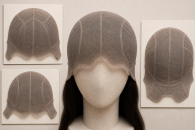
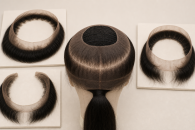
A cap creates a fixed extraction grid
Cap holes guide where strands can be pulled, but the operator still controls hole pattern, strand amount, hook angle, and skipped areas. The result tends toward a distributed pattern rather than individually painted placement. Test the cap fit and extraction on dry, detangled hair before any chemical product is mixed.
Hair length and texture affect cap removal
Long, dense, curly, coily, fragile, tangled, or extension hair can be difficult to pull through small openings without tension or snagging. A cap is not suitable merely because the desired highlights are fine. Stop if extraction causes pain, breakage, severe tangling, or distortion of the intended curl pattern.
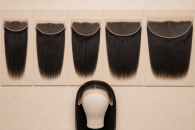
Foils isolate individually selected sections
Foils can support weaves, slices, panels, face frames, lowlights, or varied widths. Isolation helps keep formulas and neighboring hair separate when packets are stable. It also requires sectioning skill, enough clean foil, consistent saturation, and a placement order that fits the processing window.
Scalp proximity differs
Cap lightener sits on hair outside the cap, but pulled strands emerge through openings near the scalp and product must remain off skin unless the exact system permits otherwise. Foils can also leak or slip toward the scalp. Neither physical barrier overrides the lightener’s intended-use directions.
Placement controls the visual result
A cap distributes strands according to its grid, while foils can place brightness around the face, part, crown, interior, or ends. Write the target before selecting the method. The color placement guide shows why location and upkeep are separate from shade.
Saturation must match section density
Pulled cap strands can clump together and hide dry interior fibers. Foil sections can be too thick, underloaded, or overloaded until product leaks. Use the amount and section size supported by the formula. Do not press harder, add extra developer, or extend time to compensate for weak saturation.
Timing begins before the last section
Prepare the complete pattern, tools, product quantity, and timer before mixing. The FDA hair-dye guidance emphasizes directions and timing. A cap can speed repeated strand selection, while detailed foils can take longer. The method must fit the product’s processing window without extending early sections.
Heat and containment remain product specific
A plastic cap, foil packet, room warmth, or external dryer can change the environment around lightener. Use external heat only when the exact product and method permit it. Inspect under directions without repeatedly disturbing sections. Unexpected heat, swelling, leakage, or severe discomfort is a stop condition.
Retouch planning favors records
A cap retouch can pull previously lightened strands again because the old pattern is difficult to reproduce exactly. Foil maps and photographs can improve placement repeatability, but they do not eliminate overlap. Record parting, hole or foil pattern, section width, formula, timing, and final dry result.
Starting base sets the lift task
Natural roots, old color, direct dye, plant color, gray, and previous highlights can respond differently. The light-blue color guide explains why a pale target depends on base and lightening rather than the placement tool alone.
Complex targets need controlled assessment
Mixed natural and artificial bands, extensive prior highlights, fragile hair, major correction, or multiple formulas can exceed a predictable home task. The at-home color guide helps define planning and professional boundaries.
Condition remains the final gate
Rinse and complete directed aftercare, then evaluate elasticity, breakage, tangling, and scalp response before toner or another service. The AAD coloring guidance notes that chemical services can contribute to dryness and brittleness.
Rehearse extraction or packet placement without product
A dry rehearsal shows whether the cap fits securely, strands can be pulled with acceptable tension, and the pattern is visible. For foils, rehearse partings, hand position, sheet length, fold, and packet spacing. Time a small representative area. If the dry workflow is already painful, unstable, or too slow for the product window, chemical application will not solve it.
Evaluate removal as part of the method
A cap must be removed without dragging lightened strands through openings or tangling them into untreated hair; follow the cap and product sequence. Foils must be removed and rinsed in an order that respects timing and prevents product transfer. Plan the route to water, clean towels, gloves, and eye protection before the first section is processed.
Decision table
| Decision | Option one | Option two |
|---|---|---|
| Pattern | Fixed hole grid with selected pulls | Individually mapped sections |
| Hair fit | Best when pulling is low-tension and manageable | Adaptable to varied lengths and placements |
| Isolation | Cap separates most unselected hair | Each packet isolates a section |
| Retouch | Old strands can be hard to identify | Maps help but overlap is still possible |
| Workflow | Repeated extraction before product | Section, load, fold, and monitor packets |
Final checklist
- The cap, hook, hair length, density, texture, and scalp condition are compatible.
- The foil alternative has a complete placement, section, and packet plan.
- Lightener intended use, developer, ratio, heat, and timing are exact.
- Saturation and processing can remain consistent from first to last section.
- Retouch records and overlap boundaries are practical.
Choose a cap for a compatible repeated extraction pattern and foils for mapped section control. Stop when tension, isolation, timing, scalp proximity, or future overlap cannot be managed.