Satin Hair Scarves: Fabric, Size, Tie Method, and Washing

Direct answer: choose a satin hair scarf by disclosed fiber, square or rectangular dimensions, edge finish, drape, low-tension tie method, laundering directions, complete drying, and replacement condition. The scarf should cover the intended style and remain secure without a hard knot, hairline pulling, neck pressure, or repeated tightening.
Identify the exact satin hair scarf construction
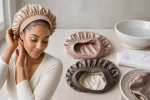
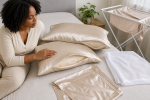
Satin describes a weave and may use polyester, silk, or another disclosed fiber. Square size, rectangular proportion, fabric weight, bias stretch, rolled edge, stitched hem, and seam quality influence drape, knot bulk, coverage, and care. Read every available fiber, dimension, closure, washing, drying, and replacement instruction before use. Product naming does not establish material quality, fit, absorbency, friction, durability, or compatibility with every hairstyle.
Check dimensions before judging fit
Measure the scarf flat and test one permitted fold against hair volume and the intended coverage. A small scarf may expose the style or require tension; an oversized scarf may create bulky knots or loose tails. Record measurements rather than relying on one-size wording. Test the accessory with the intended hair arrangement for a short supervised interval before making it part of a full routine. Fit should remain secure without pain, pulling, or restricted movement.
Inspect every hair-contact surface
Use good light and clean hands to inspect the main fabric, lining, pile, edges, binding, seams, elastic channels, buttons, loops, and other hardware. Run fingertips over contact zones for rough joins, hardened residue, loose threads, sharp components, or trapped debris. Stop using damaged construction instead of trimming or gluing it near hair.
Use controlled wet-hair handling
Fold according to the intended method, place the smooth surface as directed, cross or knot away from fragile edges and tender zones, and use only enough tension to hold the scarf during normal movement. The AAD gentle hair-care guidance supports conservative handling and avoiding unnecessary traction, but it does not endorse a specific satin hair scarf. Keep the neck, face, ears, eyes, scalp, extensions, and service areas clear of hardware and concentrated pressure.
Separate absorbency from drying claims
A fabric can collect water yet still become saturated, feel heavy, or dry slowly. Record the starting wetness, contact time, covered area, fabric saturation, and hair state after removal. Do not infer a fixed drying time or hair outcome from fabric name, thickness, shine, softness, or a single use.
Control contact time and tension
Use the shortest practical interval permitted by the directions, then inspect comfort, slippage, hairline pressure, section crowding, dampness, and transfer. Longer contact is not automatically more effective. Remove the accessory promptly if it becomes painful, heavy, hot, restrictive, or difficult to release.
Launder the complete construction
Follow the fiber-specific wash, detergent, bleach, mesh bag, spin, and drying directions. Untie every knot before washing, protect fine edges, support wet fabric, and dry the full hem before folding for storage. More detergent is not a shortcut for cleaner fabric and can leave film. Do not combine household chemicals, improvise disinfecting claims, or use heat above the stated limit. Separate strongly colored items when dye transfer is possible.
Dry completely before storage
Open folds, layers, bands, seams, pockets, loops, and thick edges so air reaches every zone. Confirm dryness by touch in the slowest-drying section rather than judging only the outer surface. Store the clean item in a dry ventilated place, not compressed in a sealed bag while moisture remains.
Recognize a failed accessory
Stop, repair according to the maker, or replace the item when there is pain, hairline pulling, neck pressure, repeated slipping, knot bulk, rough edges, loose stitching, snags, dye transfer, persistent odor, detergent film, or damp folded fabric. A cosmetic accessory is not made serviceable by fragrance, extra heat, or repeated use. Keep replacement decisions tied to observable construction and hygiene evidence.
Run a controlled satin hair scarf comparison
Compare scarf sizes and folds with the same dry hairstyle, wear period, knot location, laundering method, and movement check while changing only one feature. Use a simple written log and change one variable at a time. Weather, hairstyle, product residue, wash method, and prior fabric conditioning can otherwise make two uses look different for reasons unrelated to the accessory.
Keep cosmetic-product decisions separate
The FDA hair-products overview explains federal cosmetics context but does not substantiate fabric performance. The FDA cosmetics-allergen guidance supports careful label and ingredient review for products used alongside the accessory without predicting an individual response. Do not transfer claims from a cleanser, conditioner, or styler to the satin hair scarf.
Use related guides for separate decisions
The long-hair style guide helps with planning low-tension coverage. The gray-hair transition guide covers keeping fabric and color-care decisions separate. Use the red-hair care guide for coordinating scarf use with colored-hair routines. These guides support adjacent decisions but do not replace the exact satin hair scarf construction, fit, care, or replacement check.
Record a repeatable decision
Log product identity, fiber disclosure, dimensions, opening or closure construction, hair state, hairstyle, loading method, contact time, tension, comfort, water transfer, slippage, laundering method, dry time, odor, residue, damage, and replacement date. Keep the item only while its practical benefit remains clear and its construction stays clean, intact, comfortable, and fully dry between uses.
Decision table
| Check | Useful evidence | Stop or revise when |
|---|---|---|
| Construction | Fiber, dimensions, seams, edges, and closure are disclosed and intact | Rough, loose, sharp, or damaged contact zones |
| Fit | Hair fits without crowding, pulling, pressure, or restricted movement | Pain, strong marks, repeated slippage, or trapped hair |
| Use | Contact method and duration are controlled and repeatable | Saturation, heaviness, heat, or difficult release |
| Care | The complete item washes and dries according to directions | Persistent odor, film, dye transfer, or hidden dampness |
| Replacement | Surfaces, closure, and absorbency remain serviceable | Damage or performance loss persists after proper care |
Final checklist
- The exact satin hair scarf fiber, dimensions, construction, and care directions are known.
- Hair-contact surfaces and hardware are clean, smooth, and intact.
- Fit, tension, contact time, and wetness are controlled.
- The complete item is washed and dried before storage.
- Pain, damage, persistent odor, dye transfer, or trapped moisture ends use.
A satin hair scarf is a fiber, size, edge, tie-method, and laundering decision. Coverage should come from suitable dimensions and a stable fold, not from excessive knot tension.