Wig Detangling Spray: Selection, Use, Cleaning, and Replacement

Direct answer: Choose wig detangling spray by matching the formula and current directions to the exact synthetic, human-hair, or blended fiber and to the wig's dry or damp state. Test the closed system's nozzle on a protected card, confirm a controlled pattern, and apply the stated amount to supported sections away from lace, knots, bonds, elastic, hardware, eyes, skin, and floors when excluded. Work tangles from ends upward with the permitted tool and stop at compact mats or structural resistance. Judge the fully dry fiber for residue, transfer, weight, static, texture change, and renewed tangling. Retire leaking, clogged, sputtering, cracked, expired, contaminated, separated, or unpredictably spraying stock.
Test the nozzle before product approaches the wig
Record formula, warnings, compatible fiber and wig state, nozzle type, distance, pattern, dose, section size, excluded cap zones, comb or brush route, drying, residue, floor protection, storage, lot, expiration, and container condition. Keep a clean dry pattern card and untreated fiber reference so nozzle drift and material response can be compared.
Separate detangling spray from conditioner and styling spray
A detangler is selected for controlled slip during a supported grooming route. It is not automatically a rinse-out conditioner, heat protectant, holding spray, shine spray, adhesive release product, or scalp cosmetic. Record the exact intended state and next tool step. Do not stack multiple sprays because their bottles look similar or because each uses the word smooth.
Match formula to fiber and finish
Verify standard synthetic, heat-compatible synthetic, human hair, blend, coating, color process, curl pattern, and any prohibited oils, silicones, alcohols, fragrance, or deposits. A product that moves easily through straight human hair can weigh down a synthetic curl, while a synthetic spray may not suit a processed human-hair wig. Unknown fiber prevents a confident formula choice.
Inspect trigger, pump, dip tube, and cap
Check nozzle opening, actuator return, collar, threads, visible dip tube, body, cap, lot, and exterior residue. Look for cracks, leaks, corrosion, clogged film, swelling, or a trigger that sticks. Prime only as directed onto a protected card. Do not pierce the nozzle, remove an internal screen, transplant a trigger, thin the liquid, or use high pressure to clear a blockage.
Read pattern and dose on a dry card
Use the stated distance and orientation over a clean protected card. Observe whether the output is fine and even, a narrow stream, large drops, edge-heavy, or irregular. Count the required strokes and let the card dry. A changed pattern can concentrate product on one fiber zone. Do not test into open air near people, finished floors, electrical equipment, or other products.
Map tangles before adding slip
Place the dry or permitted damp wig on a stable support and divide it into visible sections. Identify loose crossings, end tangles, nape friction, compact mats, knots, weft catches, damaged ends, and hair trapped in hardware. A compact mat or resistance at the base may require another route. Spray should not be used to hide torn lace, loosened wefts, failed bonds, or fused synthetic fiber.
Apply to supported lengths in bounded sections
Protect the work surface and hold the section above the intended zone so pulling does not reach knots or wefts. Use the documented distance and stroke count, avoiding overspray onto lace, cap panels, elastic, clips, combs, and adjacent sections. Distribute only by the permitted motion. More liquid can make the floor slippery, increase residue, and extend drying without resolving the tangle.
Release tangles from ends toward the base
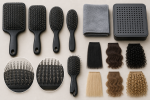
Use fingers or the named wide-tooth comb or looped-bristle brush according to the fiber directions. Start below the tangle and move upward in short low-force steps while supporting above the working point. Do not pull from the root, saw through a knot, brush a compact mat, or keep adding spray when resistance does not change. Stop before the base or attachment system is loaded.
Keep nozzle drift and floor exposure controlled
Use a washable protected work area with ventilation when required. Keep bottles closed between sections and wipe the permitted exterior. Inspect the floor, stand, towel, cap, and nearby objects for droplets. Clean overspray by the surface-specific method before walking through it. A pleasant scent or invisible dry film does not mean surrounding residue is absent.
Evaluate after complete dry-down
Compare strand movement, texture memory, curl pattern, luster, static, transfer, tack, odor, weight, and renewed tangling with the untreated reference. Residue can appear only after several sections or after dust contact. Do not claim fiber repair from temporary slip. Reassess dose, section size, formula, and tool when the dry wig becomes coated, limp, stiff, or rapidly tangled again.
Retire unreliable spray and failed fiber separately
Discard the spray for unknown identity, expiry, leak, cracked body, failed trigger, blocked nozzle, contamination, unexpected separation, changed odor, or an output pattern that no longer matches the baseline. Set aside the wig separately for fused filament, severe matting, broken hair, torn lace, loose wefts, failed bonds, persistent residue, or base damage that controlled detangling cannot address.
Decision table
| Checkpoint | Continue when | Stop or replace when |
|---|---|---|
| Formula | Exact fiber, wig state, exclusions, and next tool are known | Unknown blend, styling-product substitution, or conflicting directions |
| Nozzle | Pattern card shows a controlled repeatable output | Stream, large drops, sputter, drift, clog, leak, or failed return |
| Section | Supported lengths and tangle map remain visible | Compact mat, base resistance, hidden damage, or overspray |
| Dry result | Fiber moves near baseline without tack or transfer | Weight, residue, texture loss, odor, or rapid retangling |
| Environment | Stand, towel, floor, and nearby items remain controlled | Slippery floor, uncontained droplets, or unknown surface residue |
Describe slip and grooming without extending cosmetic claims
FDA hair-product information provides cosmetic context but does not certify a detangler for a particular wig. AAD sources support limiting pulling in the complete system, not a slip result. The label, nozzle card, and dry fiber record bound the conclusion.
- FDA hair-products overview: Keep formula and use statements within current product disclosure.
- AAD traction guidance: Stop before grooming resistance becomes repeated pulling.
- AAD extension precautions: Maintain a clean hair system and use gentle supported handling.
Choose fiber and attachment before selecting spray
Related extension pages address hair format and placement. They do not identify nozzle pattern, detangler dose, section size, or residue limits.
- hair extension selection guide: separating fiber disclosure and attachment choices from wig-care decisions
- hair extension type guide: keeping extension formats distinct from a complete wig and its cap
- hair crown extension guide: reviewing shade and placement outside product or tool selection
Final checklist
- Formula, compatible fiber, wig state, nozzle, distance, and dose are recorded.
- A dry protected card confirms the current output pattern before wig use.
- Tangles are mapped and sections are supported before product is applied.
- Lace, knots, bonds, elastic, hardware, eyes, skin, and floors stay outside exclusions.
- Clogged, leaking, sputtering, contaminated, expired, or altered spray is retired.
Temporary slip is not fiber repair
Reduced resistance in one recorded section does not prove repaired fiber, permanent detangling, reduced shedding, stronger knots, heat protection, skin suitability, or the same result on another wig.
Wig detangling spray is a formula, nozzle-pattern, bounded-dose, section, supported-tool, overspray, dry-residue, and replacement decision. Stop when slip begins to hide structural resistance or material failure.