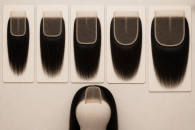
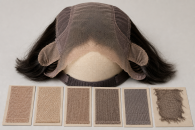
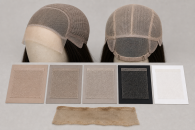
Wig Cap Sizing: Fit, Material, and Construction Guide

Direct answer: Choose a wig cap size by comparing the full recorded measurement set with the current chart for the exact cap construction, not by circumference alone. Account for front-to-nape depth, crown arc, ear-tab position, temple route, nape width, lace dimensions, stretch-panel direction, elastic condition, strap range, and the volume of the documented hair preparation. Select a size that reaches the landmarks without maximum stretch or maximum adjustment, then perform a product-free dry fit. Reject persistent rotation, nape lift, shallow crown, ear pressure, lace buckling, deep marks, painful pulling, or hardware misalignment rather than forcing a nominal size.
Translate a complete measurement set into one cap contract
Start with dated raw measurements acquired on the intended hair preparation. Attach the exact maker, model, construction, size-chart version, units, named measurement routes, cap circumference, depth, ear-to-ear dimensions, temple route, nape width, stretch panels, elastic, straps, lace, ear tabs, combs, and allowable alteration. Do not mix chart values from another seller or cap type.
Use the chart for the exact construction
Match maker, model, cap type, size label, chart date, units, and route definitions. A small, medium, or large label has no fixed cross-brand dimensions. Lace-front, full-lace, open-wefted, monofilament, hand-tied, and closed caps can distribute the same nominal circumference differently. Archive the chart used for the decision.
Compare all dimensions before choosing a label
Place circumference, front-to-nape, both ear-to-ear routes, temple route, nape width, and any maker-specific depth beside the chart. Mark where the head falls near different nominal sizes. Do not select from the largest number automatically; identify which dimension controls landmark reach and which can be accommodated only by documented adjustment.
Read stretch by direction and material
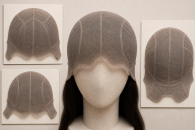
Identify stretch panels, elastic channels, weft spacing, mesh direction, and rigid lace or monofilament zones. Measure only through the supported inspection route and compare with the new-condition record. Stretch in circumference does not prove added crown depth, nape width, or ear-tab reach. A cap requiring maximum extension at rest has no observed adjustment reserve.
Protect crown depth and front-to-nape reach
Check whether the selected size can seat at the intended front while reaching the crown and nape without lifting, flattening preparation, or pulling lace backward. Excess depth can wrinkle or migrate; insufficient depth can make an otherwise matching circumference feel tight. Do not lower the front or overtighten the nape to conceal wrong depth.
Align ear tabs and temple structure
Place ear tabs, temple seams, side panels, and any bendable stays at their intended landmarks. They should not sit on the ear, angle sharply, or require pulling one side farther than the other. Asymmetry in the measurement record may call for fitting support or alteration, not unequal strap tension that rotates the cap.
Separate lace dimensions from cap size
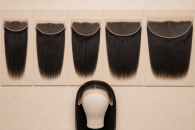
Record lace-front width, lace depth, parting area, cut boundary, and attachment instructions independently. A larger cap does not guarantee a wider or deeper lace area, and trimming lace does not correct cap circumference or crown depth. Do not cut, tint, adhere, or alter lace before the product-free fit contract passes.
Keep nape and adjustment range observable
Position the nape at its intended boundary and inspect elastic, hooks, loops, sliders, straps, and anchors. Begin near the documented neutral setting. Tighten only within instructions and in small symmetrical steps. Maximum closure, hooked elastic beyond its range, knots in straps, or added pins are not valid ways to convert one size into another.
Run a product-free dry fit
Use the same hair preparation recorded during measurement and no adhesive, tape, powder, spray, or extra grip. Align front, crown, ears, and nape; turn the head, look up and down, sit, and move the jaw. Record rotation, edge lift, nape rise, buckle, pressure, hardware contact, and preparation shift before any styling hides the evidence.
Distinguish size error from component failure
A previously suitable cap can change when elastic relaxes, straps stretch, lace tears, seams open, wefts loosen, or panels distort. Compare current relaxed dimensions and hardware with the baseline. Do not move immediately to a smaller nominal size when the actual problem is failed construction, a changed preparation, or an altered measurement route.
Use alteration only with a defined contract
When the maker or qualified fitter supports alteration, record the exact seam, panel, elastic, strap, or nape change and its effect on all landmarks. Preserve enough adjustment reserve for ordinary fit checks. Do not cut structural mesh, remove ear tabs, relocate combs, or sew through lace solely to force a size label to work.
Retire an unserviceable cap
Remove the wig from wear for torn lace, widened holes, failed elastic, broken straps, loose anchors, distorted panels, rough hardware, persistent residue, painful pressure, repeated migration, or a geometry that cannot reach front, crown, ears, and nape together. A tighter accessory does not repair structural or dimensional failure.
Decision table
| Checkpoint | Continue when | Stop or replace when |
|---|---|---|
| Chart | Exact maker, model, construction, date, units, and routes match | Borrowed label, mixed chart, or unclear route |
| Dimensions | All recorded arcs and widths fit without forcing one control point | Circumference-only choice or conflicting landmark reach |
| Stretch | Directional reserve remains within supported adjustment | Maximum extension, relaxed elastic, or rigid-zone strain |
| Dry fit | Front, crown, ears, and nape align product-free | Rotation, lift, buckle, deep mark, pain, or hardware conflict |
| Condition | Lace, panels, seams, elastic, straps, and anchors match baseline | Tear, distortion, failure, residue, or unserviceable geometry |
Use tension guidance as a fit stop rule
AAD guidance supports avoiding painful repeated pulling but does not define cap labels or adjustment ranges. FDA hair-product context does not establish fit. The exact maker chart, the complete measurement record, cap construction, and a product-free dry fit control the size decision.
- AAD traction guidance: Painful tension is a stop signal, not proof that a tighter cap is secure.
- AAD extension precautions: Keep the complete hair system clean and avoid damaging attachment pressure.
- FDA hair-products overview: Do not use a cosmetic product to hide a cap-size problem during fitting.
Resolve hair format before interpreting cap volume
Extension guides help classify fiber, attachment, and placement. They do not convert head measurements into a cap label or authorize structural alteration.
- hair extension selection guide: keeping extension fiber and attachment choices outside this wig-equipment decision
- hair extension type guide: separating extension formats from a complete wig and cap system
- hair crown extension guide: handling shade and placement as a separate reader task
Final checklist
- The exact maker, model, construction, chart date, units, and routes are recorded.
- Circumference, depth, crown, ear, temple, nape, and preparation volume are compared.
- Stretch direction and adjustment reserve are separated from rigid lace and panels.
- A product-free dry fit aligns front, crown, ears, and nape without maximum tension.
- Failed lace, elastic, straps, panels, hardware, or unresolved geometry triggers service or retirement.
A chart match does not guarantee fit
This process documents how one measurement set relates to one cap contract. It does not promise comfort, secure wear, skin tolerance, hairline protection, or identical sizing across brands, constructions, preparations, or dates.
Wig cap sizing is a chart, construction, dimension, directional-stretch, landmark, adjustment, dry-fit, and condition decision.