Closure Wigs: Fit, Material, Density, Installation, Care, and Removal

Direct answer: Choose a closure wig by matching the closure's width, depth, parting area, lace or base material, edge finish, and shade with the cap circumference, ear and nape landmarks, density distribution, fiber directions, and intended attachment method. Inspect the inside before wear. The cap should settle without painful tension, closure buckling, hard ridges, or lace pulled beyond its shape. Follow the exact installation, cleaning, drying, and removal directions; no closure size or density label establishes universal fit.
Map the closure and cap as one system
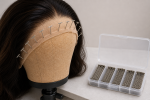
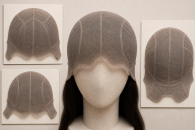
Photograph the clean dry wig from the outside and inside. Record closure width and depth, parting area, lace or other base, edge finish, cap panels, weft pattern, elastic, straps, combs, seam condition, fiber disclosure, density description, color, length, and every attachment direction.
Confirm that the top piece is a closure
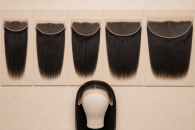
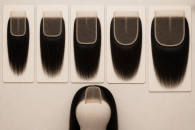
A closure usually covers a compact top or parting zone rather than the wider ear-to-ear area associated with a frontal. Record the actual width, depth, contour, part direction, number of part options, and connection to the surrounding cap. Do not classify the wig from a seller phrase alone; inspect the interior base and the boundaries where the closure meets cap panels or wefts.
Inspect lace or base material under neutral light
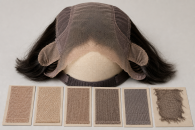
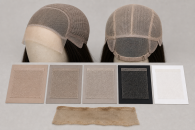
View the closure over a light and dark clean background. Note mesh opening, thickness, stretch direction, coating, reinforced areas, knots or attachment points, edge binding, and any pre-cut shape. Compare shade in indoor neutral light and indirect daylight. A close visual shade does not establish skin compatibility, invisibility, or permission to tint, bleach, color, or coat the base.
Read density as distribution, not one number
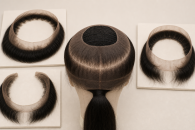
Observe the hair concentration at the part, front edge, closure perimeter, crown transition, sides, and nape. Look for abrupt bands, exposed tracks, heavy knots, sparse patches, or a top that does not blend into the cap. A density percentage or light, medium, and full label can use different methods; it does not specify identical strand counts or movement across products.
Match cap landmarks before attachment
Prepare hair by a clean, dry, low-tension method. Place the wig without adhesive and align center front, closure part, crown, ear areas, and nape. Check strap range and cap depth without pulling the lace. If the closure ripples, the cap bridges over bulk, ear areas distort, or the nape rises, change the preparation or size decision rather than increasing tension.
Audit combs, clips, straps, and seams
Turn the wig inside out and locate every contact part. Check comb teeth, clip edges, strap hooks, elastic channels, seams, exposed thread, and weft ends. Map each item against the prepared hair and avoid a contact point that presses, catches, or repeatedly loads one small area. Remove or alter hardware only when the maker provides an approved route.
Choose one installation route by its directions
Separate glueless, strap-and-comb, tape, adhesive, sew-in, or other disclosed routes instead of combining them casually. Verify all compatible surfaces, preparation, quantity, placement, drying or setting interval, ventilation, removal product, and cleanup. Do not add adhesive to an irritated area, use a sew-in path on a person without qualified support, or improvise extra pins through the closure.
Run a staged fit and movement check
Begin with a short dry fit. Turn the head, look up and down, sit, and move the jaw while observing closure position, cap edges, comb pressure, strap movement, and nape rise. Stop for pain, burning, persistent itching, swelling, numbness, headache, increasing tenderness, bumps, deep marks, pulled edges, or a system that remains stable only when overtightened.
Part and arrange without overloading the base
Use only tools and hair-state directions permitted for the fiber and closure. Support hair near the base, use small sections, and keep heat, tension, moisture, and product within all disclosed limits. Do not scrape the mesh, repeatedly drag a comb across knots, widen the part by pulling fibers, or use product buildup to hide poor density transition.
Separate daily upkeep from full washing
After removal or wear, release tangles by the fiber directions and clear permitted residue from the cap, closure perimeter, straps, and hardware. A daily wipe or light detangle does not replace a full wash. Set a wash decision from actual buildup, odor, exposure, fiber behavior, and label directions rather than a universal calendar.
Wash with the cap supported
Close hardware as directed, release tangles, and support the cap and closure so wet weight does not stretch one edge. Use only the permitted water temperature, cleanser, direction, agitation, rinse, and conditioning route. Avoid rubbing the closure against itself, twisting the cap, soaking hardware outside its limits, or assuming human-hair and synthetic-fiber directions are interchangeable.
Dry the closure, seams, and cap interior completely
Blot without wringing and arrange the wig on a compatible stable support. Keep the closure in its natural contour, open the cap for airflow, and inspect doubled seams, elastic channels, strap ends, comb bases, and weft bands before storage. Surface-dry hair does not prove that the closure edge or cap interior is dry. Use heat only when every material direction permits it.
Remove before the system becomes difficult to release
Follow the route-specific release sequence. Detach clips and combs, loosen straps, or fully release adhesive or thread by the stated method before lifting the closure. Support hair and skin, work in small visible sections, and stop at resistance. Do not pull the wig backward, scrape residue, cut near skin, or use an unlisted solvent to speed removal.
Replace or repair only by an approved route
Set aside the wig for torn or fraying lace, widening holes, shed or exposed knots, split cap seams, loose wefts, rough hardware, failed elastic, closure distortion, persistent residue, odor, incomplete drying, matting at the base, or a fit that now requires force. A cosmetic part change cannot restore a damaged closure base, cap structure, or attachment system.
Decision table
| Checkpoint | Continue when | Stop or replace when |
|---|---|---|
| Closure | Geometry, base, edge, and part remain intact | Ripples, tears, widening holes, or distorted contour |
| Density | Transition is observable across top and cap | Abrupt bands, exposed tracks, or unstable sparse zones |
| Fit | Landmarks align without maximum tension | Pain, lifted nape, buckling, or pulled lace |
| Attachment | One compatible route follows complete directions | Mixed methods, pressing hardware, or improvised pins |
| Care | Closure, cap, seams, and hardware dry fully | Residue, odor, dampness, matting, or structural change |
Apply scalp guidance to the worn system, not the product label
AAD guidance supports avoiding painful repeated pulling and watching the hairline during wig or extension wear. It does not certify a closure material, density label, attachment route, or fit. FDA information sets a separate boundary for cosmetics used around hair and the cap.
- AAD weave and extension precautions: Use clean hair handling and avoid a closure setup that depends on damaging tension.
- AAD hairstyle traction guidance: Pain and repeated pulling are reasons to change the fit rather than tighten it.
- FDA hair-products overview: Keep cleansers, styling products, and cosmetic contact within their own directions.
Route extension questions outside the closure-wig decision
A closure wig is a complete cap system. The related guides remain useful when the unresolved task concerns separate extension fibers, attachment formats, shade, or placement rather than the closure and cap.
- hair extension selection guide: separates extension attachment choices from the closure cap
- hair extension format guide: keeps separate extension systems outside this complete-wig page
- hair crown extension guide: addresses shade and placement as independent questions
Final checklist
- Closure geometry, base, shade, edge, cap panels, wefts, straps, and hardware are recorded.
- The dry cap reaches front, crown, ear, and nape landmarks without painful force.
- One installation route is followed without combining incompatible methods.
- Removal releases every attachment before the closure is lifted.
- Closure, seams, cap interior, elastic, and hardware are fully dry before storage.
Keep closure conclusions within the inspected wig
This guide does not rank fibers, assign a fixed density count, promise an invisible part, establish a wear duration, or claim irritation-free attachment. Fit, appearance, and care observations apply only to the recorded wig, preparation, method, and session.
A closure wig is a closure, cap, density, hardware, fit, attachment, removal, and drying decision. Retain it only while every layer remains inspectable and the worn system does not depend on painful tension.