Glitter Hair Gel: Finish, Transfer, Fade, and Removal Guide

Direct answer: glitter hair gel combines a styling base with reflective particles intended for the labeled cosmetic use. Verify that the product is specifically directed for hair, keep it away from eyes and breathing zones, apply a small amount to controlled sections, and let it dry. Check particle fallout and fabric transfer before wearing the style, then remove it with the maker’s shampoo and cleanup process.
The main issue is containment. Glitter appearance depends on particle size, shape, concentration, base color, lighting, gel load, and placement, while cleanup must account for both styling film and mobile particles.
Confirm hair-use labeling
Do not substitute craft glitter or an unlabeled loose decorative material. Read product identity, intended body area, age limits, eye warnings, ingredient information, and removal directions. A cosmetic-use statement for one area does not automatically authorize use on hair or near the eyes.
Keep the original package. Do not mix separate loose glitter into plain gel unless the manufacturer expressly provides that system and method.
Inspect particle and gel characteristics
Observe whether particles are fine or larger, round or angular-looking, sparse or dense, and fully suspended in the gel. Check whether the base is clear, tinted, firm-hold, or flexible.
Particle shape and concentration influence reflection and texture, but appearance alone cannot establish safety or compatibility. Use the label, not visual assumptions.
Choose placement by contact risk
Select a braid, part accent, bun surface, tips, isolated streak, or another hair-only zone. Keep the application away from eyes, eyelashes, eyebrows, mouth, and irritated skin. Consider where the style will contact hands, collars, pillows, headphones, and furniture.
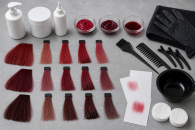
Dense all-over placement creates more particle load and more cleanup than a narrow accent. Start with the smallest area that meets the visual goal. The red hairstyle ideas can help define a limited braid, bun, or panel accent without implying that glitter gel reproduces hair color.
Prepare a contained workspace
Cover the surface with a washable or disposable barrier and close nearby containers. Avoid fans and open windows that move particles. Prepare gloves when directed, clips, a dedicated applicator, towel, transfer card, lint roller, and wash materials before opening the jar.
Do not apply over carpet, bedding, food preparation areas, or another porous surface that is difficult to clean.
Complete a section and fallout test
Follow any required warning or skin-check directions. Apply a measured amount to a hidden representative section, let it dry, then inspect shine, hold, stiffness, particle distribution, flaking, fallout, transfer, and removal.
Move the section gently over a clean dark and light surface. Visible particles indicate a cleanup and contact risk even if the gel still looks intact.
Build placement density gradually
Use a clean brush or gloved tool approved by the label. Lay down a thin film, arrange the section, and add small accents only where needed. Brushing back and forth can disturb hair and distribute particles beyond the target.
Higher density can increase sparkle in direct light but can also increase stiffness, weight, fallout, and wash time. Do not judge only under flash photography.
Use lighting to evaluate the finish
Inspect the style in diffuse indoor light, directional light, and normal daylight. Fine iridescent particles may appear subtle until the angle changes, while large reflective pieces can dominate close photographs.
Evaluate particle spacing, gel shine, hold, visible residue, and balance with the hairstyle. The hair gel guide provides adjacent hold and finish context without addressing particle fallout.
Let the gel dry undisturbed
Follow the stated drying route. Do not add unlisted heat, spray, oil, or another gel to seal particles. Touching, brushing, or reshaping while wet can spread glitter to hands and surrounding hair.
After drying, repeat the gentle movement check. A dry surface does not prove zero fallout.
Check transfer and fallout separately
Press a clean tissue lightly against the section to check gel or pigment transfer. Then move the section over a contrasting card to check loose particles. One test cannot replace the other.
Inspect hats, scarves, collars, and shoulders during wear. Friction, humidity, sweat, rain, and broken gel cast can release particles later.
Do not use it as eye glitter
Hair gel should not be applied to eyelids, lashes, brows, or the eye contour unless the exact product explicitly names that use. Keep hands and particle-covered tools away from eyes.
If material enters an eye, follow the label response instructions and seek appropriate help when needed. Do not continue the style while irritation is present.
Contain loose particles during removal
Before washing, use only a label-approved pre-removal method. If gentle combing is directed, work over a contained surface and clean the tool frequently. Do not shake hair, use forced air, or brush aggressively to scatter glitter.
A lint roller may help clean compatible fabric or a protected workspace, but it should not be rolled on hair or scalp.
Shampoo and rinse methodically
Wet hair and distribute shampoo through the gelled sections as directed. Separate braids, twists, or dense sections so cleanser reaches the inner surfaces. Rinse away from the eyes and repeat only when the instructions and hair condition permit.
Check the hair, drain area, towel, comb, and shoulders for remaining particles. Do not use household solvents or abrasive scrubbing.
Clean tools and surfaces
Collect visible residue before wet wiping so it does not spread. Wash reusable applicators, clips, and combs separately from ordinary grooming items until clean. Dispose of single-use barriers according to local requirements.
Close the product and store it as directed. Do not return used gel or collected particles to the jar.
Glitter gel checklist
- Verify explicit hair-use labeling and eye restrictions.
- Inspect particle size, density, and gel base.
- Select a hair-only zone with limited contact.
- Prepare a contained, low-airflow workspace.
- Complete required checks and a section fallout test.
- Build density in thin controlled placement.
- Evaluate in several lighting conditions.
- Test gel transfer and particle fallout separately.
- Contain particles during wear and removal.
- Shampoo, inspect, and clean tools and surfaces methodically.
Sources and scope
The FDA hair dye guidance supports following directions, directed skin checks, gloves, eye-area restrictions, timing, rinsing, and scalp-condition boundaries when a formula functions as hair color. The FDA cosmetics labeling summary supports retaining and reading product identity and required label information. Neither source endorses glitter gel or establishes particle safety, hold, fallout, transfer resistance, duration, or removal for a specific product. The direct-color guide helps distinguish reflective particles in gel from pigment-only deposit.