How to Choose and Use Hairline Barrier Cream at Home

Direct answer: choose a hairline barrier cream whose directions permit use with the planned color service and on the intended intact skin area. Dispense a small clean amount, then apply a thin narrow band on skin just outside the hairline without coating hair, scalp, eyebrows, eyelids, ears, or irritated skin. Keep the application visible, remove it as directed after the service, and avoid contaminating the original container. Barrier cream can reduce direct staining at an edge; it cannot prevent allergy, stop every leak, replace careful brush control, or make dye contact safe.
A purpose-made barrier product differs from stain remover, petroleum used without product approval, conditioner, lotion, makeup primer, or household ointment. The important decisions are intended use, ingredient limits, consistency, dispensing format, placement precision, cleanup, and storage.
Confirm compatibility with the service
Read both the hair-color directions and the barrier product directions. Confirm where the cream may be placed, whether it must be removed before rinsing, and whether it can contact the chosen color system. Do not assume one barrier suits permanent color, direct dye, lightener, gloss, and every hairline technique.
Check warnings for eyes, mucosal areas, broken skin, allergies, and ingredient sensitivities. A protective-sounding product name is not evidence of universal compatibility.
The at-home hair color planning guide helps establish product quantity, sectioning, brush loading, skin protection, timing, and cleanup before application begins.
Review ingredients and texture
Choose a formula with a complete current ingredient list and avoid known personal sensitivities. Fragrance-free, plant-based, or salon-grade wording does not establish individual suitability.
A workable consistency stays where placed in a thin layer. Very runny cream can migrate toward eyes or hair. A stiff wax can form a thick ridge, catch strands, or interfere with precise root application. Test a small amount on a clean palette to understand spread without dipping repeatedly into the container.
Reject product that is separated beyond label expectations, discolored, unusually odorous, dried at the opening, contaminated, expired, or stored outside its directions.
Choose a clean dispensing format
Pumps and squeeze tubes reduce direct contact with the bulk product when the nozzle remains clean. Jars require a fresh disposable applicator for every removal. Do not use gloved fingers that have touched hair, color, clips, or skin to enter a container.
Dispense onto a clean palette rather than directly onto the face. Prepare only a modest amount. Leftover cream on the palette should not be returned to the package.
Keep the nozzle, cap, and threads free of color residue. Close the container immediately after dispensing and place it in the clean-supply zone.
Prepare the hairline
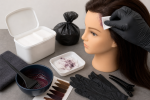
Clip dry hair away from the forehead, temples, sideburn area, and nape without pulling painfully. Inspect the skin in good light. Do not apply over scratches, sunburn, active irritation, open areas, or a previous reaction.
Remove jewelry and keep the cape and neck strip correctly positioned. Complete every label-required allergy alert or skin test for the hair color before each use. A barrier does not replace that test.
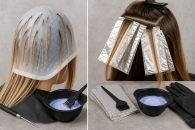
The hair color application guide supports broader formula and section decisions that determine where a clean boundary is needed.
Apply a thin controlled band
Use a clean disposable flat applicator or other permitted tool. Place the cream on intact skin just outside the hairline, leaving the hair and scalp clear. A narrow continuous band is easier to inspect than scattered thick patches.
Work around the forehead and temples with special care near the eyes. Stop well before the eyebrows, eyelids, and ear canal. At the nape, keep the cream above the neck strip and away from the inner cape surface unless directions specify otherwise.
Do not massage the product broadly across the face. Do not press it under hair or use a thick layer to compensate for imprecise color application.
Keep the color boundary visible
During application, maintain a clear line between barrier and hair. If cream transfers onto root sections, remove or correct it according to directions before applying color; a coated strand may accept color differently.
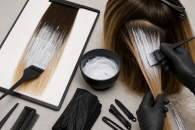
Load the tint brush conservatively near edges and direct strokes toward the hair, not skin. Barrier cream is a secondary control, not permission to overlap product onto the forehead.
If color crosses the boundary, follow label-directed cleanup promptly. Do not simply spread more cream over the contact or leave the area hidden until processing ends.
Remove the barrier after service
Follow the barrier and hair-color directions for removal order. Use a clean damp cloth, permitted wipe, or rinse method as specified. Move residue away from the eyes and away from freshly colored hair when possible.
Do not scrub until skin becomes red. Persistent staining is not a reason to use household solvents, abrasive exfoliation, bleach, or repeated incompatible products.
Inspect the hairline under neutral light after cleanup. Stop and follow product guidance if burning, swelling, blistering, hives, or persistent redness occurs.
Prevent container contamination
Use one clean applicator per dip and discard it after contact with skin. Separate unused tools from used tools. Never add water, oil, color, or cleaner to the barrier package.
Store the closed product at the directed temperature away from heat, sunlight, freezing, children, pets, and food. Keep the label readable. Do not transfer cream into an unmarked jar.
Discard the product when expired or when identity, storage history, seal, texture, odor, or cleanliness is uncertain.
Understand the safety boundary
The U.S. Food and Drug Administration advises following hair-dye directions, completing the directed skin test before every use, wearing gloves, keeping dye away from the eyes, observing processing time, and rinsing the scalp well. A barrier band does not change those requirements.
The American Academy of Dermatology notes that lightening more than three shades generally requires stronger peroxide and can cause more damage. Hairline protection has no bearing on lift limits, overlapping lightener, correction, or hair fragility.
Do not use scalp hair dye on eyebrows or eyelashes. Barrier cream does not turn an eye-area application into an acceptable use.
Common barrier-cream mistakes
- Using an unlabeled household ointment.
- Applying a thick ridge into the hair.
- Dipping a contaminated glove into a jar.
- Coating eyebrows, eyelids, ears, or broken skin.
- Using cream to hide product already on skin.
- Assuming it prevents allergy or all staining.
- Returning palette leftovers to the container.
- Scrubbing aggressively during removal.
For visual placement and upkeep planning, see the hair color ideas guide. The barrier supports a clean edge but does not select the shade or technique.
Final barrier-cream checklist
- Confirm intended use with the exact color service.
- Review ingredients, warnings, texture, and expiration.
- Dispense a small amount without contaminating the package.
- Clip hair away and inspect intact skin.
- Apply a thin band outside the hairline.
- Keep cream off hair, scalp, brows, eyes, and ears.
- Clean product crossings promptly as directed.
- Remove gently, discard applicators, and store closed.
Sources and scope
The FDA hair dyes guidance supports the label, skin-test, glove, timing, eye-area, scalp-condition, and adverse-reaction boundaries in this guide. The American Academy of Dermatology coloring guidance supports conservative shade changes and damage-reduction limits. Neither source endorses barrier-cream ingredients, consistency, effectiveness, brand, or individual suitability.