Oil Applicator Combs: Reservoir, Flow Control, and Cleaning

Direct answer: choose an oil applicator comb by reservoir material, cap seal, tooth spacing, outlet design, flow control, section access, oil compatibility, complete cleaning, drying, and storage. Test the empty mechanism and a small permitted amount before full use, and stop when the tool leaks, drags, floods a section, or cannot be cleaned internally.
Define the exact oil applicator comb task
Inspect reservoir stiffness, fill opening, cap threads, gasket, valve, outlet channel, comb-head attachment, tooth spacing, tooth tips, disassembly points, and material-compatibility statements. Product name and appearance do not establish calibration, formula compatibility, chemical resistance, leak resistance, or suitability for every hair context. Read the tool directions and the hair-product directions together.
Match the tool to the permitted formula
Match tooth spacing and flow to the intended hair section without using the device to scratch the scalp, force through tangles, or distribute a formula whose directions prohibit decanting. The FDA hair-products overview provides federal cosmetics context but does not establish compatibility between a formula and this oil applicator comb. Do not transfer a product when its original package, timing, ventilation, mixing, or disposal directions require otherwise.
Inspect the complete mechanism
Use bright light and clean hands. Check the reservoir, cap, threads, gasket, outlet, nozzle or teeth, removable parts, molded marks, and cleaning access. Reject cracks, sharp edges, loose components, distorted openings, trapped residue, unknown material, or a channel that cannot be inspected.
Prepare a controlled setup
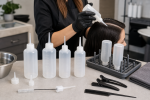
Keep the original oil package and directions traceable, start with clean dry parts, verify the seal, fill only to the permitted level, and protect clothing and surfaces from transfer. Keep towels, section clips, a stable stand, rinse basin, cleaning brush, and waste method ready. Do not place a filled tool near eyes, food, children, pets, heat, or an unstable edge.
Test flow before hair contact
Test pressure and angle over a collection surface, then use light controlled passes on one separated section. Stop if oil pools, flow continues after release, or teeth pull. A water check is useful only when both the tool and later formula permit water contact and complete drying. Water flow does not predict the behavior of every oil, gel, color, cleanser, or treatment product.
Use markings and dose evidence carefully
Count permitted fills or passes rather than relying on an unverified reservoir volume. Record the amount loaded, amount remaining, sections covered, and any leakage. A line, bottle shape, squeeze, or reservoir fill is not a universal unit. Use the formula’s stated amount and keep a simple record so repeated passes do not hide an excessive total.
Section without force
Create parts with a separate clean sectioning tool when needed. Keep the applicator away from eyes and broken or actively irritated skin. Use light pressure, maintain control of the outlet, and stop if teeth catch, hair mats, the scalp becomes painful, or the tool slips.
Keep cross-use visible
Dedicate the tool to one compatible material or maintain a documented cleaning boundary. Do not move a bottle, gasket, brush, comb head, or nozzle between incompatible formulas because the parts look clean. Preserve the original product identity and opening date.
Clean every hidden channel
Empty as directed, disassemble only intended parts, clean the reservoir, gasket, channel, comb head, and teeth with the permitted method, rinse, and dry every hidden cavity before reassembly. More detergent, solvent, bleach, boiling water, or household chemical is not a shortcut unless the tool directions specify it. Never use a needle or sharp wire that can enlarge an outlet or leave damage.
Dry before reassembly or storage
Place parts on a clean drying rack with openings positioned for drainage and airflow. Inspect threads, gaskets, nozzles, channels, reservoirs, and tooth bases for droplets. Store unassembled when directed and never seal visible moisture or odor inside.
Recognize the replacement point
Stop or replace the tool for leaking cap, swollen reservoir, cracked teeth, sharp tips, clogged outlets, uncontrolled flow, trapped oil, persistent odor, staining, difficult disassembly, or incomplete internal drying. A stained, leaking, swollen, cracked, sharp, or internally damp applicator is not restored by fragrance, a tighter grip, or another rinse without evidence that the fault is gone.
Run a controlled oil applicator comb comparison
Compare tooth spacing and flow using the same permitted oil, fill amount, pressure, angle, section size, pass count, and collection method. Change one variable at a time and use a simple collection surface before hair contact. This is a practical tool check, not a laboratory calibration or a formula-performance result.
Keep reaction and claim boundaries conservative
The FDA cosmetics-allergen guidance supports ingredient and label review without predicting an individual response. The AAD gentle hair-care guidance supports cautious handling without endorsing a oil applicator comb. Stop use and seek appropriate help for significant burning, swelling, hives, breathing difficulty, persistent eye exposure, pain, or marked shedding.
Use related guides for separate decisions
The hair-dye brush guide helps with comparing section-control tools. The hair spray-bottle guide covers separating reservoir-comb and spray delivery. Use the long-hair style guide for planning low-tension sections. These supporting guides do not replace the exact oil applicator comb material, flow, cleaning, or compatibility check.
Record the final tool decision
Log tool identity, material, capacity, parts, formula, amount loaded, section count, pressure, angle, flow, leakage, drag, amount remaining, cleaning method, dry time, odor, damage, and replacement date. Keep the tool only while its mechanism remains predictable and every product-contact surface can be cleaned and dried.
Decision table
| Check | Useful evidence | Stop or revise when |
|---|---|---|
| Material and fit | Tool material and formula compatibility are documented | Swelling, cracking, clouding, or unknown compatibility |
| Flow | Output starts and stops predictably under light control | Spurts, leaks, clogs, pooling, or continued flow |
| Hair contact | Sections receive controlled delivery without pulling | Eyes are threatened, teeth catch, or hair and scalp hurt |
| Cleaning | Every product-contact surface is accessible | Residue remains in a sealed or hidden channel |
| Drying | All parts are visibly dry before storage | Droplets, odor, or trapped moisture remains |
Final checklist
- The exact oil applicator comb material, mechanism, formula boundary, and cleaning method are known.
- Flow is tested away from eyes and hair before application.
- Sections, total amount, pressure, and leakage are recorded.
- Every product-contact channel is cleaned and fully dried.
- Cracks, sharp parts, leaks, trapped residue, or swelling ends use.
An oil applicator comb is a reservoir, seal, tooth, flow, and cleaning decision. Controlled section delivery is useful only while the device remains compatible, leak-free, smooth, and fully cleanable.