Wig Cap Construction Types: Fit, Material, and Construction Guide

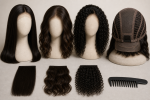
Direct answer: Compare wig cap construction types by mapping what is open, closed, laced, monofilament, hand-tied, seamed, elastic, adjustable, and rigid. Open-wefted caps use spaced tracks and stretch bands; closed caps cover more of the base; lace-front caps localize lace at the front; full-lace caps extend lace across more of the structure; monofilament caps add a defined fine panel; hand-tied caps ventilate hair into mesh. None of these labels alone establishes fit, comfort, ventilation, durability, or styling freedom. Match the actual panel map, dimensions, stretch directions, hardware, and care limits to the reader's setup.
Draw the cap as a structural map
Turn each dry cap inside out and sketch open wefts, closed panels, lace coverage, monofilament zones, hand-tied mesh, seam lines, elastic channels, ear tabs, nape, straps, combs, and clips. Record which zones stretch, carry hair, accept parting, contact prepared hair, or exclude adhesive. Compare construction only after the full dimensions and condition are known.
Map an open-wefted cap
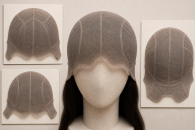
Identify horizontal tracks, vertical stretch bands, open spaces, crown closure, nape elastic, and side structure. Record spacing and how the cap changes shape without pulling it beyond the supported range. Open areas can expose the preparation and change airflow, but they do not prove a cooler or lighter experience. Look for loose tracks, broken band stitching, and distorted spacing.
Map a closed-wefted or basic cap
Closed material or closely arranged wefts cover more of the interior and can hide seams or product residue. Record panel fabric, crown pattern, track placement, stretch zones, and access for inspection and rinsing. Do not assume that fuller coverage means stronger construction, less shedding, or fewer pressure points. Joined layers can retain moisture and need a deliberate dry endpoint.
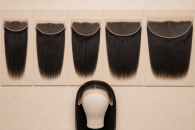
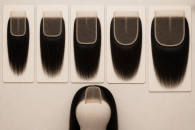
Define the lace-front boundary
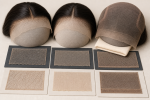
Measure lace width, depth, ear-to-ear reach, temple transition, knot field, seam joining lace to the remaining cap, and uncut edge. Lace at the front does not define the crown, nape, or side construction. Check whether the seam lies flat in the intended shape and whether hardware or adjustment pulls against it. Do not cut lace before the dry fit passes.
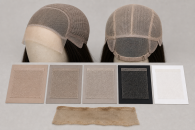
Define full-lace coverage precisely
Record which front, crown, side, and nape zones are actually lace and where reinforcement, stretch panels, elastic, or seam tape interrupts it. Full-lace terminology can still include nonlace components. Inspect knot density, repair areas, panel junctions, and edge reinforcement. Greater lace coverage does not establish invisible edges, unrestricted parting, lower tension, or suitability for every attachment method.
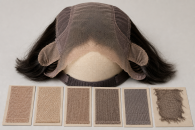
Locate monofilament panels
Identify a monofilament top, crown, part, or other named area and distinguish it from surrounding lace, mesh, fabric, or wefts. Record dimensions, seam perimeter, hair attachment, stiffness, and allowed parting area. A monofilament label does not describe the complete cap. Rough seams, delamination, lifted edges, or local buckling can affect fit even when the panel itself remains intact.
Inspect hand-tied construction
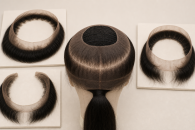
Determine which hairs are individually ventilated and which zones still use wefts, seams, reinforcement, or machine stitching. View knots and mesh against contrasting backing without pulling. Note density changes, double knots, repairs, widened holes, and pulled strands. Hand-tied does not prove a universal density, movement pattern, comfort level, or resistance to shedding.
Compare directional stretch rather than softness
Observe where the cap expands in circumference, depth, or both and where lace, monofilament, seam tape, or closed panels remain relatively fixed. Use the maker's inspection range only. A soft hand feel can hide limited directional reserve, while an elastic band can relax with age. Do not translate stretch in one axis into missing depth or ear-tab reach.
Trace load through seams and hardware
Follow the route from straps, hooks, combs, clips, elastic, and ear tabs into nearby panels and seams. Check whether adjustment loads lace, a weft band, closed fabric, or reinforcement. Hardware that is smooth and attached can still be poorly positioned for one preparation. A construction comparison must include where force enters the cap, not only what material is visible.
Dry-fit the structural map
Use the intended preparation and neutral adjustment. Align front, crown, ears, and nape, then observe which panels stretch, buckle, lift, or compress during ordinary movement. Record seam pressure, track exposure, lace ripple, monofilament distortion, and hardware contact. Do not use adhesive or maximum strap tension to make one construction behave like another.
Choose care by joined materials
Follow the narrowest wash, product, heat, drying, and storage limit among hair, lace, monofilament, weft thread, panel fabric, elastic, seam tape, adhesive, and hardware. Rinse and dry hidden intersections deliberately. Do not soak, heat, solvent-clean, or fold a cap based on one visible material while ignoring another joined component.
Retire construction failure, not a category label
Remove the cap from wear for torn lace, widened mesh, loose wefts, split panels, opened seams, delamination, failed elastic, broken straps, rough hardware, persistent residue, odor after full drying, or a panel map that no longer reaches its landmarks. The fact that a cap is full-lace, monofilament, or hand-tied does not make those failures serviceable.
Decision table
| Checkpoint | Continue when | Stop or replace when |
|---|---|---|
| Open wefts | Tracks, bands, spacing, and crown stay aligned | Loose track, split band, distorted gap, or exposed rough seam |
| Lace | Coverage, knots, edge, and transition seam remain intact | Widened hole, pull, buckle, tear, or loaded junction |
| Monofilament | Panel and perimeter lie flat in the intended cap shape | Lift, delamination, rough seam, or local distortion |
| Stretch | Directional reserve supports all landmarks without maximum extension | Wrong axis, relaxed elastic, rigid-zone strain, or shallow depth |
| Hardware | Load enters reinforced structure smoothly and symmetrically | Lace pressure, failed anchor, rough tooth, or concentrated pulling |
Use scalp guidance as a force boundary, not a cap ranking
AAD sources support avoiding painful repeated pulling but do not rank cap construction types. FDA context applies to cosmetics used on hair or cap residue, not structural quality. The turned-out cap map, dimensions, care directions, and dry fit control the comparison.
- AAD traction guidance: Stop when a panel or attachment creates repeated pulling.
- AAD extension precautions: Keep the complete system clean and the attachment load observable.
- FDA hair-products overview: Assess any cleanser or styling product separately from cap architecture.
Resolve the hair system before comparing cap architecture
Extension guides help distinguish hair formats and attachments. They do not determine lace coverage, weft spacing, monofilament area, stretch direction, or cap seams.
- hair extension selection guide: keeping extension fiber and attachment choices outside this wig-equipment decision
- hair extension type guide: separating extension formats from a complete wig and cap system
- hair crown extension guide: handling shade and placement as a separate reader task
Final checklist
- Every open, closed, lace, monofilament, hand-tied, elastic, and reinforced zone is mapped.
- Dimensions and stretch directions are recorded separately from category names.
- Seams, panel junctions, straps, combs, clips, and load paths remain visible.
- Product-free fit shows how the actual cap reaches front, crown, ears, and nape.
- Tears, loose wefts, split panels, delamination, failed elastic, or rough hardware trigger service or retirement.
Construction labels do not rank comfort or quality
This comparison does not promise airflow, comfort, realism, durability, parting freedom, secure wear, lower tension, or damage-free use for any cap type.
A wig cap type is a panel, weft, lace, monofilament, seam, stretch, hardware, fit, care, and condition map.