Mesh Wig Caps: Selection, Use, Cleaning, and Replacement

Direct answer: choose a mesh wig cap by open-cell size and shape, fiber, stretch recovery, seam layout, elastic-edge width, cap depth, hair volume, snag exposure, cleaning directions, and replacement signs. The open knit should contain the prepared hair without large strands escaping, comb teeth catching, the edge rolling, or pressure concentrating at the hairline. Visible openings do not guarantee airflow, cooler wear, secure hold, or less traction.
Inspect the open-cell geometry
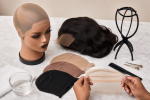
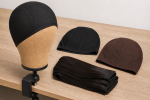
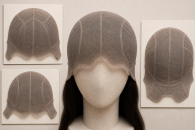
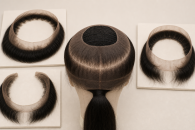
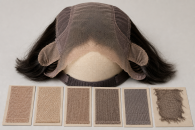
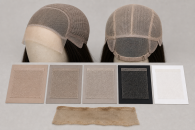
Record whether openings are diamond, hexagonal, or another knit, their approximate size when relaxed, changes under light stretch, fiber thickness, seam direction, elastic width, and cap depth. Inspect for broken loops, stretched cells, knots, rough joins, and openings that vary sharply. Open mesh is distinct from close-knit nylon and thick dome-cap fabric.
Match openings to the prepared hair
Fine loose strands, short edges, braid ends, loc tips, beads, and small hardware can enter or protrude through larger cells. Prepare hair in a clean, dry, low-tension arrangement and check whether the mesh contains it without forcing bulk into a few openings. A second cap is not an automatic fix because it changes pressure and friction.
Size the elastic edge separately
A roomy mesh body can still have a narrow or tight edge. Compare the opening with the intended cap line, ear clearance, nape, and temples. Stretch should remain even around the circumference. Stop if the band rolls, folds, migrates, leaves persistent marks, or requires repeated pulling to stay in place.
Keep the seam away from concentrated bulk
Orient the cap by its directions and place the seam where it does not sit on a braid ridge, knot, clip, tender area, or wig pressure point. Smooth the mesh without twisting cells. Tuck escaped strands with fingers rather than a pin, hook, or comb tooth that can enlarge the opening or scratch the scalp.
Audit comb and clip snag paths
Inspect the underside of the wig and map every comb, clip, strap, and rough seam. Insert attachment teeth only by the wig directions and confirm they do not catch the mesh or transfer force to one small area. Mesh damage near a loaded attachment can spread when the head moves or the wig is removed.
Evaluate airflow as an observation
Openings may allow more visible space between yarns, but comfort also depends on wig cap construction, hair preparation, density, weather, activity, moisture, and wear duration. Record heat, dampness, itch, edge pressure, and movement without claiming that a mesh cap is breathable or cooler for every wearer.
Check movement before extended wear
Turn the head, look down, and make ordinary facial movements while checking temples, ears, crown, and nape. The mesh should not slide over the hair, expose a pressure ridge, or pull escaped strands. Stop for pain, burning, swelling, headache, numbness, bumps, or increasing tenderness.
Remove catches one at a time
Release wig attachments before touching the mesh cap. Support the cap and hair while easing the edge away from the nape. If a strand, comb, clip, or braid tip is caught in a cell, isolate and release that point before continuing. Pulling the whole cap can enlarge a hole and transfer force to hair.
Clean without enlarging openings
Follow the reusable or single-use designation. For washable mesh, remove hair by hand, use the stated water and cleanser, press gently rather than scrubbing, rinse through the open knit, and avoid wringing. Brushes, hooks, and rough towels can snag loops. Cleaning does not restore a broken cell or weakened edge.
Dry flat and inspect every cell
Arrange the cap in its relaxed shape on a clean dry surface with airflow. Do not stretch it over a large form or use unapproved heat. After drying, inspect the full mesh against a contrasting background for broken loops, permanent cell enlargement, seam shift, residue, and elastic recovery.
Replace before a small defect spreads
Replace for a broken loop, enlarging opening, split seam, frayed or stretched elastic, repeated hair escape, snagging, persistent odor, residue, staining, dampness, painful fit, or cap distortion. Tying a knot in the mesh or stitching across unknown fibers can create a hard pressure point and is not a routine repair.
Use scalp guidance to interpret mesh observations
The AAD traction resource supports stopping repeated pulling and painful tight styles, but it does not show that open cells reduce tension. The AAD weave and extension article supports gentle maintenance around added hair without selecting mesh size. The FDA hair-products page supplies cosmetics context for products that may transfer to the cap; it does not verify airflow, snag resistance, or material life.
Route adjacent wig questions to their own guides
Use the hair extensions type guide to distinguish wigs and extensions before choosing an underlayer. The hair crown extensions guide handles color and placement questions that open-cell geometry cannot resolve. The hair extensions selection guide keeps attachment decisions separate from mesh containment.
Do not turn visible holes into a performance claim
Open construction can be described and inspected, but this page does not promise cooler wear, ventilation, secure hold, painless contact, reduced traction, or a specific cosmetic result. The defensible evidence is cell integrity, hair escape, hardware catches, edge pressure, cleaning, and shape recovery.
Decision table
| Check | Useful evidence | Stop or revise when |
|---|---|---|
| Cells | Openings are even and loops remain intact | A loop breaks or one opening enlarges |
| Containment | Prepared hair stays inside without force | Strands, braid ends, or hardware protrude |
| Edge | Elastic lies flat without rolling or marks | Pressure, migration, or persistent indentation |
| Snag path | Wig hardware clears the mesh | Comb or clip catches a cell |
| Care | Mesh returns to shape after permitted cleaning | Distortion, odor, residue, or dampness remains |
Final checklist
- Cell shape, relaxed opening size, fiber, seams, and elastic edge are documented.
- The chosen mesh contains the actual braid ends, short strands, and hardware.
- Wig combs and clips have a clear path that does not catch or enlarge cells.
- Removal isolates each snag instead of pulling the whole open-knit cap.
- A contrasting-background inspection follows every permitted wash and dry cycle.
A mesh wig cap is an open-cell, containment, snag, edge-pressure, cleaning, and replacement decision. Choose it for a documented fit, not for an assumed airflow or hold advantage.