Dome Caps for Wig Making: Selection, Use, Cleaning, and Replacement

Direct answer: choose a dome cap for wig making by thick stretch-fabric composition, panel and seam layout, unstretched dimensions, recovery, edge finish, wig-block size, planned sewn or otherwise permitted construction method, wear fit, cleaning limits, and replacement signs. Build on a stable block that matches the intended head measurements and remove the cap for a separate fit check before finalizing the unit. A thick cap does not guarantee durable stitching, secure adhesive bonding, universal fit, comfortable wear, or protection from tension.
Confirm that it is a wig-making dome cap
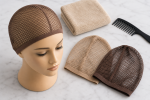
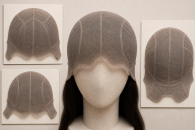
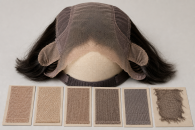
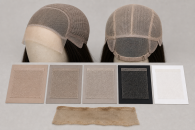
A dome cap is generally thicker and more structured than a fine nylon liner or open mesh cap, with visible panels or seams and enough body to support an approved wig-building method. Record fiber, thickness, stretch directions, panel count, seam bulk, edge finish, size range, and whether the maker permits sewing, bonding, or another construction method.
Start from intended head measurements
Record circumference, front to nape, ear to ear, temple to temple, and nape width for the intended wearer. Select the closest suitable canvas block or form and mark orientation without permanently altering the cap. A larger form can overstretch fabric; a smaller form can produce a unit that depends on excessive tension.
Inspect panels and stretch recovery
Under bright light, check every panel, seam, fold, and elastic edge for skipped stitches, loose threads, holes, runs, puckering, rough joins, color transfer, and uneven tension. Apply only light permitted stretch in the relevant directions and confirm recovery. Permanent whitening, thinning, distortion, or seam separation ends the build.
Secure the block before construction
Use a stable stand or clamp on a level work surface and keep the block from rotating unexpectedly. Separate hair wefts, thread, adhesive, and any permitted tools into visible zones. Store needles, pins, hooks, blades, and hot tools safely when not actively used. Do not work on an unstable lap-held or rolling form.
Map rows before adding weight
Plan the nape, sides, crown, closure or frontal area, part direction, weft spacing, overlap, and expected hair weight. Keep rows balanced around panel seams instead of loading one line. Density should be treated as distribution and weight, not simply the number of wefts that can fit on the cap.
Keep sewing within a defined method
When sewing is permitted, use compatible thread, stitch spacing, tension, and seam allowance. Avoid pulling stitches hard enough to gather the dome cap, cut the knit, or distort the block dimensions. Count and secure tools, keep points directed away from the body, and stop for fraying, tearing, skipped fabric, or cap distortion.
Keep bonding claims and chemistry bounded
When a cap and adhesive expressly permit a bonded method, review both current directions for material compatibility, ventilation, amount, setting interval, attachment surface, wear limit, and removal. Do not mix methods or assume that a thicker cap blocks adhesive from skin. Unidentified glue and improvised heat are outside a controlled wig build.
Remove the work from the block for fit
A cap that looks smooth on a form still needs a separate, brief fit check under the intended use conditions before finishing. Check hairline, temples, ears, crown, nape, seam pressure, weight, and movement. Do not correct a small cap with aggressive stretching or a large cap with concentrated elastic pressure.
Inspect the inside of the finished unit
Turn the unit inside out and inspect stitches or bonded lines, weft ends, knots, seam ridges, loose thread, hardened material, clips, combs, straps, and any edge that can contact hair or scalp. Covering a rough point does not prove that its underlying attachment is stable.
Clean according to the completed construction
The final care method must satisfy the dome cap, hair fiber, wefts, thread or adhesive, closure, and hardware. Use the most restrictive compatible directions. Support the cap during washing, avoid wringing, rinse permitted products completely, and keep unsupported chemicals and heat away from seams and bonded areas.
Dry on a correctly sized support
Blot as directed, arrange the unit on a clean support that does not overstretch it, and provide airflow through cap, seams, wefts, and dense zones. Inspect for dampness, color transfer, odor, puckering, adhesive change, and loss of shape before storage or wear.
Retire an unstable base
Stop using the unit for split panels, spreading holes, cut fibers, failed stitches or bond lines, permanent stretch, hardened seams, rough contact points, persistent odor, residue, trapped moisture, painful fit, or weight that the cap no longer supports predictably. Adding more rows or adhesive cannot restore a failed base.
Apply health sources only to the finished wear context
The AAD traction guidance explains the risk of repeated tight pulling after a unit is worn; it is not a wig-making instruction. The AAD weave and extension precautions support gentle hair and scalp practices without approving a block, cap, stitch, or bond. The FDA hair-products overview provides cosmetics context for hair and styling products, not tool safety or structural certification of a handmade unit.
Separate the base build from extension shopping
The hair crown extensions guide can inform separate shade and length planning. The hair extensions selection guide addresses fiber and attachment formats rather than block sizing. The hair extensions type guide helps define the finished format before rows are mapped onto a dome base.
Keep a handmade build inside observable limits
This page does not certify stitch strength, adhesive compatibility, tool use, scalp comfort, wear duration, or a damage-free result. Inspect cap recovery, panel seams, weight distribution, inside contact surfaces, final fit, and wash response. Uncertain construction requires revision or retirement, not a broader claim.
Decision table
| Check | Useful evidence | Stop or revise when |
|---|---|---|
| Material | Thick stretch fabric and panels are intact | Thinning, holes, whitening, or split seams |
| Block fit | Form matches intended measurements without over-stretch | Cap is forced onto an incorrect block |
| Build | Rows and weight are distributed without distortion | Stitches gather or bonding hardens the cap |
| Wear fit | Inside surfaces are smooth and pressure is even | Ridges, rough points, pain, or migration appears |
| Care | Complete construction cleans and dries compatibly | Odor, residue, dampness, or bond change remains |
Final checklist
- The item is a thick wig-making dome cap with known stretch directions and panel seams.
- Block dimensions match the intended wearer without forcing the base fabric.
- Rows, weight, stitches, or permitted bond lines do not distort the cap.
- The completed inside surface receives a separate contact and fit inspection.
- Cleaning and drying satisfy the cap, hair, attachment method, and hardware together.
A wig-making dome cap is a base-material, block-size, construction, weight-distribution, fit, and care decision. The build is only as predictable as the cap’s recovery, seams, inside finish, and final fit.