Wig Sewing Thread: Selection, Use, Cleaning, and Replacement

Direct answer: Choose wig sewing thread by matching its disclosed fiber, twist, thickness or size, color, surface finish, and care limits with the cap, lace, weft, needle eye, stitch plan, and final washing routine. Inspect the spool for fuzz, weak sections, knots, flattening, residue, and uneven winding before use. Test on an off-head swatch, keep stitch tension from puckering the material, and replace thread that frays, fades, bleeds, hardens, weakens, or no longer passes cleanly through the selected needle.
Build a spool and swatch baseline
Photograph each unlabelled working spool only after recording its disclosed fiber, size or weight, twist, color, length, care limits, storage directions, and lot information from the original source. Save dry cap-material swatches with controlled stitches for later fray and color comparison.
Verify fiber and construction instead of judging shine
Record whether the thread is polyester, nylon, cotton, blended, coated, bonded, textured, or another disclosed construction. Note ply count, twist direction when provided, finish, size system, and care limits. A glossy black strand does not identify fiber, strength, abrasion behavior, heat tolerance, stretch, or suitability for lace, cap fabric, or wefts.
Compare thickness with the needle eye and material
The strand should pass through the selected eye without scraping, flattening, splitting, or requiring force. Compare thread diameter with mesh openings, seam allowance, weft edge, and planned stitch spacing on a dry swatch. A thicker thread can create bulk or cut delicate material; a thinner thread is not automatically less visible or sufficiently durable.
Match color in more than one lighting condition
Place a loose strand and a stitched swatch against the exact lace, cap, weft edge, and hair under neutral indoor light and indirect daylight. Check both front and reverse sides. Black, brown, beige, and transparent-looking options can contrast differently against materials. Do not dye, marker-color, coat, or bleach thread unless every direction permits it.
Inspect spool winding and strand continuity
Rotate the spool and look for crossed layers, crushed edges, loose loops, embedded lint, stains, oily patches, factory knots, broken ends, flattening, and abrupt color or texture changes. Pull only a short controlled length for inspection. Do not unwind an entire spool, use teeth to cut thread, or return a contaminated loose strand to the winding.
Make an off-head compatibility swatch
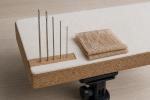
Use the intended needle type, thread length, stitch pattern, cap or lace scrap, and weft edge on a stable practice block. Record threading friction, knot size, stitch visibility, material puckering, strand fuzz, breakage, and how the swatch lies after tension is released. One swatch does not establish long-term wear, but it can reject an obvious mismatch before construction.
Control working length and abrasion
Use a manageable length that does not repeatedly drag across the floor, hair, block edge, clothing, or rough table surfaces. Keep the strand path clear and support material while drawing each stitch. Stop if the thread kinks, coils, pills, flattens, sheds lint, catches at the eye, or develops a weak-looking section. Replace the working length rather than hiding a defect inside a seam.
Set tension by the material response
Tighten only until the intended layers meet without puckering, sawing mesh, crushing a weft edge, or creating a hard ridge. Observe both sides after every short section. Uniform spacing does not excuse distorted material. If stitches loosen or the base gathers, reassess thread size, needle, bite depth, spacing, knot method, and material support.
Keep knots and ends away from contact points
Use only the construction plan's knot or securing method and keep ends trimmed by a controlled tool after all sharp-tool rules are met. Position finished knots away from rough skin-contact zones, hardware, elastic channels, and visible part areas. Do not melt, burn, glue, or chemically seal thread unless the exact materials and directions authorize that process.
Evaluate the thread during permitted washing
On a completed off-head test or the final unit when directions allow, observe whether the thread absorbs residue, changes color, bleeds, swells, hardens, shrinks, stretches, or dries slower than surrounding material. Support the seam while wet. Do not use one wash to claim lifetime colorfastness, fixed strength, or compatibility with every cleanser.
Store spools clean, dry, and protected from snagging
Secure the loose end by the spool's intended method without cutting into lower layers. Keep spools upright or enclosed as directed, separated from sharp tools, liquids, adhesives, dust, heat, sunlight, and damp textiles. Preserve fiber and lot records outside the spool when labels are removed from the work zone. Do not combine unknown partial spools.
Replace strand or spool at observable failure
Discard a working length for fuzzing, nicks, flattened zones, weak spots, knots, contamination, or repeated eye friction. Retire the spool for persistent odor, moisture, residue, discoloration, bleeding, brittleness, hardening, uneven stretch, widespread lint, damaged winding, unknown identity, or storage history that makes compatibility uncertain.
Decision table
| Checkpoint | Continue when | Stop or replace when |
|---|---|---|
| Fiber | Disclosure and care limits match the material plan | Unknown construction or incompatible heat, wash, or chemical limits |
| Eye fit | Strand passes without scraping or flattening | Force, splitting, fuzz, or repeated breakage |
| Swatch | Stitches lie flat without cutting or puckering | Hard ridge, gathered lace, loose seam, or damaged weft |
| Condition | Color, twist, and surface remain consistent | Bleed, fray, lint, knot, residue, or weak section |
| Storage | Identity is preserved and spool stays clean and dry | Unknown partial spool, dampness, contamination, or tangled winding |
Keep thread observations outside hair-growth or scalp claims
AAD guidance can inform the later tension and cleanliness review of the worn system, but it does not rank thread. FDA hair-product information does not establish sewing-fiber compatibility or seam strength. Thread evidence comes from disclosure and controlled off-head material checks.
- AAD extension precautions: Keep the completed system clean and avoid a seam plan that contributes to painful tension.
- FDA hair-products overview: Check cleanser and cosmetic directions separately from sewing-thread properties.
- AAD hairstyle traction guidance: Assess the final fit rather than claiming a thread prevents pulling.
Use hair guides after thread and seam compatibility is resolved
The related pages address extensions, shade, and upkeep. Thread color or thickness cannot select a hair format or validate an attachment route.
- hair crown extension guide: separates shade planning from thread matching
- hair extension format guide: keeps product construction outside spool selection
- hair extension selection guide: routes fiber and attachment decisions to the hair system
Final checklist
- Fiber, twist, size, color, finish, care limits, and spool identity are documented.
- Thread passes through the selected eye without force, flattening, splitting, or fuzz.
- An off-head swatch remains flat at the intended stitch spacing and tension.
- Working strands showing contamination, knots, fray, or weak sections are replaced.
- Spools remain identified, clean, dry, enclosed, and separated from sharp tools.
Report material compatibility without promising seam life
A clean flat swatch can show an obvious thread-and-material fit for the recorded setup. It does not establish lifetime strength, colorfastness under every wash, invisible stitches, scalp comfort, or a certain wig result.
Wig sewing thread is a fiber, size, color, eye-fit, tension, wash, and storage decision. Replace it whenever identity or strand condition is no longer clear enough to support a controlled seam.