Adjustable Wig Straps: Selection, Use, Cleaning, and Replacement

Direct answer: Choose an adjustable wig strap as a complete system: elastic webbing, slider, hook or tab, cap anchor, and matching attachment point. The slider must hold a reproducible setting without twisting the webbing, and both sides should remain within their usable range rather than being pulled to the limit. Set the straps while the wig is off the head, then run a brief fit and movement check. Loosen or stop for pressure, painful pulling, hardware contact, cap distortion, or nape rise. Replace the strap for failed recovery, slider creep, bent attachments, rough edges, or damaged anchor seams.
Map the complete adjustment path
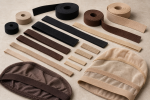
Photograph each strap from cap anchor to attachment end. Record webbing fiber and width, relaxed segment length, slider style and travel, hook, loop or tab geometry, stitching, anchor seam, paired left-right setting, unused tail, and every point where hardware could contact the cap or hair.
Inventory webbing and hardware as one assembly
A usable adjustable strap includes the elastic or webbing segment, routing through a slider, a hook, loop, tab or comparable end, and a secure cap anchor. Record missing or substituted pieces. A length of plain elastic is not an adjustable system, and a slider cannot compensate for an incompatible anchor or attachment end.
Inspect slider routing before changing length
Follow the webbing through each slot and compare it with the maker diagram or an intact paired strap. The material should lie flat without a half twist, doubled edge, trapped seam, or abrasive fold. Move the slider only while the strap is unloaded. Do not force it across thick stitching or rethread it by guesswork.
Find the usable range instead of the extreme range
Mark the longest and shortest positions that retain proper slot engagement, flat webbing, and a manageable free tail. Exclude settings that pull the slider against a seam, leave too little material captured, or stack the tail under hardware. Maximum shortening is not a target and does not prove better hold.
Compare paired straps at equal landmarks
When the cap uses left and right straps, align them at corresponding marks or measured lengths before fitting. Confirm that anchor seams and attachment points are symmetrical. Correct a cap or construction problem rather than using one much shorter strap to pull the wig sideways, rotate the crown, or lift one nape corner.
Check hooks, loops, and tabs under magnification
Inspect attachment ends for bends, cracks, sharp molding, burrs, enlarged holes, loose stitching, and rough hook surfaces. Engage each end with its designed cap point off-head and release it again. It should seat without scraping nearby fabric or requiring a tool. Do not hook into an improvised seam, lace opening, or hair.
Set the cap off-head before the first fit
Begin at a moderate equal setting and place the wig according to its own directions. Observe front, crown, ear, and nape landmarks before shortening. Remove the wig to adjust again rather than sliding loaded hardware against hair or skin. Record each setting so changes are deliberate and reversible.
Run a movement check focused on the nape
Turn the head, look up and down, sit, and move the jaw while observing nape lift, cap rotation, hardware position, webbing roll, and slider movement. Stop for pain, burning, numbness, increasing tenderness, headache, deep marks, or pulling concentrated near anchors. More shortening is not the default response to movement.
Release the attachments before removal
Locate both ends, support the cap, and disengage hooks or tabs before lifting the nape. Return sliders to a storage setting only after the wig is off-head. Do not pull the cap over engaged hardware, allow hooks to drag across hair, or use scissors or a pointed tool to free a strap.
Clean sliders and anchor seams without trapping moisture
Follow the care limits for elastic, hardware, thread, and cap. Clear permitted residue around slider slots and attachment ends without soaking hidden cavities outside directions. Keep corrosive cleaners, oils, bleach, and high heat away unless specifically allowed. Open the cap for airflow and verify that anchor seams and doubled webbing are dry.
Replace the failed component by an approved route
Retire the strap or obtain qualified repair for webbing that stays stretched, curls, narrows, frays, hardens, or exposes elastomer; a slider that creeps, cracks, jams, or cuts fibers; a bent or sharp attachment; or a loose anchor seam. Do not knot a slipping strap, glue a slider, or sew hardware into a new unverified location.
Decision table
| Checkpoint | Continue when | Stop or replace when |
|---|---|---|
| Assembly | Webbing, slider, end hardware, and anchor are compatible | Missing part, substitution, rough edge, or uncertain routing |
| Range | Setting retains engagement and flat webbing | Extreme limit, short capture, stacked tail, or seam contact |
| Pairing | Left and right settings preserve cap alignment | Asymmetry, rotation, lifted nape, or one loaded anchor |
| Movement | Hardware stays clear and slider position is unchanged | Creep, roll, pressure, pain, or cap distortion |
| Care | Slots, webbing layers, ends, and anchors are clean and dry | Corrosion, dampness, fray, failed recovery, or loose seam |
Use wear guidance without claiming a strap is protective
AAD guidance supports reducing harmful repeated tension and responding to symptoms, but it does not define a strap setting or safe pressure. FDA hair-product information cannot certify elastic, sliders, hooks, or seams. Keep conclusions tied to the recorded cap assembly.
- AAD hairstyle traction guidance: Do not use adjustment range to justify painful or repeated pulling.
- AAD extension precautions: Evaluate cleanliness and tension across the full worn system.
- FDA hair-product context: Assess nearby cosmetics separately from strap materials and hardware.
Select hair and coverage after the cap aligns
Related extension guides answer format and placement questions. They do not establish slider travel, hook compatibility, or a strap setting.
- hair extension type guide: keeps extension formats outside strap adjustment
- hair crown extensions guide: separates shade and coverage from nape settings
- hair extension selection guide: routes hair-system choices after cap fit
Final checklist
- Webbing, sliders, attachment ends, anchors, and paired settings are recorded.
- Both straps remain inside a usable range with flat correctly routed material.
- Adjustments are made off-head and verified at cap landmarks.
- Every hook or tab is released before removal.
- Slider creep, failed recovery, rough hardware, or loose anchors trigger replacement.
Do not convert adjustment into a hold guarantee
A setting that stayed aligned during one brief movement check applies only to that strap pair, cap, preparation, and session. It does not prove fixed hold, scalp safety, hair protection, comfort, or universal suitability.
An adjustable wig strap is a webbing, slider, attachment-end, anchor, range, pairing, and release decision. Keep the assembly only while every setting remains visible and repeatable.