Silicone Wig Bands: Selection, Use, Cleaning, and Replacement

Direct answer: Choose a silicone wig band by confirming its disclosed material, size, width, thickness, edge finish, inner texture, perforations or solid zones, and closure or continuous-loop construction. Inspect and dry-fit the band without stretching it to a limit. It should lie flat without rolled edges, skin pinching, painful pressure, trapped hair, or a closure ridge. Follow the exact cleaning and drying directions because residue and moisture can change surface behavior. Replace the band for cracks, tears, tacky or hard areas, permanent stretch, damaged perforations, rough edges, or a failed join.
Document both silicone surfaces while dry
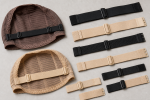
Record disclosed silicone composition, continuous or closure format, relaxed circumference, width, thickness, edge profile, inner and outer texture, perforations, seams or joins, color, tack, care limits, and any visible residue, permanent stretch, clouding, tears, or surface cracks.
Confirm silicone instead of inferring it from appearance
A smooth translucent or skin-toned band is not automatically silicone. Use the product disclosure to distinguish silicone from thermoplastic elastomer, rubber, coated textile, or mixed constructions. Record warnings, storage limits, cleaning method, and contact directions. Do not infer latex-free status, hypoallergenic performance, or medical-grade material from color or softness.
Compare inner texture with outer finish
Inspect both faces under raking light. Note smooth zones, raised dots, ribs, matte or glossy surfaces, molded patterns, and any directional texture. Identify which face is intended inward. Texture can change friction and residue collection, but it does not prove a hold duration, moisture control, or skin tolerance.
Measure width, thickness, and edge profile
Lay the relaxed band flat without tension and measure at several points. Look for tapered, rolled, feathered, molded, or cut edges and compare their consistency. A wider or thicker band may distribute contact differently but can approach ears, fold on curves, or create a visible ridge. Do not trim a molded edge to change fit.
Inspect perforations as structural openings
For a perforated band, compare hole size, spacing, edge smoothness, and the material bridges between openings. Reject torn, merged, stretched, or ragged holes. Perforations do not guarantee ventilation, dryness, or comfort. A solid band is not automatically less suitable; evaluate the disclosed design and the actual dry fit.
Evaluate closure or continuous-loop geometry
A continuous loop must retain an even circumference without a hidden twist or lumpy join. A closure format should align its ends, cover any contact surface, and lie flat. Do not punch new holes, tie the band, add pins, glue an opening, or force a closure beyond its designed overlap.
Run the first fit with clean dry surfaces
Prepare hair and skin according to the complete wig and band directions. Place the band without cosmetics, oils, adhesive, or wet residue unless expressly required. Keep edges above ears and away from broken or concerning skin. Stop if the band rolls, migrates, pinches, traps hair, or needs extreme stretch to stay in place.
Add the wig without hiding pressure points
Place the wig using its own compatible method and locate every comb, clip, strap, seam, and edge relative to the silicone. Hardware should not press through the band or sit on a molded ridge. Turn the head and move the jaw briefly, then remove the system to inspect for deep marks, persistent redness, discomfort, or transferred residue.
Remove by reducing drag rather than pulling
Release all wig attachments first. Find the silicone edge, support nearby hair, and lift a small section to break surface contact before rolling the band away gradually. Free caught strands one at a time. Do not snap the loop off, drag it across the hairline, use a sharp tool, or pull harder when tack has increased.
Clean residue by the disclosed chemistry
Follow the specified cleanser, water temperature, contact time, rinsing, and handling method. Keep unlisted alcohol, oils, powders, solvents, bleach, abrasives, and high heat outside the process. Clean both faces, perforations, closure, and joins without aggressive scrubbing. A cloudy or tacky surface should not be polished or coated to simulate new material.
Dry, store, and replace on material change
Let the band dry fully in the stated shape and location, away from lint, dust, direct heat, sunlight, sharp objects, and incompatible surfaces. Replace for cracks, tears, enlarged perforations, split joins, permanent stretch, rolled edges, hard or sticky patches, persistent odor or residue, discoloration with texture change, or loss of a repeatable flat fit.
Decision table
| Checkpoint | Continue when | Stop or replace when |
|---|---|---|
| Disclosure | Material identity and contact directions are known | Unknown polymer or unsupported hypoallergenic claim |
| Surface | Intended face is even, clean, and intact | Tacky patch, hard zone, crack, residue, or rough edge |
| Geometry | Width, thickness, holes, and closure lie flat | Roll, tear, merged perforation, split join, or extreme stretch |
| Fit | Band and wig hardware remain separate during brief movement | Pinch, trapped hair, deep mark, migration, or pressure ridge |
| After cleaning | Both faces, openings, and joins are fully dry | Clouding with texture change, odor, dampness, or persistent residue |
Keep silicone observations within cosmetic-accessory evidence
AAD guidance can support stopping painful or repeatedly pulling wig setups, but it does not certify silicone composition or skin tolerance. FDA hair-product information does not approve a band, friction texture, or cleaning claim. Follow current product disclosures and observable condition.
- AAD extension precautions: Use clean, low-tension practices when the band is part of a wig system.
- AAD traction guidance: Pain or repeated pulling is a stop signal, not a reason to increase band stretch.
- FDA hair-products overview: Assess styling products and cleansers separately from silicone performance.
Use extension guides after surface contact is resolved
The linked guides cover hair formats, shade, and placement. They do not establish polymer identity, edge comfort, or a cleaning route for silicone.
- hair extension selection guide: keeps fiber and attachment decisions outside silicone fit
- hair crown extensions guide: separates shade and coverage from band contact
- hair extension type guide: routes hair-format questions beyond this accessory
Final checklist
- Material disclosure, surfaces, dimensions, perforations, and closure are recorded.
- The dry band lies flat without extreme stretch, rolling, pinching, or trapped hair.
- Wig hardware does not press through or overlap a molded ridge.
- Cleaning follows the disclosed chemistry and every surface dries fully.
- Cracks, tack changes, hard areas, failed joins, or permanent stretch trigger replacement.
Do not claim silicone guarantees hold or tolerance
A clean band that lay flat during one brief check does not establish a wear duration, anti-slip guarantee, ventilation result, skin compatibility, irritation-free use, or protection from traction.
A silicone wig band is a polymer, surface, dimension, edge, closure, dry-fit, cleaning, and replacement decision. Retain it only while material identity and condition remain observable.