Lace Wig Adhesive: Selection, Use, Cleaning, and Replacement

Direct answer: Choose lace wig adhesive only when its current directions identify the formula, intended surfaces, preparation, amount, layer sequence, setting interval, compatible lace, removal product, cleanup, and storage limits. Do not substitute it for tape or a scalp-protector product. Use it only on the permitted intact contact area, keep it away from eyes and hair unless directions state otherwise, and stop for unexpected discomfort or visible skin change. Release the lace fully with the specified method before lifting. Discard a container with unknown identity, expired directions, cracked cap, blocked dispenser, contamination, separation outside instructions, or residue that prevents controlled dosing.
Keep the complete label and container record
Record product identity, ingredients or formula disclosure, warnings, compatible surfaces, preparation, quantity, number of layers, drying or setting interval, removal product, cleanup, storage, expiration or open-life directions, lot, dispenser type, cap condition, and outer residue.
Classify the formula from current disclosure
Determine whether the product is water-based, solvent-based, silicone-based, acrylic, or another disclosed system. Record all warnings and ventilation directions. Appearance and odor cannot identify chemistry or compatibility. Do not mix formulas, thin a thick product, transfer it into an unmarked bottle, or infer that clear-drying means suitable for every lace or contact area.
Separate adhesive from tape and barrier products
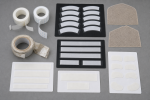
Liquid or gel adhesive creates a film according to its own layer and setting directions. Tape arrives as a solid coated carrier, while a scalp protector is a separate pre-adhesive product. Do not combine these categories unless the full system directions explicitly name the pairing, sequence, removal route, and compatible surfaces.
Inspect the container before opening
Check cap, nozzle, brush, tube seal, threads, body, lot record, and storage history. Look for cracks, leaks, dried buildup, swelling, corrosion, damaged tamper evidence, or residue from another product. Wipe only by the permitted exterior method. A blocked nozzle should not be pierced with a pin or enlarged with a blade.
Prepare only the disclosed contact surfaces
Follow cleansing, drying, hair-control, and product-exclusion directions exactly. Keep the work area ventilated when required and protect eyes and surrounding hair. Do not apply over broken, inflamed, sunburned, recently irritated, or otherwise concerning skin. A clean-looking surface does not remove the need to follow warnings and compatibility steps.
Dispense a controlled quantity
Use the stated applicator and dose route without dipping a used tool back into the container. Keep the nozzle from touching lace, skin, hair, or a work surface. Apply only the described width and number of layers. More product is not evidence of longer wear and can change setting, residue, release, or cleanup behavior.
Observe the specified setting state
Use the maker's timing and visual or tactile endpoint without touching wet product with bare fingers. Environmental conditions can change drying, so do not invent a shortcut with a hair dryer, fan, heat tool, powder, or extra layer unless directions permit it. Attach lace only at the stated stage and avoid repositioning that drags uncured film.
Keep lace placement visible and reversible
Align the lace and cap before contact, then work in small visible sections by the approved method. Do not stretch lace to compensate for wrong cap fit. Stop if the film spreads beyond the intended zone, reaches hair, forms ridges, or creates uneven contact. Do not add product under an attached edge without a supported correction route.
Monitor the contact zone rather than the clock alone
During wear, check edge position, residue, odor, moisture, pulling, and skin signals. Remove or seek appropriate guidance for burning, swelling, blistering, persistent itching, increasing tenderness, or another unexpected response. A stated wear interval is a maximum under specific directions, not a requirement to keep the system attached.
Release the film before moving the lace
Use the named remover, quantity, dwell interval, ventilation, and section size. Support the lace and wait until the film releases without force. Do not peel against resistance, scrape the contact area, cut close to skin, or substitute an unlisted solvent. Continue in small sections until all attachment points are free.
Clean residue by surface-specific directions
Separate skin, lace, hair, cap fabric, tools, and work surface because each can have different limits. Remove residue with compatible products and gentle controlled motion. Rinse or wash only as directed, then dry completely. Do not use adhesive-removal observations to make claims about skin safety or lace durability.
Store upright and retire compromised stock
Close the dispenser immediately, clean the exterior if permitted, and store in the stated temperature, light, and ventilation conditions away from ignition sources where relevant. Discard for unknown identity, expired or missing directions, damaged closure, contamination, persistent blockage, leaking, unexpected separation, altered odor or texture, or an unreliable dose.
Decision table
| Checkpoint | Continue when | Stop or replace when |
|---|---|---|
| Identity | Formula, lot, warnings, surfaces, and removal route are known | Unknown transfer, missing directions, or incompatible system |
| Container | Cap and dispenser provide a controlled clean dose | Crack, leak, blockage, contamination, or dried buildup |
| Application | Named surfaces and layer sequence remain visible | Excess spread, hair contact, wrong setting stage, or forced repositioning |
| Removal | Specified release method frees lace without force | Peeling, scraping, cutting near skin, or unlisted solvent |
| Storage | Closed stock remains stable under stated conditions | Expiry, separation, altered texture, odor, or unreliable dispensing |
Use authoritative guidance to limit cosmetic claims
AAD guidance supports avoiding harmful pulling in a wig system, but it does not approve adhesive chemistry or wear duration. FDA hair-product information provides cosmetic oversight context, not a product-specific authorization. Current directions control formula and removal decisions.
- FDA hair-products overview: Keep cosmetic claims and directions tied to the actual disclosed product.
- AAD extension precautions: Avoid an attachment system that relies on damaging tension.
- AAD traction guidance: Painful pulling is a reason to reassess fit rather than add adhesive.
Resolve the hair system before choosing adhesive
These extension guides address fiber and placement. They cannot establish adhesive chemistry, layer count, release product, or contact compatibility.
- hair extension type guide: separates attachment format from adhesive formula
- hair extension selection guide: keeps fiber decisions outside film application
- hair crown extensions guide: routes shade and placement after attachment planning
Final checklist
- Formula, warnings, compatible surfaces, dose, setting, release, and storage are recorded.
- Container and dispenser remain closed, clean, intact, and identifiable.
- Only the stated contact zone and layer sequence are used.
- The named remover releases every section before lace is lifted.
- Unknown, expired, contaminated, leaking, blocked, or altered stock is discarded.
Do not promise hold or skin tolerance
A film that set and released as directed in one recorded session does not establish a wear duration, waterproof result, universal compatibility, irritation-free contact, scalp protection, or damage-free removal.
Lace wig adhesive is a formula, dispenser, surface, layer, setting, release, cleanup, and storage decision. Controlled removal is part of the product choice, not an afterthought.