Headband Wigs: Fit, Material, Density, Installation, Care, and Removal

Direct answer: Choose a headband wig by evaluating the integrated front band, cap size and depth, fiber, shade, density distribution, internal hardware, and care directions as one system. The band should lie flat across the intended front zone while the cap reaches crown, ears, and nape without maximum stretch or painful pulling. Confirm that combs, straps, seams, and closure parts do not press through the band. Dry-fit before styling, follow the fiber-specific wash and heat limits, release every attachment before removal, and set aside a wig with failed elastic, rough hardware, torn panels, distorted band edges, persistent residue, or density loss at the base.
Inspect the band and cap as one complete wig
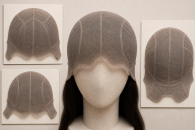
Photograph the wig from front, sides, back, crown, and interior. Record band width, material, backing, seam, closure or fixed loop, cap panels, circumference and depth, elastic, straps, combs, fiber disclosure, shade, length, density distribution, care limits, and every contact landmark.
Confirm the headband is structurally integrated
A headband wig has a front band joined to the cap rather than a separate grip placed beneath an unrelated wig. Trace the band seam from temple to temple and around any closure, overlap, or fixed section. Record whether the band can be changed according to the maker directions. Do not classify a standard wig with a decorative scarf as the same construction.
Read band material and backing separately
Inspect the visible fabric, structural backing, elastic insert, edge binding, stitched channel, and closure face. A smooth decorative surface does not identify stretch direction, fiber content, drying limits, or skin-contact suitability. Look for rough hook material, exposed adhesive, loose thread, thick overlap, hard seams, or backing that folds when the band follows a curve.
Match cap circumference and depth to landmarks
Measure the relaxed interior according to the maker method and compare it with prepared hair, front position, crown depth, ear areas, and nape. The cap should settle without pulling the band backward, lifting the nape, compressing braid ridges, or forcing the ears. A wide adjustment range does not correct a cap that is too shallow or deep.
Evaluate density as a map rather than a label
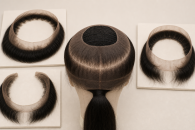
Observe fiber concentration at the band seam, crown, sides, back, part-free top, and nape. Look for abrupt heavy zones, exposed tracks, sparse patches, or a front transition that does not follow the band. Light, medium, or full descriptions can use different methods and cannot establish identical strand counts, weight, movement, or drying time.
Verify fiber and heat limits before styling
Record whether the wig is synthetic, heat-compatible synthetic, human hair, blended, or another disclosed fiber. Follow the exact detangling, product, water, tool, and temperature directions. A natural appearance does not identify material. Do not test heat on the installed wig, infer tolerance from shine, or apply color and chemical services without explicit material support.
Audit combs, straps, elastic, and seams
Turn the wig inside out and locate every tooth, clip, strap, anchor, elastic channel, weft edge, and seam. Map those parts to prepared hair and the band position. Internal hardware should not press through a thin band or cluster at one small area. Remove or relocate a component only through an approved construction or repair route.
Prepare hair with low bulk and visible edges
Use a clean, dry preparation compatible with the cap and keep the intended band contact zone observable. Distribute bulk rather than stacking a ridge under the crown or closure. Protect loose strands from hook material and comb teeth. A smoother preparation does not justify high tension, and a headband should not be used to conceal pain or unstable attachment.
Run the first fit without extra accessories
Place the wig using only its disclosed integrated system. Align the band, crown, ear zones, and nape before adding a scarf, decorative band, hat, or styling product. Turn the head, look up and down, sit, and move the jaw. Check for rolling edges, cap rotation, nape rise, hardware pressure, pulling, deep marks, or movement that requires overtightening.
Layer a separate decorative band only if compatible
If the directions permit an outer band, compare its width, stretch, closure, seam, and care limits with the integrated band. The added layer should not fold the base band, cover warning signs, trap rough hardware, or increase pressure. Keep decorative pieces separately identified so their cleaning and replacement decisions do not become confused with the wig structure.
Remove by reversing each attachment step
Locate and release combs, clips, straps, hook-and-loop sections, or other disclosed parts before lifting the cap. Support the band seam and free caught strands one at a time. Move the wig in the low-resistance direction. Do not pull it backward by the hair, snap an elastic closure, or drag band edges over the hairline.
Wash the band, cap, and fiber by compatible limits
Follow the most restrictive applicable directions for all joined materials. Release tangles, close or protect hardware as instructed, support wet weight, and avoid rubbing the band against itself. Rinse permitted cleanser from the band backing, cap panels, seams, and fiber base. Do not assume that washable fiber makes every elastic, closure, or decorative layer washable.
Dry the hidden layers before storage
Blot without wringing and arrange the wig on a compatible stable support. Open the cap for airflow and inspect the band seam, backing, closure overlap, elastic channels, comb bases, weft bands, and nape. Surface-dry hair does not prove that dense joined layers are dry. Store only after shape and interior condition can be examined.
Retire structural changes instead of disguising them
Set aside the wig for a stretched or hardened band, rolled edge, failed closure, torn cap, widening seam, loose weft, rough comb, broken strap, persistent odor or residue, incomplete drying, matting at the base, or density loss that exposes construction. A new outer scarf cannot repair an integrated band or cap failure.
Decision table
| Checkpoint | Continue when | Stop or replace when |
|---|---|---|
| Integrated band | Material, backing, edges, seam, and closure lie flat | Roll, rough edge, failed closure, hard seam, or exposed adhesive |
| Cap | Front, crown, ears, and nape align without maximum stretch | Shallow fit, nape lift, rotation, compression, or painful pulling |
| Fiber and density | Disclosure and distribution match the intended care plan | Unknown fiber, exposed tracks, base matting, or unsupported heat |
| Hardware | Combs and straps remain visible and distributed | Pressing teeth, loose anchor, rough part, or concentrated load |
| After care | Band, cap, seams, closures, and fiber base are fully dry | Residue, odor, damp layers, distortion, or degraded elastic |
Apply scalp guidance to the complete worn system
AAD guidance supports reducing painful repeated pulling and checking the hairline during wig or extension wear. It does not certify an integrated band, density label, cap size, or wear interval. FDA hair-product context does not determine fiber or textile compatibility.
- AAD weave and extension precautions: Use clean preparation and avoid a wig system that depends on damaging tension.
- AAD traction guidance: Pain and repeated pulling require fit reassessment rather than tighter adjustment.
- FDA hair-products overview: Evaluate styling products and cleansers under their own directions.
Route extension choices outside the complete wig
The related guides address separate extension fibers, formats, shade, and placement. They do not change integrated-band construction or cap fit.
- hair extension selection guide: separates extension choices from a complete headband wig
- hair extension type guide: keeps attachment formats outside integrated-cap evaluation
- hair crown extensions guide: routes shade and placement questions beyond band fit
Final checklist
- Integrated band, backing, edges, closure, cap, and hardware are recorded.
- Cap landmarks align without maximum stretch or painful pressure.
- Fiber, density distribution, heat limits, and care route are verified.
- Every internal attachment is released before removal.
- Band seam, cap interior, elastic, hardware, and fiber base dry fully.
Keep conclusions within the recorded complete wig
This page does not assign a universal cap size, density count, hold time, comfort result, hairline protection, skin tolerance, or styling outcome. Fit observations apply only to the inspected wig, preparation, and session.
A headband wig is an integrated-band, cap, fiber, density, hardware, fit, removal, and drying decision. Retain it only while every layer remains inspectable and the system does not depend on painful tension.