Human-Hair Wigs: Fit, Material, Density, Installation, Care, and Removal

Direct answer: Choose a human-hair wig by confirming only the provenance, strand-alignment, color-service, chemical-service, texture, length, zone-fullness, and base facts that current seller or maker evidence supports. Compare the measured base with the actual prepared-hair volume, then conduct an unassisted fitting that leaves adjusters near neutral and keeps all cosmetics off the hairline. Build washing, conditioning, thermal styling, color service, drying, and storage around the documented processing history. During takedown, unload each fastening system before moving the base. Quarantine compact felting, cuticle-like roughness that does not clear through supported care, track release, lace rupture, adjustment failure, persistent deposit, or a base that no longer returns to its recorded dimensions.
Build a provenance and service dossier
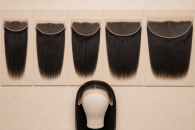
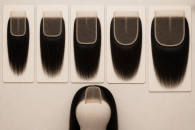
Create an evidence set showing the dry exterior, underside, hairline, part, tips, nape, and each repaired zone. Preserve seller and maker statements about human-hair origin, collection or alignment terms, coloring, chemical services, texture setting, length, and zone-by-zone fullness. Add the measured base geometry, lace and track construction, adjustment components, permitted cosmetics, thermal ceiling, cleansing route, alteration log, and storage history. Exclude marketing language that cannot be tied to current evidence.
Verify the material claim at the level provided
Record whether the listing identifies human hair only, a blend, a named sourcing category, an alignment term, or no further detail. Do not infer donor geography, cuticle direction, collection method, grade, ethics, or processing from feel, price, shine, or a seller label. Missing evidence narrows the comparison; it does not authorize a burn test, solvent test, microscope claim, or unsupported authenticity conclusion.
Separate origin language from processing history
A human-hair label does not disclose bleaching, dye, coating, silicone finishing, curl setting, straightening, acid treatment, or repeated service. Compare current maker care directions with observed color, porosity differences, texture memory, coated feel, and previous repair records. Describe only what is documented or visible. Hair can be human and still require a conservative heat, color, wash, and product route.
Measure the complete cap geometry
Use the prepared-hair measurement record for circumference, front-to-nape depth, ear-to-ear arcs, temple route, and nape width. Compare those values with the exact construction and chart version. A matching circumference cannot correct a shallow crown, misplaced ear tabs, short nape, or lace panel that does not reach its landmarks. Do not depend on maximum stretch or maximum strap closure.
Survey the underside as a serviceable assembly
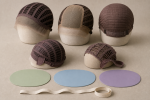
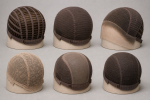
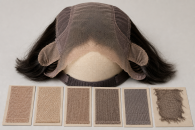
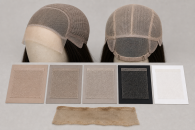
Invert the base on a broad support and illuminate it from above and from the side. Trace lace coverage, ventilated fields, monofilament, closed fabric, track rows, seam allowances, elastic channels, and material transitions. Flag expanding openings, displaced knots, released tracks, abrasive stitching, lifting tape, discoloration, cured deposit, and undocumented alteration. Premium hair cannot make a separating base structurally sound.
Describe fullness by location and hair behavior
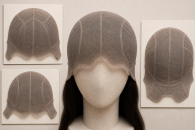
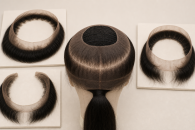
Compare the hairline, part, crown, temples, side panels, rear field, and nape while the base holds its intended form. Note abrupt concentration, sparse fields, visible track rows, perimeter weight, short return strands, and changes after a controlled part. Seller percentages and light, medium, or full terms may use proprietary methods; they do not establish comparable mass, strand population, motion, drying demand, or thermal retention.
Trace how fittings load the prepared hair
Identify teeth, hinges, anchor stitching, sliders, elastic sections, hook surfaces, and any authorized tape or bond zone. Examine finish, symmetry, corrosion, and the structure receiving each load. A smooth part can still land on a braid ridge, pull a fragile front field, or focus weight into a small perimeter zone. Additional fittings cannot convert an incorrectly shaped base into a correct one.
Conduct an unassisted fitting baseline
Use the documented preparation and begin with adjustment close to its neutral position. Seat the intended front, crown depth, side landmarks, and nape, then perform slow turns, jaw movement, sitting, and upward and downward gaze. Log base rotation, front ripple, nape rise, indentation, directional pull, component pressure, and preparation migration. End the fitting and revisit geometry instead of masking evidence with bond products or added compression.
Choose products by processed-hair and cap compatibility
Review shampoo, conditioner, detangler, oil, styling product, color, bleach, adhesive, and remover separately. Confirm whether each can contact the hair, lace, knots, weft roots, seam tape, elastic, and hardware. A formula suitable for attached hair may be too heavy or difficult to rinse from a wig base. More slip, softness, or shine can also mean coating, transfer, and trapped residue.
Set a thermal plan from service history
Reconcile the hair's documented coloring or chemical history with the appliance instructions and the lowest limit among lace, elastic, bond zones, and other base parts. Log moisture state, strand section, set point, exposure interval, tool spacing, and cooling method. Human hair does not make the assembled wig uniformly heat compatible. Keep unknown coatings, concentrated cosmetic, mesh, adjustment material, fittings, and bonded junctions outside unsupported heat.
Wash and condition without loading the base
Detangle through the supported route, measure product and water, and keep the cap controlled while wet. Guide water and product in the permitted strand direction, maintaining placement exclusions around knots, seams, bonds, and elastic. Avoid rubbing lengths together, twisting the cap, piling dense hair, or dragging combs through wefts. Rinse hidden nape, crown, and interior zones to the documented endpoint.
Confirm the wet assembly has returned to baseline
Press out water through the approved blotting route and place the wig on a compatible ventilated support. Restore the documented strand pattern without tensioning it into another geometry. Test the ventilated fields, track joins, monofilament, elastic channels, fitting bases, root zones, nape, and dense curl groups. Ends that feel dry cannot establish readiness when hidden base layers or compact sections remain cool, heavy, or damp.
Unload the fastening system during takedown
Support the base while opening adjustment parts and releasing teeth, clips, tape, bond product, and any outer retention accessory in its documented order. Ease trapped strands from one contact point at a time. Never use the hair lengths as a handle, recoil elastic, or lift a bonded front while resistance remains. After takedown, document deposit, shed hair, displaced knots, stretched mesh, and changed fittings.
Quarantine service and end-of-life conditions
Remove the wig from routine use when mesh ruptures, openings connect, tracks release, adjustment material relaxes, straps fail, teeth become abrasive, clips crack, panels lose form, hair compacts beyond supported release, deposit persists, or dry condition retains an unexplained odor. Compare current base dimensions and strand behavior with the service dossier. Added density, stronger bond, greater compression, or heavier conditioner cannot restore a failed assembly.
Decision table
| Checkpoint | Continue when | Stop or replace when |
|---|---|---|
| Disclosure | Human hair and processing claims are recorded at their supported level | Origin, grade, alignment, or processing is inferred |
| Base fit | Measured landmarks seat with reserve left in the adjusters | Rotation, insufficient depth, nape rise, ripple, or concentrated pressure |
| Density | Distribution remains inspectable across every zone | Hidden tracks, abrupt load, sparse field, or base separation |
| Care | Products, heat, washing, and drying match hair and cap limits | Unknown coating, overloaded base, residue, damp layers, or unsupported heat |
| Condition | Hair, lace, wefts, elastic, straps, and hardware return near baseline | Matting, tear, looseness, roughness, odor, or distortion |
Use sources for tension and cosmetic boundaries
AAD guidance supports avoiding painful repeated pulling around wigs and extensions but does not verify hair origin, grade, density, or processing. FDA hair-product context supports following cosmetic directions but does not certify a human-hair wig. The recorded seller disclosure and inspected wig control.
- AAD extension precautions: Use a clean system and keep attachment force below a damaging level.
- AAD traction guidance: Persistent discomfort or repeated pulling ends the fitting attempt.
- FDA hair-products overview: Review every cosmetic through its current directions and supported claims.
Separate complete wigs from extension formats
The related pages help classify extension fiber and attachment choices. They do not replace the cap, density, hardware, product, heat, or removal record for a complete wig.
- hair extension selection guide: keeping extension fiber and attachment choices outside this wig-equipment decision
- hair extension type guide: separating extension formats from a complete wig and cap system
- hair crown extension guide: handling shade and placement as a separate reader task
Final checklist
- Hair origin and processing language is limited to documented evidence.
- Cap dimensions, lace, density map, wefts, elastic, straps, combs, and clips are recorded.
- The unassisted fitting seats all measured landmarks with adjustment reserve and no discomfort.
- Products, heat, washing, drying, removal, and storage follow the exact wig route.
- Matting, torn lace, loose wefts, failed elastic, rough hardware, or distortion triggers service or retirement.
Human hair is not a universal quality claim
This guide does not assign origin, grade, cuticle direction, ethical sourcing, wear duration, heat tolerance, color outcome, comfort, durability, or damage-free performance. Findings apply to the documented wig and session.
A human-hair wig is a disclosure, processing, cap, density, hardware, fit, product, heat, care, removal, and retirement system.