Wig Lace Materials: Fit, Material, and Construction Guide

Direct answer: Compare wig lace materials by verified fiber disclosure, mesh geometry, thread thickness, openness, color, sheen, directional stretch, knot field, edge finish, seam reinforcement, and care limits. Terms such as Swiss, French, HD, transparent, film, mesh, or monofilament can be used differently and do not replace physical inspection. View the same dry sample over several matte backings, flex only within instructions, and inspect knots and edges without pulling. Retire or repair lace with runs, widening holes, torn edges, lifted seams, permanent distortion, rough residue, or color change outside its baseline.
Inspect lace as a material before judging a wig label
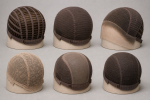
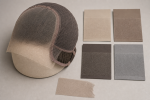
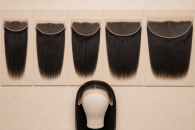
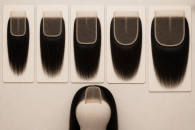
Place clean dry lace over matte light, midtone, dark, and neutral backing. Photograph front and back under diffuse and side light. Record disclosed fiber, knit or net structure, mesh opening, thread thickness, color, sheen, stretch direction, edge finish, knot type, seam reinforcement, repair, cleaning limit, and every run, snag, widened opening, or discolored zone.
Start with disclosed fiber, not a marketing name
Record nylon, polyester, another named polymer, blend, or unknown material only when supported. A regional or premium-sounding lace term may describe fineness, color, supplier convention, or nothing measurable. Do not infer fiber from flame, solvent, stretch, or touch tests. Unknown composition requires the most conservative product, heat, and cleaning route.
Describe the mesh geometry
Observe opening shape, opening size, repeat pattern, row direction, and whether the structure is uniform or changes near a seam. Use a neutral scale reference outside the publishable image when needed. Larger openings do not automatically mean more airflow, less visibility, or lower strength. Compare actual samples under the same light and cap tension.
Separate thread weight from opening size
A fine thread can form a relatively open or compact mesh, while a thicker thread can use another pattern. Record thread width, twist appearance, fuzz, coating, sheen, and consistency without claiming a specific denier unless disclosed. Inspect crossed points for abrasion, broken filaments, and flattened zones. One delicate-looking area does not establish the structure of the full panel.
Map directional stretch and recovery
Identify lengthwise, crosswise, diagonal, and bias response through the maker's permitted inspection. Record relaxed dimensions before and after a small controlled extension. Do not pull until the mesh visibly narrows or knots move. Stretch that helps one curve can distort an edge, widen holes, or load a seam elsewhere. Recovery matters separately from initial softness.
Compare color over controlled backings
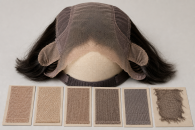
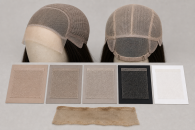
Place the same dry lace over matte light, medium, deep, cool, and warm neutral backings under fixed lighting. Record mesh color, sheen, edge contrast, knot contrast, and any shift from coatings or residue. This is a material comparison, not a promise of invisibility or a universal skin match. Camera exposure and surrounding hair color can alter appearance.
Inspect knots as part of the material system
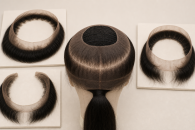
View single, double, clustered, or otherwise disclosed knots from both faces. Record density, spacing, color, tension, and widening around each attachment. Knot processing can change fiber condition and mesh load. Do not bleach, tint, pick, pull, or ventilate hair during an inspection unless the exact wig construction and product directions support that separate procedure.
Read raw, cut, folded, and reinforced edges differently
Identify whether the lace edge is raw, factory cut, folded, bound, taped, seamed, or reinforced. Check for fray, curl, hardened product, lifted tape, rough binding, and tension concentrated at corners. A clean raw edge can behave differently from the same material after cutting or adhesive removal. Do not trim before the complete cap fit is established.
Evaluate seams and panel junctions
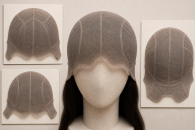
Follow where lace joins monofilament, wefts, elastic, closed fabric, ear tabs, or another lace weight. Record seam width, thread, tape, overlap, and load direction. A strong-looking seam can be too stiff for one curve, while a fine seam can fail if adjustment hardware pulls across it. Compare joined construction rather than a loose swatch alone.
Keep products and heat within material limits
Review cleanser, adhesive, remover, tint, makeup, styling spray, heat, and drying directions against the disclosed fiber and every joined component. Test language on a product label does not prove compatibility with this lace. Avoid household solvents, unsupported bleach, direct iron contact, high-temperature airflow, and repeated scrubbing that can alter mesh and edge condition.
Clean and dry without changing the mesh
Support the panel, use the stated water and cleanser route, and move residue along the permitted direction. Do not rub lace against itself, twist it, scrape knots, or pull a damp edge. Rinse seam overlaps and knot fields, then dry flat or in the supported cap shape. Compare openings, color, feel, and relaxed dimensions with the pre-clean baseline.
Retire material failure by observed condition
Set aside lace for a run, widening hole, torn corner, split seam, missing knot field, permanent wave, hardened residue, coating loss, color change, persistent odor after full drying, or stretch that no longer recovers. A different adhesive, makeup layer, denser hairline, or tighter cap does not restore failed mesh.
Decision table
| Checkpoint | Continue when | Stop or replace when |
|---|---|---|
| Fiber | Material disclosure and care limits are known | Unknown material is subjected to heat, solvent, or destructive testing |
| Mesh | Openings and thread intersections remain uniform near baseline | Run, widened hole, broken filament, flattening, or distortion |
| Stretch | Small permitted extension recovers without moving knots or seams | Permanent narrowing, edge curl, loaded seam, or relaxed panel |
| Color | Dry mesh and knots remain consistent across controlled backings | Discoloration, coating shift, residue, or unsupported match claim |
| Edge | Raw or reinforced finish remains smooth and intact | Fray, tear, hard product, lifted tape, or rough binding |
Keep material inspection separate from scalp outcomes
AAD guidance supports avoiding damaging tension but does not classify lace fibers, mesh sizes, or edge finishes. FDA hair-product context applies to cosmetics used near lace and does not certify compatibility. The disclosed material, physical sample, joined cap, and care directions control.
- AAD traction guidance: Do not use stretch or attachment pressure as evidence of secure fit.
- FDA hair-products overview: Evaluate a cosmetic or remover under its own directions and claim scope.
- AAD extension precautions: Keep the hair system clean and avoid repeated pulling at attachment boundaries.
Identify the full hair system before selecting lace
Extension guides address fiber and attachment formats. They cannot identify lace polymer, mesh geometry, edge behavior, knot condition, or seam compatibility.
- hair extension selection guide: keeping extension fiber and attachment choices outside this wig-equipment decision
- hair extension type guide: separating extension formats from a complete wig and cap system
- hair crown extension guide: handling shade and placement as a separate reader task
Final checklist
- Fiber disclosure, mesh geometry, thread weight, color, sheen, and stretch direction are recorded.
- Knots, raw or reinforced edges, seams, and panel junctions remain visible.
- Controlled backing comparisons avoid unsupported invisibility or universal-match claims.
- Products, heat, cleaning, and drying follow the narrowest joined-material limit.
- Runs, widening holes, tears, distortion, residue, color change, or failed recovery trigger service or retirement.
Lace vocabulary is not material proof
This page does not rank named lace categories or promise invisibility, skin match, comfort, ventilation, durability, easy application, or damage-free removal.
Wig lace is a disclosed-fiber, mesh, thread, stretch, color, knot, edge, seam, care, and failure decision.